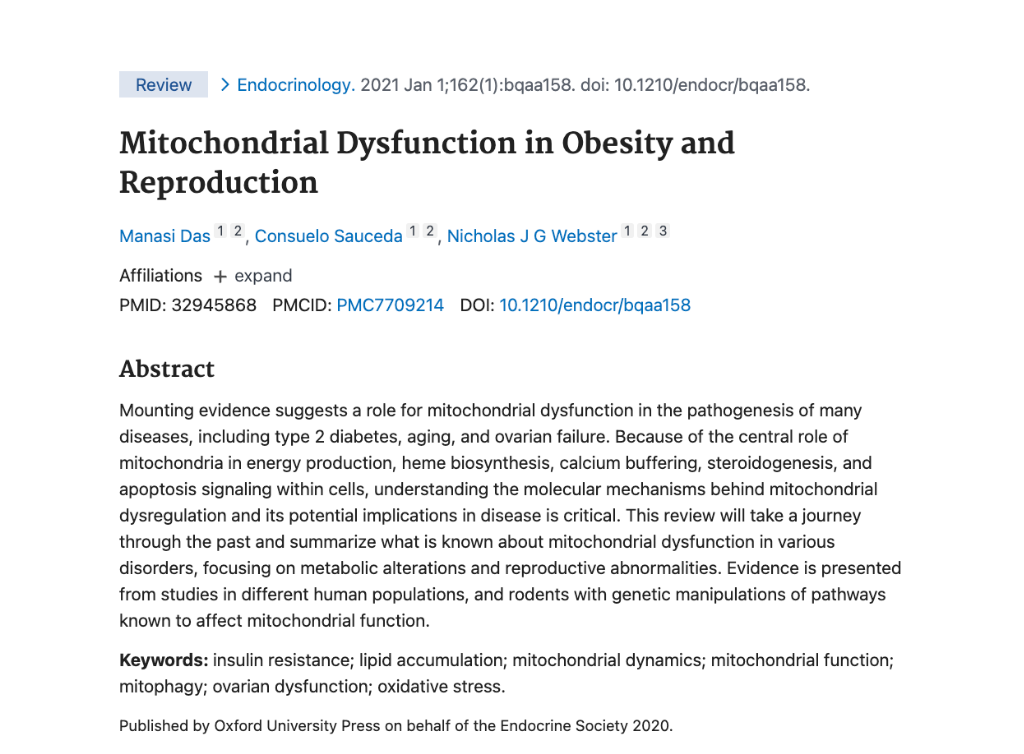
Article Review – Mitochondrial Dysfunction in Obesity and Reproduction

Article Review – Mitochondrial Dysfunction in Obesity and Reproduction

by Manasi Das, Consuelo Sauceda, Nicholas J G Webster

This article is part of Opti Metabolics’ ongoing effort to translate complex metabolic research into clear, practical insights for readers without formal scientific or medical training.

Summary -

This article examines how obesity-driven mitochondrial dysfunction impairs reproductive health, particularly in women. It highlights the critical role of mitochondrial energy metabolism in oocyte development and hormone regulation, and how metabolic stress linked to obesity and insulin resistance compromises fertility and offspring health.

Key Takeaways Explained for a Non-Medical Audience

– Mitochondria are essential in reproductive tissues for energy production, steroid hormone synthesis, and redox balance.

– Obesity induces mitochondrial dysfunction in ovarian and reproductive tissues, contributing to impaired fertility.

– Excess nutrient availability and chronic inflammation alter mitochondrial dynamics, leading to increased oxidative stress and disrupted cellular signaling.

– Insulin resistance interferes with mitochondrial biogenesis and impairs the quality and function of oocytes.

– Mitochondrial dysfunction reduces ATP availability in granulosa cells and oocytes, impacting follicular development and ovulation.

– High-fat, high-carbohydrate diets accelerate mitochondrial stress in reproductive tissues and promote systemic inflammation.

– Obesity-related oxidative stress damages mitochondrial DNA (mtDNA), which has been associated with poor embryo development.

– Mitochondrial abnormalities are linked to reproductive endocrine disorders such as polycystic ovary syndrome (PCOS).

– Leptin resistance in obese individuals disrupts the normal communication between metabolic and reproductive pathways.

– Disrupted mitochondrial signaling affects placental function, increasing the risk of gestational diabetes and adverse birth outcomes.

– Mitochondrial dysfunction in early development may predispose offspring to metabolic disorders later in life.

– Lifestyle interventions that restore mitochondrial function can improve reproductive outcomes and reduce transgenerational disease risk.

– Caloric restriction and exercise have been shown to improve mitochondrial health in reproductive organs.

– Nutrient timing and quality—especially reducing simple carbohydrates and processed fats—may restore metabolic and reproductive signaling.

– Therapeutic strategies targeting mitochondrial dynamics offer potential for treating obesity-related infertility.


Integrated Insights –

This article reinforces the central role of mitochondrial health in both metabolism and reproduction. Obesity-induced mitochondrial stress, largely driven by excess carbohydrates and poor-quality fats, disrupts hormone balance and fertility—yet can be reversed through targeted metabolic interventions.

Alignment with Broader Review Content –

– Mitochondrial dysfunction is a unifying factor behind insulin resistance, hormonal imbalance, and inflammation.

– Diets high in refined carbohydrates and omega-6 seed oils impair mitochondrial efficiency and reproductive signaling.

– Ketogenic and low-carb dietary approaches reduce mitochondrial stress and restore metabolic communication between organ systems.

Reviewed and interpreted by the Opti Metabolics editorial team, with a focus on early metabolic risk detection and prevention.

Read the article to learn more: Mitochondrial Dysfunction in Obesity and Reproduction

Health & Medical Disclaimer –

Opti Metabolics does not provide medical diagnosis, treatment, or advice. Our program is for educational and informational purposes only and does not represent medical advice or the practice of medicine. These article summaries are intended to help readers understand metabolic health research and emerging scientific findings, but personal health decisions should always be made in consultation with a qualified healthcare provider.

Participants are strongly advised to consult their personal healthcare professional before making any dietary, lifestyle, or medication changes.

x
Opti Metabolics provides informational health insights and does not dispense medical advice, diagnose, treat, or cure any medical conditions. Always consult a qualified healthcare professional before making any health-related decisions.

Contact With Us!

Email: info@optimetabolics.com

Join Opti Metabolics

It’s time to take control of your health.

Eat Like a Human Again

Drop your name and email to receive the eBook that shows how returning to simple, whole foods can restore stable energy, support metabolic health, and help your body function the way it was designed to.
Name

The Fast Track to Frailty

Drop your name and email to receive the guide that helps you understand how GLP-1 weight loss changes your body, and why the scale alone never tells the full story.
Name

Starving for Nothing

Drop your name and email to receive the eBook that shows why “Eat Less, Move More” was never your fault. It was the wrong story, and now you get the right one.
Name