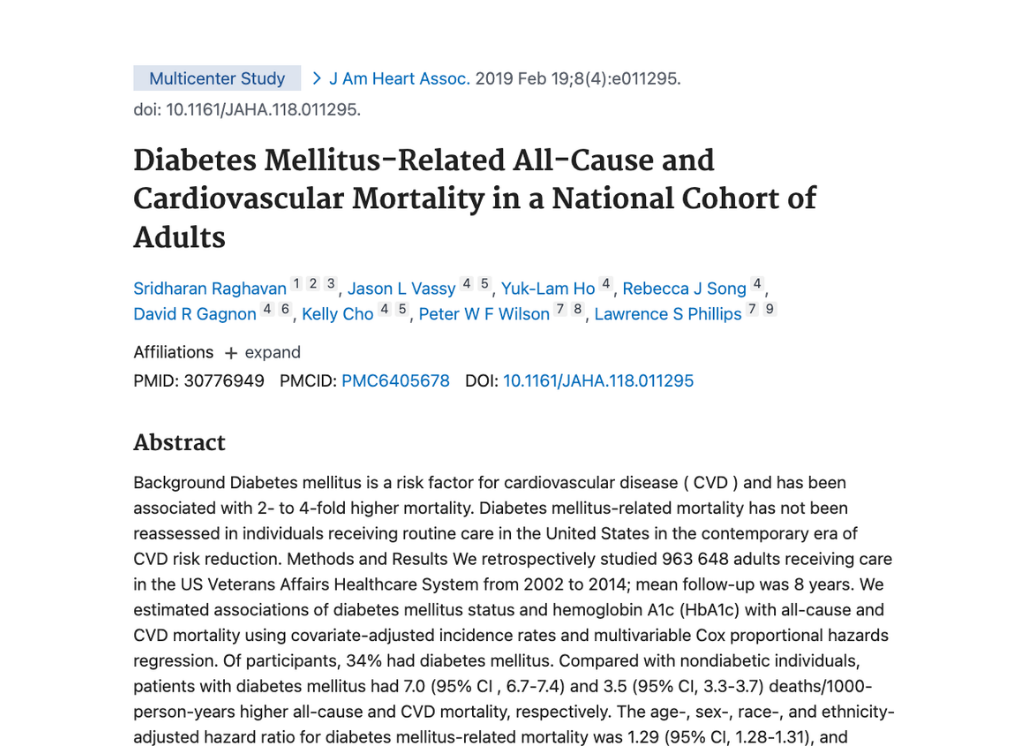
Article Review – Diabetes Mellitus-Related All-Cause and Cardiovascular Mortality in a National Cohort of Adults

Article Review – Diabetes Mellitus-Related All-Cause and Cardiovascular Mortality in a National Cohort of Adults

by Sridharan Raghavan, Jason L Vassy, Yuk-Lam Ho, Rebecca J Song, David R Gagnon, Kelly Cho, Peter W F Wilson, Lawrence S Phillips

This article is part of Opti Metabolics’ ongoing effort to translate complex metabolic research into clear, practical insights for readers without formal scientific or medical training.

Summary -

This national cohort study reveals that diabetes mellitus is significantly associated with increased all-cause and cardiovascular mortality, even after adjusting for other risk factors. The findings emphasize the urgent need for metabolic interventions targeting insulin resistance and glycemic control to reduce premature death and cardiovascular events in diabetic populations.

Key Takeaways Explained for a Non-Medical Audience

– The study followed over 1.5 million U.S. adults receiving care through the Veterans Health Administration.

– Adults with diabetes had a 30–50% higher risk of all-cause mortality compared to those without diabetes.

– Cardiovascular mortality was especially elevated in individuals with diabetes, particularly among younger patients.

– Risk persisted even after adjusting for age, smoking, BMI, blood pressure, cholesterol levels, and kidney function.

– Among individuals under 55 years of age, diabetes was linked to nearly double the risk of cardiovascular death.

– Poor glycemic control (as reflected by higher HbA1c levels) was strongly correlated with increased mortality.

– The presence of additional comorbidities, including chronic kidney disease and hypertension, amplified mortality risk.

– Mortality risks were elevated even in individuals with early-stage or seemingly mild diabetes.

– The study highlighted the importance of early screening and proactive intervention for metabolic disease.

– A dose-response relationship was observed: longer diabetes duration correlated with greater mortality risk.

– Cardiovascular disease remained the leading cause of death among those with diabetes.

– Even modestly elevated fasting glucose or impaired glucose tolerance was associated with increased risk.

– The findings reinforce that diabetes is not a neutral condition and requires aggressive management from the onset.

– Lifestyle modifications, particularly around metabolic control, could substantially reduce mortality in diabetic patients.

– Targeting root causes—such as insulin resistance—offers a more effective strategy than treating downstream complications.


Integrated Insights –

This study powerfully supports the Opti Metabolics framework by showing that insulin resistance and impaired glucose metabolism are central drivers of early mortality. Addressing these imbalances through low-carbohydrate nutrition, stress reduction, and anti-inflammatory strategies aligns directly with preventing long-term complications of diabetes.

Alignment with Broader Review Content –

– The clear association between HbA1c and mortality underscores the importance of glycemic control in all stages of metabolic disease.

– The early onset of risk in younger populations mirrors patterns seen with excessive carbohydrate consumption and seed oil-driven inflammation.

– The findings support a proactive, root-cause-focused approach to metabolic disease, consistent with low-carb, nutrient-dense dietary interventions promoted by Opti Metabolics.

Reviewed and interpreted by the Opti Metabolics editorial team, with a focus on early metabolic risk detection and prevention.

Read the article to learn more: Diabetes Mellitus-Related All-Cause and Cardiovascular Mortality in a National Cohort of Adults

Health & Medical Disclaimer –

Opti Metabolics does not provide medical diagnosis, treatment, or advice. Our program is for educational and informational purposes only and does not represent medical advice or the practice of medicine. These article summaries are intended to help readers understand metabolic health research and emerging scientific findings, but personal health decisions should always be made in consultation with a qualified healthcare provider.

Participants are strongly advised to consult their personal healthcare professional before making any dietary, lifestyle, or medication changes.

x
Opti Metabolics provides informational health insights and does not dispense medical advice, diagnose, treat, or cure any medical conditions. Always consult a qualified healthcare professional before making any health-related decisions.

Contact With Us!

Email: info@optimetabolics.com

Join Opti Metabolics

It’s time to take control of your health.

Eat Like a Human Again

Drop your name and email to receive the eBook that shows how returning to simple, whole foods can restore stable energy, support metabolic health, and help your body function the way it was designed to.
Name

The Fast Track to Frailty

Drop your name and email to receive the guide that helps you understand how GLP-1 weight loss changes your body, and why the scale alone never tells the full story.
Name

Starving for Nothing

Drop your name and email to receive the eBook that shows why “Eat Less, Move More” was never your fault. It was the wrong story, and now you get the right one.
Name