Email: success@optimetabolics.com
This article is part of Opti Metabolics’ ongoing effort to translate complex metabolic research into clear, practical insights for readers without formal scientific or medical training.
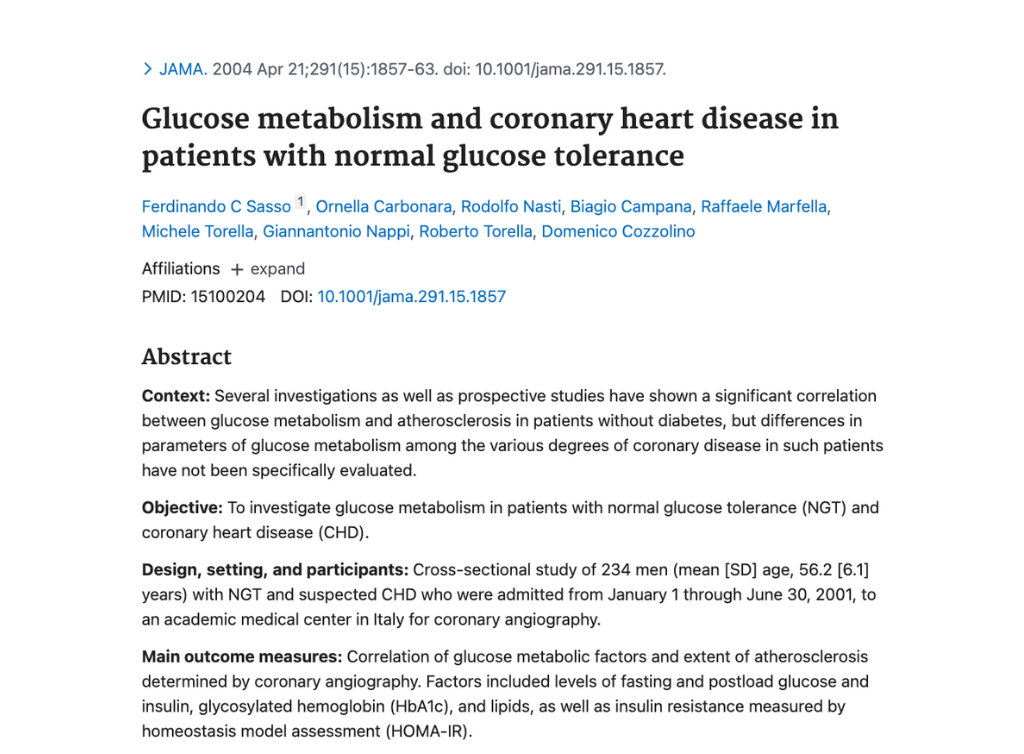
This study investigates the link between glucose metabolism and coronary heart disease (CHD) in individuals who exhibit normal glucose tolerance (NGT) by traditional standards. Despite appearing metabolically healthy by glucose tolerance tests, many of these individuals show impaired insulin sensitivity and hyperinsulinemia, which are significant predictors of cardiovascular risk. The findings emphasize that traditional glucose testing may overlook early metabolic dysfunction that contributes to coronary artery disease.
– Patients with normal glucose tolerance can still have significant impairments in insulin sensitivity.
– Fasting and post-load insulin levels were significantly higher in CHD patients with NGT compared to controls.
– Elevated insulin levels were positively correlated with the severity of coronary artery stenosis.
– Traditional oral glucose tolerance tests may not fully capture underlying insulin resistance in patients.
– Fasting glucose alone is not a reliable marker for assessing cardiovascular risk in NGT individuals.
– Hyperinsulinemia, even in the presence of normal glucose, is independently associated with coronary artery disease
– The study supports the hypothesis that insulin resistance precedes overt hyperglycemia and contributes to atherosclerosis.
– Higher insulin and C-peptide levels suggest a compensatory mechanism due to peripheral insulin resistance.
– The results underscore the need for more sensitive markers of metabolic health beyond glucose levels.
– Individuals classified as “metabolically healthy” by glucose tolerance may still be at high risk for CHD.
– Insulin resistance contributes to endothelial dysfunction, a key mechanism in atherogenesis.
– Elevated insulin may promote vascular smooth muscle proliferation and atherosclerotic plaque development.
– The study adds to the growing evidence that metabolic dysfunction can be present long before diabetes is diagnosed.
– Subclinical metabolic stress, driven by poor insulin signaling, may be an early and under-recognized driver of heart disease.
– Assessment of insulin and C-peptide levels could improve early detection of cardiovascular risk.
This article reinforces a central tenet of Opti Metabolics: that metabolic health cannot be accurately assessed through glucose tolerance alone. Elevated insulin levels and early insulin resistance are powerful, independent drivers of cardiovascular disease and must be addressed proactively, even in individuals not classified as diabetic.
– Insulin resistance can exist in the absence of hyperglycemia and remains a critical driver of chronic diseases including CHD.
– The study supports the importance of tracking fasting insulin, C-peptide, and other early indicators of metabolic dysfunction.
– This research aligns with the Opti Metabolics focus on upstream markers and preventive strategies over reactive diagnostics.
Reviewed and interpreted by the Opti Metabolics editorial team, with a focus on early metabolic risk detection and prevention.
Read the article to learn more: Glucose Metabolism and Coronary Heart Disease in Patients with Normal Glucose Tolerance
Opti Metabolics does not provide medical diagnosis, treatment, or advice. Our program is for educational and informational purposes only and does not represent medical advice or the practice of medicine. These article summaries are intended to help readers understand metabolic health research and emerging scientific findings, but personal health decisions should always be made in consultation with a qualified healthcare provider.
Participants are strongly advised to consult their personal healthcare professional before making any dietary, lifestyle, or medication changes.
Email: info@optimetabolics.com
It’s time to take control of your health.