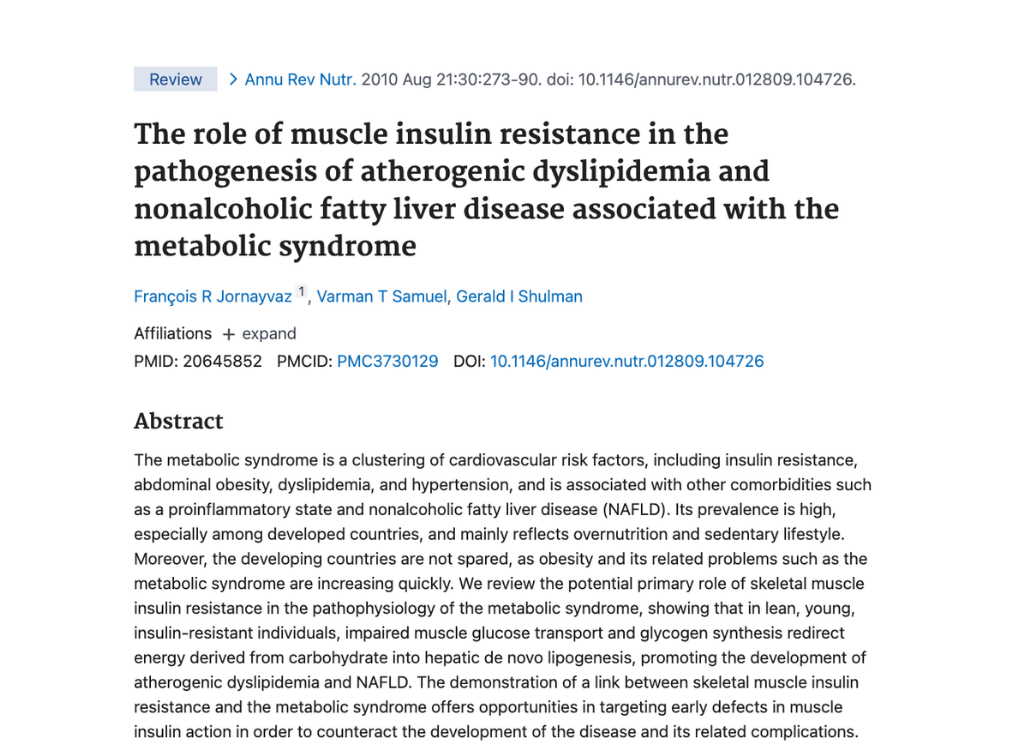
Article Review – The Role of Muscle Insulin Resistance in the Pathogenesis of Atherogenic Dyslipidemia and Nonalcoholic Fatty Liver Disease Associated with the Metabolic Syndrome

Article Review – The Role of Muscle Insulin Resistance in the Pathogenesis of Atherogenic Dyslipidemia and Nonalcoholic Fatty Liver Disease Associated with the Metabolic Syndrome

by François R Jornayvaz, Varman T Samuel, Gerald I Shulman

This article is part of Opti Metabolics’ ongoing effort to translate complex metabolic research into clear, practical insights for readers without formal scientific or medical training.

Summary -

This article explores how muscle insulin resistance serves as a critical early defect leading to the development of atherogenic dyslipidemia and nonalcoholic fatty liver disease (NAFLD) within the context of metabolic syndrome. The findings underscore the importance of targeting insulin resistance and dietary factors to prevent downstream metabolic and cardiovascular complications.

Key Takeaways Explained for a Non-Medical Audience

– Muscle insulin resistance impairs glucose uptake, contributing to systemic hyperglycemia and compensatory hyperinsulinemia.

– Impaired muscle metabolism diverts excess substrates toward hepatic lipid synthesis, promoting NAFLD.

– Increased liver fat accumulation exacerbates insulin resistance and disrupts lipid profiles, elevating cardiovascular risk.

– Elevated circulating free fatty acids from adipose tissue lipolysis further worsen muscle and liver insulin sensitivity.

– Atherogenic dyslipidemia in metabolic syndrome is characterized by high triglycerides, low HDL cholesterol, and small dense LDL particles.

– Excess dietary carbohydrates, particularly refined sugars, drive muscle insulin resistance by increasing glucose and insulin load.

– Omega-6-rich seed oils contribute to inflammation and oxidative stress, aggravating metabolic dysfunction.

– Low-carbohydrate and ketogenic dietary approaches improve muscle insulin sensitivity and reduce hepatic fat accumulation.

– Exercise enhances muscle glucose uptake and mitochondrial function, mitigating insulin resistance.

– Genetic factors influence susceptibility to muscle insulin resistance and NAFLD progression.

– Early interventions targeting muscle insulin sensitivity can prevent progression to type 2 diabetes and cardiovascular disease.

– Natural compounds with anti-inflammatory and antioxidant properties support metabolic recovery.

– Persistent muscle insulin resistance maintains a vicious cycle of metabolic stress and lipid abnormalities.

– Multimodal strategies addressing diet, exercise, and metabolic inflammation are essential for optimal outcomes.

– Monitoring insulin resistance markers can guide personalized treatment and prevention efforts.

Integrated Insights –

This article aligns closely with the Opti Metabolics framework by emphasizing insulin resistance—particularly in muscle tissue—as a root cause of metabolic syndrome components including NAFLD and dyslipidemia. It reinforces the value of dietary carbohydrate restriction and reducing pro-inflammatory omega-6 seed oils to restore metabolic balance and prevent disease progression.

Alignment with Broader Review Content –

– Confirms insulin resistance as a central mechanism linking metabolic dysfunction and chronic disease.

– Highlights the detrimental role of excess carbohydrates and omega-6 fatty acids in promoting inflammation and metabolic stress.

– Supports integrative approaches combining low-carb/ketogenic diets and natural anti-inflammatory nutrients to optimize metabolic health.

Reviewed and interpreted by the Opti Metabolics editorial team, with a focus on early metabolic risk detection and prevention.

Read the article to learn more: The Role of Muscle Insulin Resistance in the Pathogenesis of Atherogenic Dyslipidemia and Nonalcoholic Fatty Liver Disease Associated with the Metabolic Syndrome

Health & Medical Disclaimer –

Opti Metabolics does not provide medical diagnosis, treatment, or advice. Our program is for educational and informational purposes only and does not represent medical advice or the practice of medicine. These article summaries are intended to help readers understand metabolic health research and emerging scientific findings, but personal health decisions should always be made in consultation with a qualified healthcare provider.

Participants are strongly advised to consult their personal healthcare professional before making any dietary, lifestyle, or medication changes.

x
Opti Metabolics provides informational health insights and does not dispense medical advice, diagnose, treat, or cure any medical conditions. Always consult a qualified healthcare professional before making any health-related decisions.

Contact With Us!

Email: info@optimetabolics.com

Join Opti Metabolics

It’s time to take control of your health.

Eat Like a Human Again

Drop your name and email to receive the eBook that shows how returning to simple, whole foods can restore stable energy, support metabolic health, and help your body function the way it was designed to.
Name

The Fast Track to Frailty

Drop your name and email to receive the guide that helps you understand how GLP-1 weight loss changes your body, and why the scale alone never tells the full story.
Name

Starving for Nothing

Drop your name and email to receive the eBook that shows why “Eat Less, Move More” was never your fault. It was the wrong story, and now you get the right one.
Name