Email: success@optimetabolics.com
This article is part of Opti Metabolics’ ongoing effort to translate complex metabolic research into clear, practical insights for readers without formal scientific or medical training.
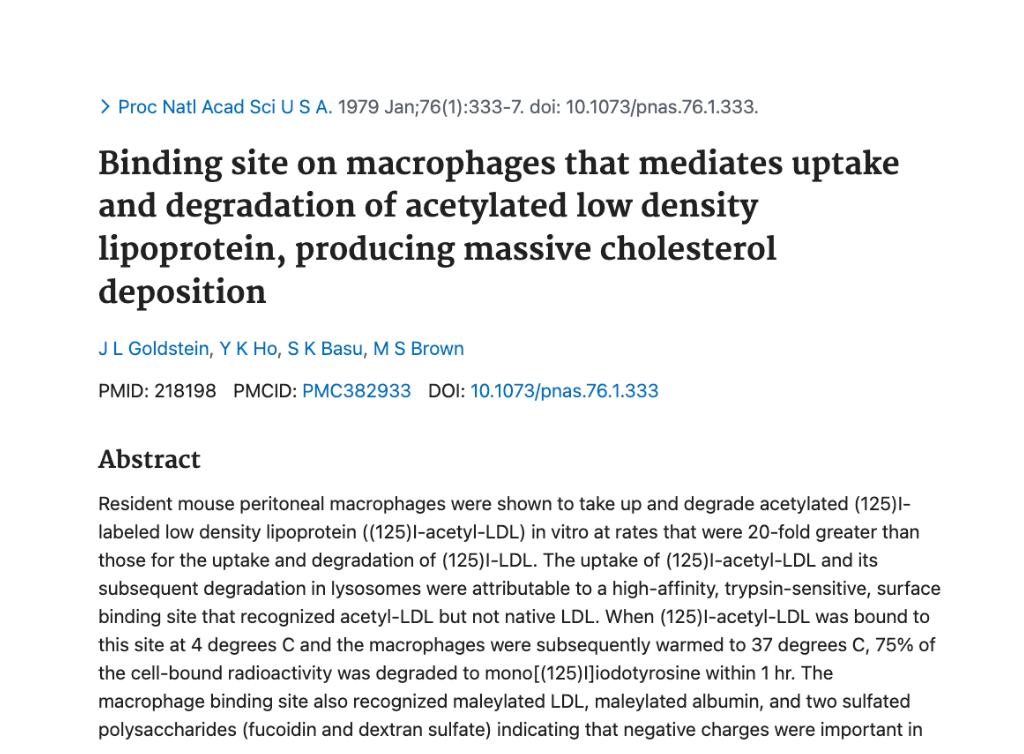
This article explores how macrophages take up and degrade acetylated low-density lipoprotein (LDL) at a significantly higher rate than native LDL, leading to substantial cholesterol accumulation. The findings highlight a high-affinity, trypsin-sensitive macrophage binding site specific to modified LDL, which may contribute to foam cell formation and atherosclerosis. These insights suggest a critical link between modified lipoprotein metabolism and cardiovascular disease risk, emphasizing the importance of managing lipid profiles for metabolic health.
– Resident mouse peritoneal macrophages degrade acetylated LDL at rates 20 times higher than native LDL.
– The uptake of acetylated LDL occurs via a high-affinity, trypsin-sensitive surface binding site on macrophages.
– This binding site specifically recognizes acetylated LDL but not native LDL.
– Acetylated LDL degradation in macrophages results in lysosomal breakdown to monoiodotyrosine within one hour at 37°C.
– The binding site also recognizes maleylated LDL, maleylated albumin, and sulfated polysaccharides like fucoidin and dextran sulfate.
– Negative charges on modified molecules are crucial for binding to the macrophage site.
– Similar binding sites exist in rat peritoneal macrophages, guinea pig Kupffer cells, and human monocytes but not in human lymphocytes or fibroblasts.
– Acetylated LDL uptake stimulates cholesterol esterification in macrophages by 100-fold.
– This process leads to a 38-fold increase in cellular cholesterol content in macrophages.
– The macrophage uptake mechanism may serve as a backup for degrading denatured LDL in the body.
– The pathway could explain cholesterol deposition in macrophages in familial hypercholesterolemia, where native LDL receptor function is impaired.
– The study hypothesizes that this scavenger pathway contributes to foam cell formation in atherosclerosis.
– Macrophage cholesterol accumulation from modified LDL may exacerbate cardiovascular disease risk.
– The findings underscore the role of modified lipoproteins in driving lipid-laden macrophage formation.
The article’s findings align with the Opti Metabolics framework by illustrating how modified lipoproteins, such as acetylated LDL, contribute to metabolic dysregulation through excessive cholesterol accumulation in macrophages, a key step in atherosclerosis. This process underscores the importance of reducing inflammatory and oxidative stressors, such as those from omega-6-rich diets, to mitigate lipid modification and foam cell formation. A low-carbohydrate or ketogenic diet may help manage lipid profiles and reduce the risk of such metabolic disturbances.
– The study supports the notion that insulin resistance and poor metabolic health exacerbate lipid dysregulation, contributing to chronic conditions like atherosclerosis by promoting modified LDL uptake.
– It highlights the role of chronic inflammatory stresses, as modified LDL uptake by macrophages triggers proinflammatory responses linked to cardiovascular disease.
– The findings suggest that lifestyle interventions, such as reducing omega-6 intake and adopting low-carb diets, could mitigate the metabolic stress caused by modified lipoproteins.
Reviewed and interpreted by the Opti Metabolics editorial team, with a focus on early metabolic risk detection and prevention.
Read the article to learn more: Binding Site on Macrophages that Mediates Uptake and Degradation of Acetylated Low Density Lipoprotein, Producing Massive Cholesterol Deposition
Opti Metabolics does not provide medical diagnosis, treatment, or advice. Our program is for educational and informational purposes only and does not represent medical advice or the practice of medicine. These article summaries are intended to help readers understand metabolic health research and emerging scientific findings, but personal health decisions should always be made in consultation with a qualified healthcare provider.
Participants are strongly advised to consult their personal healthcare professional before making any dietary, lifestyle, or medication changes.
Email: info@optimetabolics.com
It’s time to take control of your health.