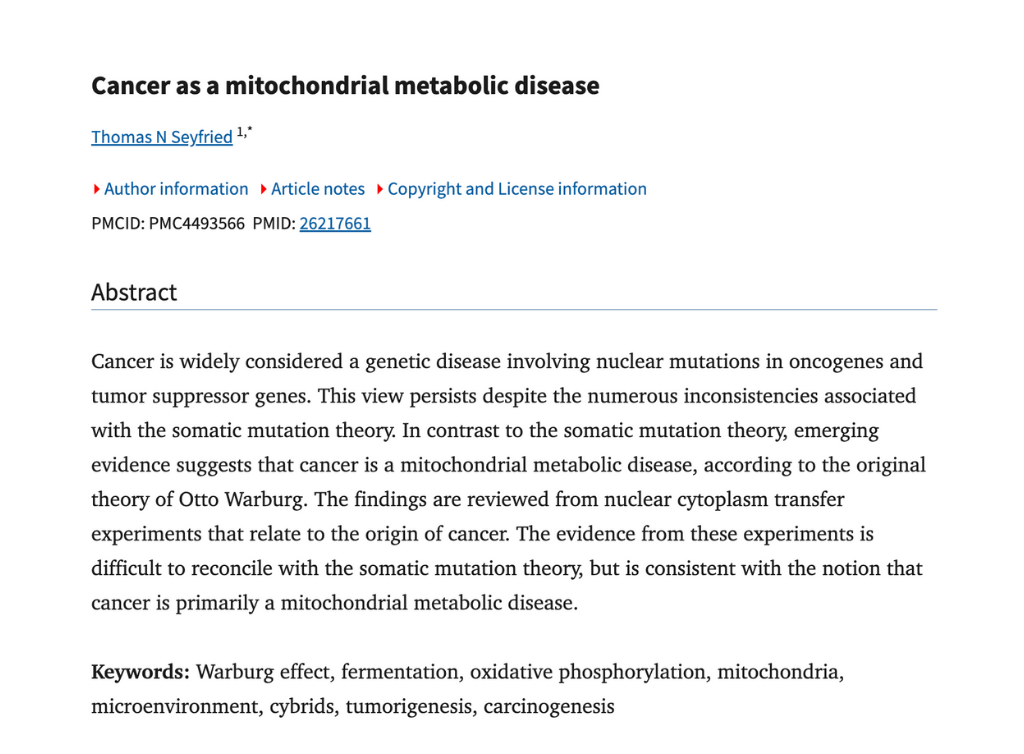
Article Review – Cancer as a Mitochondrial Metabolic Disease

Article Review – Cancer as a Mitochondrial Metabolic Disease

by Thomas N. Seyfried

This article is part of Opti Metabolics’ ongoing effort to translate complex metabolic research into clear, practical insights for readers without formal scientific or medical training.

Summary -

This article proposes that cancer originates from mitochondrial dysfunction, particularly impaired oxidative phosphorylation, leading to reliance on fermentation for energy, which drives tumor growth. It advocates targeting this metabolic defect through ketogenic diets and metabolic therapies to starve cancer cells of glucose while supporting healthy mitochondrial function. These findings underscore the importance of metabolic health in cancer prevention and treatment, aligning with strategies to optimize cellular energy regulation.

Key Takeaways Explained for a Non-Medical Audience

– Cancer is fundamentally a mitochondrial metabolic disease characterized by defective oxidative phosphorylation.  

– Impaired mitochondrial function leads cancer cells to rely on glucose fermentation, even in the presence of oxygen (Warburg effect).  

– Mitochondrial dysfunction results from genetic and environmental factors, including oxidative stress and inflammation.  

– Ketogenic diets, which reduce glucose availability, can exploit cancer cells’ metabolic vulnerabilities.  

– Cancer cells’ dependence on fermentation makes them susceptible to therapies targeting glucose metabolism.  

– Restoring mitochondrial function may suppress tumor growth by reactivating apoptosis pathways.  

– Excessive carbohydrate intake fuels cancer cell proliferation by providing abundant glucose for fermentation.  

– Mitochondrial DNA mutations contribute to the metabolic reprogramming observed in cancer cells.  

– Therapies like hyperbaric oxygen and metabolic inhibitors can enhance mitochondrial function and reduce tumor growth.  

– Chronic inflammation, often linked to poor diet, exacerbates mitochondrial damage and cancer progression.  

– Ketogenic diets increase ketone bodies, which healthy cells can use for energy but cancer cells cannot efficiently metabolize.  

– The article emphasizes that cancer management should focus on metabolic therapies over solely genetic approaches.  

– Environmental toxins and lifestyle factors, such as high omega-6 intake, worsen mitochondrial dysfunction.  

– Combining metabolic therapies with conventional treatments may improve cancer outcomes.  

– Targeting mitochondrial metabolism offers a paradigm shift in understanding and treating cancer.


Integrated Insights –

Seyfried’s work aligns with the Opti Metabolics framework by highlighting mitochondrial health as central to preventing chronic diseases like cancer. Low-carbohydrate or ketogenic diets, as advocated in the article, reduce insulin resistance and glucose-driven metabolic stress, supporting cellular energy efficiency. This approach complements the use of natural, anti-inflammatory dietary strategies to mitigate cancer risk and progression.

Alignment with Broader Review Content –

– The focus on mitochondrial dysfunction as a root cause of cancer supports Opti Metabolics’ emphasis on cellular energy regulation to prevent chronic diseases.  

– Advocating ketogenic diets aligns with reducing carbohydrate-driven insulin resistance, a key factor in metabolic health.  

– The article’s recognition of inflammation and oxidative stress as contributors to cancer connects to the broader goal of minimizing chronic inflammatory stresses through diet and lifestyle.

Reviewed and interpreted by the Opti Metabolics editorial team, with a focus on early metabolic risk detection and prevention.

Read the article to learn more: Cancer as a Mitochondrial Metabolic Disease

Health & Medical Disclaimer –

Opti Metabolics does not provide medical diagnosis, treatment, or advice. Our program is for educational and informational purposes only and does not represent medical advice or the practice of medicine. These article summaries are intended to help readers understand metabolic health research and emerging scientific findings, but personal health decisions should always be made in consultation with a qualified healthcare provider.

Participants are strongly advised to consult their personal healthcare professional before making any dietary, lifestyle, or medication changes.

x
Opti Metabolics provides informational health insights and does not dispense medical advice, diagnose, treat, or cure any medical conditions. Always consult a qualified healthcare professional before making any health-related decisions.

Contact With Us!

Email: info@optimetabolics.com

Join Opti Metabolics

It’s time to take control of your health.

Eat Like a Human Again

Drop your name and email to receive the eBook that shows how returning to simple, whole foods can restore stable energy, support metabolic health, and help your body function the way it was designed to.
Name

The Fast Track to Frailty

Drop your name and email to receive the guide that helps you understand how GLP-1 weight loss changes your body, and why the scale alone never tells the full story.
Name

Starving for Nothing

Drop your name and email to receive the eBook that shows why “Eat Less, Move More” was never your fault. It was the wrong story, and now you get the right one.
Name