Email: success@optimetabolics.com
This article is part of Opti Metabolics’ ongoing effort to translate complex metabolic research into clear, practical insights for readers without formal scientific or medical training.
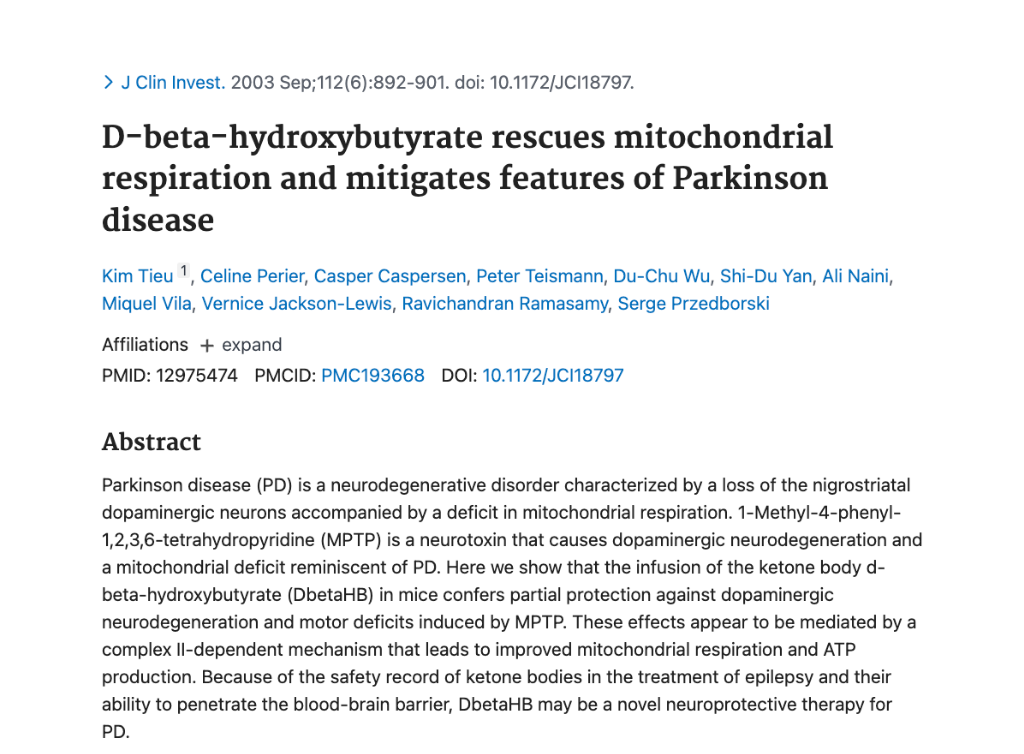
This study demonstrates that D-beta-hydroxybutyrate (D-BHB), a key ketone body, can restore impaired mitochondrial respiration and reduce neurodegeneration in models of Parkinson’s disease. The findings support the use of ketone-based therapies as a strategy to enhance cellular energy metabolism and reduce oxidative stress in neurodegenerative conditions.
– Parkinson’s disease is characterized by mitochondrial dysfunction, oxidative stress, and neuronal loss in the substantia nigra region of the brain.
– D-BHB significantly improved mitochondrial respiration and ATP production in Parkinson’s disease models, indicating restored energy metabolism.
– The compound reduced oxidative damage by decreasing the generation of reactive oxygen species (ROS), a key driver of neurodegeneration.
– D-BHB activated the expression of genes involved in mitochondrial biogenesis and energy homeostasis, such as PGC-1α.
– In animal models, D-BHB treatment protected dopaminergic neurons from degeneration and preserved motor function.
– The ketone body reduced markers of neuroinflammation, such as activated microglia and inflammatory cytokines, commonly elevated in Parkinson’s pathology.
– Treatment also modulated the activity of mitochondrial complex I, which is known to be impaired in Parkinson’s disease.
– D-BHB crosses the blood-brain barrier efficiently, allowing it to serve as a direct energy substrate for brain cells.
– The neuroprotective effects of D-BHB occurred independently of insulin, highlighting its potential benefit in insulin-resistant individuals.
– The study supports the idea that alternative metabolic fuels can bypass damaged glucose pathways in neurodegenerative diseases.
– Ketone therapy may offer a non-pharmacological intervention to delay disease progression and support brain energy balance.
– These findings reinforce the concept of Parkinson’s as a condition with strong metabolic underpinnings, including impaired cellular energy dynamics.
– D-BHB also reduced cell death and increased mitochondrial membrane potential, further indicating enhanced mitochondrial integrity.
– The therapeutic effects observed were not linked to increased oxidative burden, countering concerns about elevated ketone metabolism in vulnerable neurons.
– This study suggests that ketone supplementation could complement dietary and lifestyle strategies aimed at restoring metabolic health.
This article strongly aligns with the Opti Metabolics framework by illustrating how metabolic therapies like ketones can improve mitochondrial function, reduce oxidative stress, and preserve neurological function in degenerative diseases. These benefits are especially relevant in individuals with underlying insulin resistance or compromised glucose metabolism.
– Confirms the neuroprotective potential of ketone metabolism in conditions marked by mitochondrial dysfunction and glucose impairment.
– Reinforces the role of ketogenic or low-carbohydrate interventions in restoring energy balance and reducing inflammation.
– Validates the use of natural, non-drug interventions that bypass insulin-dependent glucose pathways and improve metabolic resilience.
Reviewed and interpreted by the Opti Metabolics editorial team, with a focus on early metabolic risk detection and prevention.
Read the article to learn more: D-beta-hydroxybutyrate Rescues Mitochondrial Respiration and Mitigates Features of Parkinson Disease
Opti Metabolics does not provide medical diagnosis, treatment, or advice. Our program is for educational and informational purposes only and does not represent medical advice or the practice of medicine. These article summaries are intended to help readers understand metabolic health research and emerging scientific findings, but personal health decisions should always be made in consultation with a qualified healthcare provider.
Participants are strongly advised to consult their personal healthcare professional before making any dietary, lifestyle, or medication changes.
Email: info@optimetabolics.com
It’s time to take control of your health.