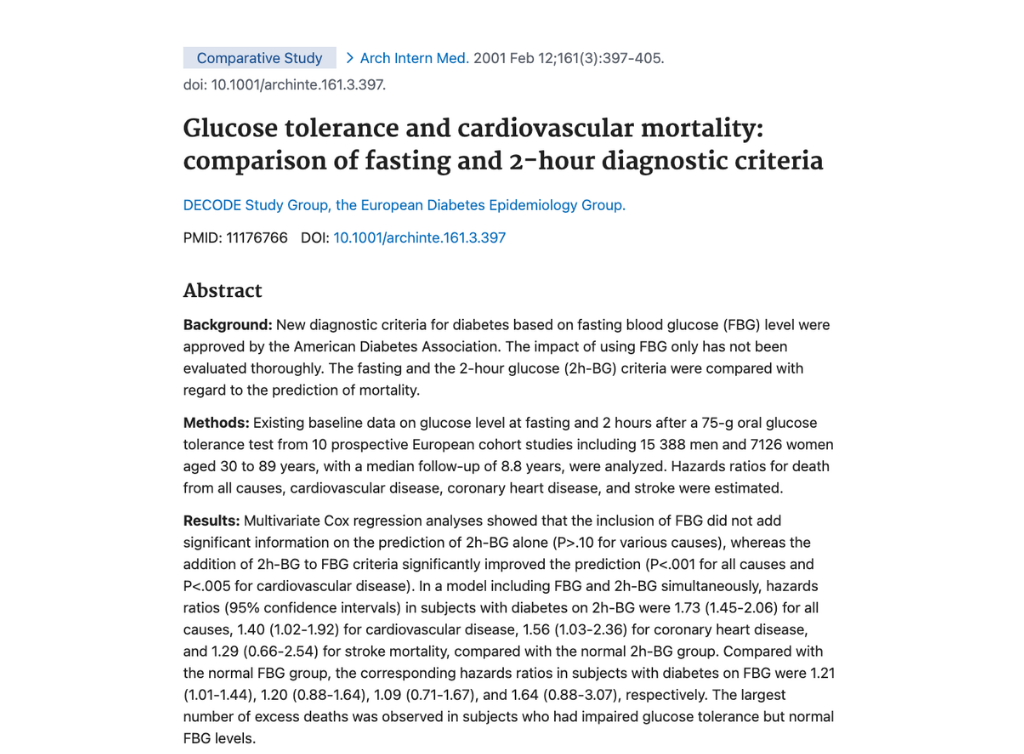
Article Review – Glucose Tolerance and Cardiovascular Mortality

Article Review – Glucose Tolerance and Cardiovascular Mortality

by DECODE Study Group; on behalf of the European Diabetes Epidemiology Group

This article is part of Opti Metabolics’ ongoing effort to translate complex metabolic research into clear, practical insights for readers without formal scientific or medical training.

Summary -

This landmark study demonstrates that even mild impairments in glucose tolerance—below the threshold for diabetes diagnosis—are associated with significantly increased cardiovascular mortality. It underscores the importance of recognizing and addressing insulin resistance and postprandial hyperglycemia as major drivers of heart disease risk, even in individuals without diagnosed diabetes.

Key Takeaways Explained for a Non-Medical Audience

– Cardiovascular mortality increases progressively with worsening glucose tolerance, even within the non-diabetic range.

– Individuals with impaired glucose tolerance (IGT) had significantly higher rates of cardiovascular death than those with normal glucose regulation.

– The 2-hour post-load glucose level during an oral glucose tolerance test (OGTT) was a stronger predictor of cardiovascular mortality than fasting glucose.

– Postprandial hyperglycemia is a more sensitive marker of cardiovascular risk than fasting glucose alone.

– The relationship between glucose tolerance and mortality was independent of age, sex, body mass index, and blood pressure.

– The study included a large cohort across multiple European countries, enhancing generalizability of findings.

– Even in the absence of diagnosed diabetes, metabolic dysfunction can lead to significant vascular damage over time.

– Early identification of impaired glucose tolerance may provide an opportunity for preventative intervention to reduce cardiovascular risk.

– Lifestyle interventions that target post-meal glucose spikes are critical in populations at risk.

– The findings challenge the traditional reliance on fasting glucose as the primary screening tool for metabolic health.

– There is a need to reassess clinical thresholds for glucose regulation to reflect the continuum of risk.

– Cardiovascular risk stratification should include dynamic measures of glucose metabolism.

– Chronic low-grade inflammation and oxidative stress likely mediate the vascular damage observed in individuals with IGT.

– Addressing insulin resistance through dietary and lifestyle modification can reduce both glucose excursions and associated cardiovascular risk.

– Glucose intolerance serves as a surrogate marker of underlying metabolic inflexibility and impaired mitochondrial function.


Integrated Insights –

This article reinforces the Opti Metabolics philosophy that metabolic dysfunction exists on a continuum, with insulin resistance and postprandial hyperglycemia driving early cardiovascular risk well before the onset of diabetes. Lifestyle and nutritional strategies that reduce carbohydrate load and improve insulin sensitivity can meaningfully lower this risk trajectory.

Alignment with Broader Review Content –

– Elevated glucose levels after meals are a clear sign of insulin resistance and metabolic inflexibility, often missed by fasting metrics alone.

– Low-carbohydrate and ketogenic dietary approaches can reduce postprandial glucose spikes and restore glycemic control.

– Omega-6-rich seed oils and processed foods may aggravate metabolic stress and contribute to cardiovascular pathology in those with impaired glucose regulation.

Reviewed and interpreted by the Opti Metabolics editorial team, with a focus on early metabolic risk detection and prevention.

Read the article to learn more: Glucose Tolerance and Cardiovascular Mortality

Health & Medical Disclaimer –

Opti Metabolics does not provide medical diagnosis, treatment, or advice. Our program is for educational and informational purposes only and does not represent medical advice or the practice of medicine. These article summaries are intended to help readers understand metabolic health research and emerging scientific findings, but personal health decisions should always be made in consultation with a qualified healthcare provider.

Participants are strongly advised to consult their personal healthcare professional before making any dietary, lifestyle, or medication changes.

x
Opti Metabolics provides informational health insights and does not dispense medical advice, diagnose, treat, or cure any medical conditions. Always consult a qualified healthcare professional before making any health-related decisions.

Contact With Us!

Email: info@optimetabolics.com

Join Opti Metabolics

It’s time to take control of your health.

Eat Like a Human Again

Drop your name and email to receive the eBook that shows how returning to simple, whole foods can restore stable energy, support metabolic health, and help your body function the way it was designed to.
Name

The Fast Track to Frailty

Drop your name and email to receive the guide that helps you understand how GLP-1 weight loss changes your body, and why the scale alone never tells the full story.
Name

Starving for Nothing

Drop your name and email to receive the eBook that shows why “Eat Less, Move More” was never your fault. It was the wrong story, and now you get the right one.
Name