Email: success@optimetabolics.com
This article is part of Opti Metabolics’ ongoing effort to translate complex metabolic research into clear, practical insights for readers without formal scientific or medical training.
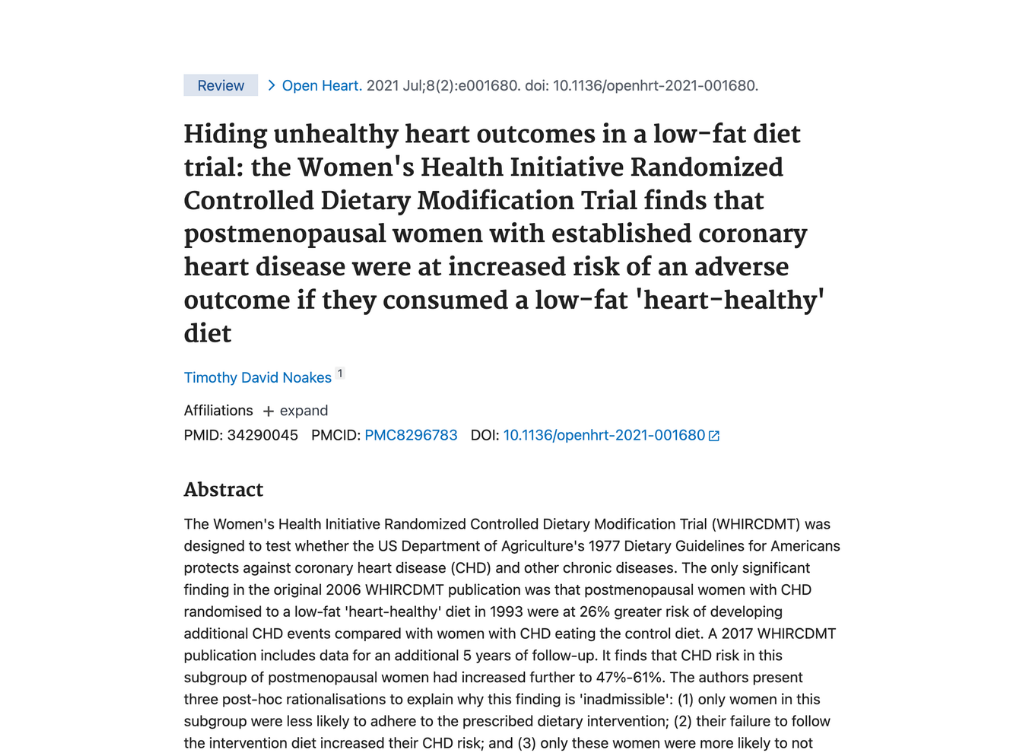
The article critiques the Women’s Health Initiative Randomized Controlled Dietary Modification Trial for downplaying evidence that a low-fat, high-carbohydrate diet increased the risk of additional coronary heart disease events by 26% to 61% in postmenopausal women with pre-existing CHD, attributing this to the diet’s exacerbation of insulin resistance. This finding challenges the safety of traditional low-fat dietary guidelines and underscores how replacing fats with carbohydrates can impair metabolic health in vulnerable populations. For prevention, it implies a need to prioritize low-carbohydrate or ketogenic diets to better manage blood sugar, reduce inflammation, and support overall metabolic resilience.
– The WHIRCDMT tested the 1977 Dietary Guidelines for Americans, promoting a low-fat diet replaced by carbohydrates from grains, fruits, and vegetables.
– Postmenopausal women with established CHD randomized to the low-fat intervention diet in 1993 showed a 26% greater risk of additional CHD events in the 2006 analysis.
– A 2017 follow-up extended this increased risk to 47%-61% for women with pre-existing CHD on the intervention diet.
– The original authors dismissed these adverse findings with three post-hoc rationalizations, including non-compliance, references to unrelated trials, and alleged differences in statin use.
– These rationalizations are critiqued as spurious and inadmissible in an intention-to-treat trial design.
– The increased CHD risk is likely due to the high-carbohydrate content of the low-fat diet worsening outcomes in insulin-resistant postmenopausal women over 13 years.
– The trial cost $415 million and involved 48,835 postmenopausal women, with the intervention group receiving intensive behavioral modification sessions.
– No significant benefits were found for preventing breast or colorectal cancer, and only marginal weight loss (0.4 kg) was observed.
– Women with type 2 diabetes at baseline experienced worsened glucose control within the first year on the low-fat diet.
– Statin use in the trial increased the risk of type 2 diabetes by 49%, higher than reported in prior meta-analyses.
– Healthy women without CHD or hypertension saw a small reduction in CHD risk but an increased stroke risk on the low-fat diet.
– The 2019 publication excluded women with CHD to report benefits in other outcomes, potentially biasing the interpretation.
– Data showed equivalent statin use between intervention and control groups among women with CHD, contradicting one rationalization.
– The Women’s Health Study identified type 2 diabetes (10.71-fold risk) and metabolic syndrome (6.09-fold risk) as stronger predictors of CHD than LDL-cholesterol (1.38-fold risk).
– The Lipoprotein Insulin Resistance score was a significant predictor of CHD risk (6.40-fold increased risk), supporting the role of insulin resistance.
This article directly supports the Opti Metabolics framework by illustrating how low-fat, high-carbohydrate diets can drive insulin resistance and metabolic dysfunction, leading to heightened chronic disease risks like CHD. It aligns with Purple Zone principles of achieving metabolic balance through reduced carbohydrate intake to mitigate inflammation and oxidative stress. Overall, the findings reinforce the value of ketogenic or low-carbohydrate strategies for optimizing energy management and preventing adverse health outcomes in at-risk individuals.
– Complements studies showing low-fat diets often fail to improve long-term metabolic markers, emphasizing instead the benefits of fat-inclusive, carbohydrate-restricted approaches for heart health.
– Echoes evidence linking excessive carbohydrate consumption to insulin resistance as a root cause of cardiovascular diseases, consistent with reviews on metabolic syndrome and diabetes.
– Supports critiques of seed oil-heavy or processed low-fat foods that promote inflammation, advocating for natural, whole-food-based low-carb diets to address underlying metabolic stresses.
Reviewed and interpreted by the Opti Metabolics editorial team, with a focus on early metabolic risk detection and prevention.
Opti Metabolics does not provide medical diagnosis, treatment, or advice. Our program is for educational and informational purposes only and does not represent medical advice or the practice of medicine. These article summaries are intended to help readers understand metabolic health research and emerging scientific findings, but personal health decisions should always be made in consultation with a qualified healthcare provider.
Participants are strongly advised to consult their personal healthcare professional before making any dietary, lifestyle, or medication changes.
Tags:
Email: info@optimetabolics.com
It’s time to take control of your health.