Email: success@optimetabolics.com
This article is part of Opti Metabolics’ ongoing effort to translate complex metabolic research into clear, practical insights for readers without formal scientific or medical training.
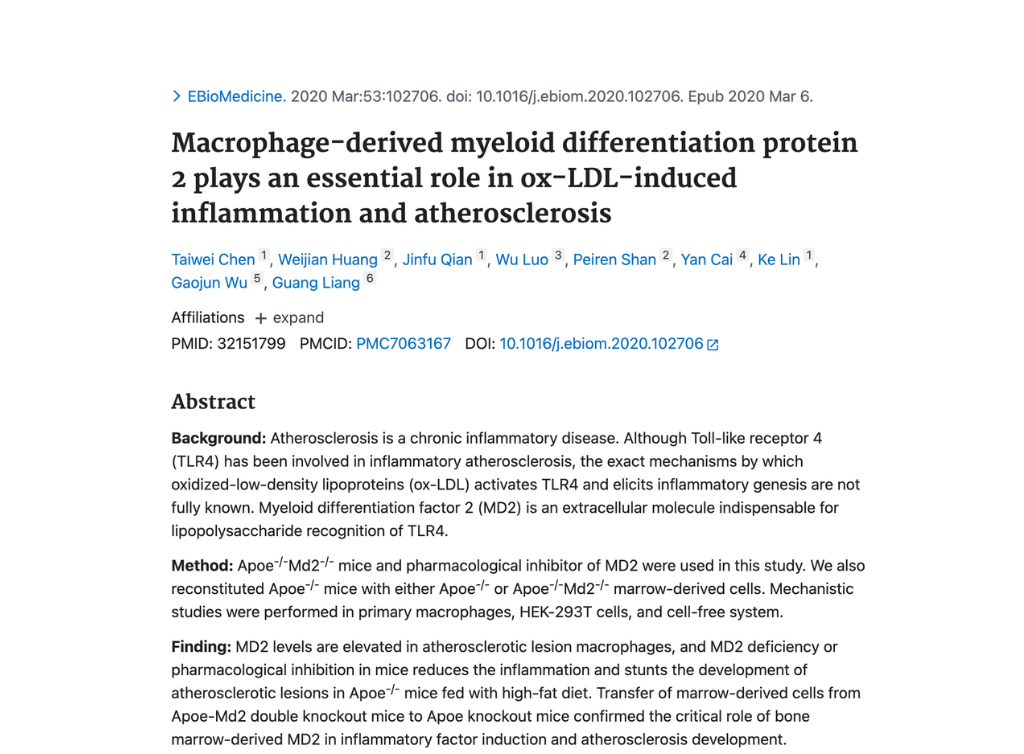
This article demonstrates that myeloid differentiation factor 2 (MD2) is crucial for oxidized low-density lipoprotein (ox-LDL)-induced activation of Toll-like receptor 4 (TLR4) in macrophages, leading to inflammation and the progression of atherosclerosis. By directly binding to ox-LDL, MD2 triggers a pro-inflammatory cascade without affecting lipid uptake, highlighting a key mechanism in chronic inflammatory cardiovascular disease. For metabolic health and prevention, these findings underscore the importance of reducing oxidative stress and inflammation through lifestyle interventions, such as low-carbohydrate diets, to mitigate insulin resistance and related conditions like heart disease.
– Atherosclerosis is a chronic inflammatory disease involving TLR4, with unclear mechanisms for ox-LDL activation of TLR4.
– MD2 is an extracellular molecule essential for lipopolysaccharide recognition by TLR4 and is implicated in ox-LDL-induced inflammation.
– MD2 levels are elevated in macrophages within atherosclerotic lesions.
– MD2 deficiency in Apoe −/− mice fed a high-fat diet reduces inflammation and stunts atherosclerotic lesion development.
– Pharmacological inhibition of MD2 also reduces inflammation and atherosclerosis in Apoe −/− mice.
– Transfer of marrow-derived cells from Apoe-Md2 double knockout mice to Apoe knockout mice demonstrates the critical role of bone marrow-derived MD2 in inflammation and atherosclerosis.
– MD2 does not affect ox-LDL uptake by macrophages but is necessary for TLR4 activation.
– MD2 directly binds to ox-LDL, triggering the formation of the MD2/TLR4 complex.
– The MD2/TLR4 interaction activates the TLR4-MyD88-NFκB pro-inflammatory cascade, contributing to inflammation.
– These mechanisms provide a basis for ox-LDL-induced macrophage inflammation and support targeting MD2 for atherosclerosis-driven cardiovascular diseases.
– Elevated MD2 in lesions suggests a macrophage-specific role in disease progression.
– Bone marrow-derived MD2 is essential for inflammatory factor induction in atherosclerosis models.
– The study used primary macrophages and cell-free systems to confirm direct MD2-ox-LDL binding.
– MD2 inhibition offers therapeutic potential without altering lipid metabolism directly.
– Findings link oxidative lipid modifications to innate immune activation in metabolic disorders.
This article aligns with the Opti Metabolics framework by illustrating how oxidative stress from ox-LDL fuels inflammation via MD2-TLR4 pathways, exacerbating insulin resistance and metabolic dysfunction. Low-carbohydrate or ketogenic diets, central to Opti Metabolics, can reduce carbohydrate-driven lipid oxidation and inflammation, potentially lowering MD2-mediated risks. By emphasizing natural, anti-inflammatory strategies, it supports preventing atherosclerosis through improved metabolic health rather than solely pharmacological means.
– Reinforces the role of oxidative stress in driving inflammation, connecting to markers like OxLDL and contributing to ASCVD/heart disease.
– Highlights chronic inflammatory stresses as underlying factors in metabolic diseases, similar to patterns seen in insulin resistance and non-alcoholic fatty liver disease.
– Supports the mitigation of lipid-induced inflammation through lifestyle interventions, aligning with avoidance of omega-6-rich oils and promotion of low-carb diets.
Reviewed and interpreted by the Opti Metabolics editorial team, with a focus on early metabolic risk detection and prevention.
Read the article to learn more: Macrophage-Derived Myeloid Differentiation Protein 2 Plays an Essential Role in ox-LDL-Induced Inflammation and Atherosclerosis
Opti Metabolics does not provide medical diagnosis, treatment, or advice. Our program is for educational and informational purposes only and does not represent medical advice or the practice of medicine. These article summaries are intended to help readers understand metabolic health research and emerging scientific findings, but personal health decisions should always be made in consultation with a qualified healthcare provider.
Participants are strongly advised to consult their personal healthcare professional before making any dietary, lifestyle, or medication changes.
Email: info@optimetabolics.com
It’s time to take control of your health.