Email: success@optimetabolics.com
This article is part of Opti Metabolics’ ongoing effort to translate complex metabolic research into clear, practical insights for readers without formal scientific or medical training.
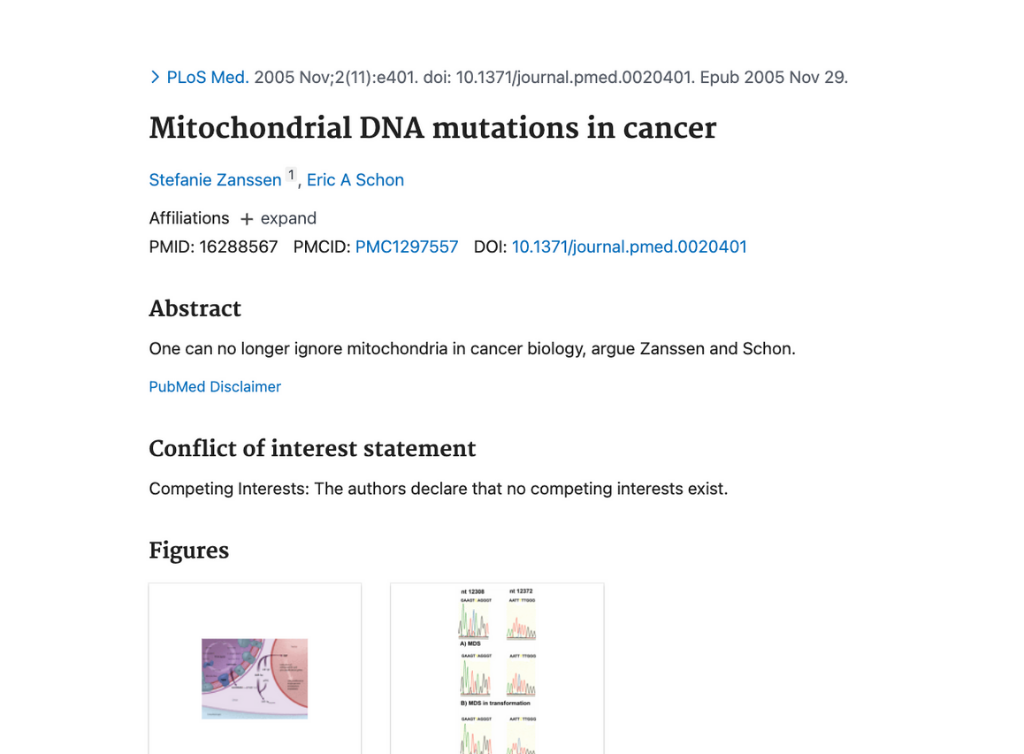
This article explores the role of mitochondrial DNA (mtDNA) mutations in cancer, highlighting their contribution to altered cellular metabolism and tumorigenesis. The authors argue that mtDNA mutations disrupt mitochondrial function, potentially driving cancer development through metabolic shifts and increased oxidative stress, which aligns with the need to address metabolic health for disease prevention.
– Mitochondria are critical for cellular energy production through oxidative phosphorylation, but mtDNA mutations can impair this process.
– Otto Warburg’s 1956 hypothesis suggested cancer arises from altered mitochondrial metabolism, a theory gaining renewed attention.
– mtDNA mutations are prevalent in various cancers, including renal, colorectal, and glioblastoma multiforme.
– These mutations can lead to homoplasmy (all mtDNA copies mutated) or heteroplasmy (mixed mutant and wild-type mtDNA), affecting cancer progression.
– Mutations in mtDNA may disrupt the tricarboxylic acid (TCA) cycle, leading to succinate accumulation and oncogenesis.
– Succinate dehydrogenase (SDH) deficiency, caused by mtDNA mutations, is linked to tumor formation via metabolic dysregulation.
– mtDNA mutations may promote tumorigenesis through pathways involving hypoxia-inducible factor (HIF) and reactive oxygen species (ROS).
– The article cites evidence of mtDNA mutations in myelodysplastic syndromes (MDS) and acute leukemia, indicating disease-specific patterns.
– Specific mtDNA mutations, like C12308T and T12372C, alter European mitochondrial haplotype U, potentially influencing cancer risk.
– Renal oncocytomas with mtDNA mutations often show chromosomal rearrangements near CCND1, suggesting a genetic link to cancer.
– The high mutation rate of mtDNA, compared to nuclear DNA, is due to less efficient repair mechanisms and ROS exposure.
– mtDNA mutations may serve as biomarkers for early cancer detection or monitoring disease progression.
– The article suggests targeting mitochondrial metabolism, such as HIF pathways, could lead to novel cancer therapies.
– The authors emphasize the need for further research to confirm the causal role of mtDNA mutations in cancer development.
The article underscores the link between mtDNA mutations and metabolic dysfunction, which aligns with the Opti Metabolics framework emphasizing the role of metabolic health in preventing chronic diseases like cancer. By disrupting energy production and increasing oxidative stress, mtDNA mutations contribute to insulin resistance and inflammatory pathways, key drivers of metabolic disease. Addressing these through low-carbohydrate or ketogenic diets may mitigate the metabolic stress linked to cancer progression.
– mtDNA mutations contribute to oxidative stress, a key factor in chronic inflammatory stresses that exacerbate metabolic diseases like cancer.
– Metabolic shifts caused by mtDNA mutations, such as increased glycolysis, parallel insulin resistance and metabolic dysregulation seen in diabetes and cancer.
– The potential of ketogenic or low-carb diets to stabilize mitochondrial function and reduce oxidative stress aligns with proposed strategies to target mitochondrial metabolism in cancer.
Reviewed and interpreted by the Opti Metabolics editorial team, with a focus on early metabolic risk detection and prevention.
Read the article to learn more: Mitochondrial DNA Mutations in Cancer
Opti Metabolics does not provide medical diagnosis, treatment, or advice. Our program is for educational and informational purposes only and does not represent medical advice or the practice of medicine. These article summaries are intended to help readers understand metabolic health research and emerging scientific findings, but personal health decisions should always be made in consultation with a qualified healthcare provider.
Participants are strongly advised to consult their personal healthcare professional before making any dietary, lifestyle, or medication changes.
Email: info@optimetabolics.com
It’s time to take control of your health.