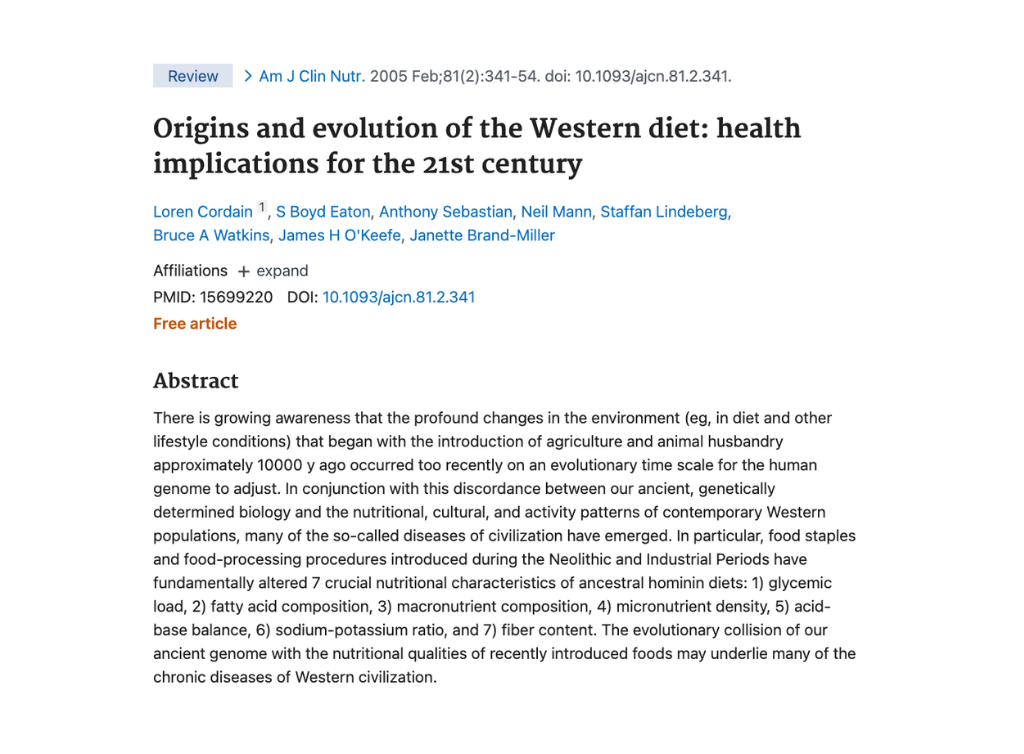
Article Review – Origins and Evolution of the Western Diet: Health Implications for the 21st Century

Article Review – Origins and Evolution of the Western Diet: Health Implications for the 21st Century

by Loren Cordain, S Boyd Eaton, Anthony Sebastian, Neil Mann, Staffan Lindeberg, Bruce A Watkins, James H O’Keefe, Janette Brand-Miller

This article is part of Opti Metabolics’ ongoing effort to translate complex metabolic research into clear, practical insights for readers without formal scientific or medical training.

Summary -

The article examines how the Western diet, shaped by agriculture and industrialization, diverges from ancestral human diets, contributing to chronic diseases like diabetes, heart disease, and cancer due to evolutionary discordance with our genetic makeup. It highlights seven key nutritional shifts—high glycemic load, altered fatty acid profiles, imbalanced macronutrients, reduced micronutrient density, disrupted acid-base balance, high sodium-potassium ratios, and low fiber content—that drive metabolic dysfunction and inflammation. Adopting dietary patterns closer to those of hunter-gatherers may mitigate these health risks.

Key Takeaways Explained for a Non-Medical Audience

– The Western diet emerged with agriculture around 10,000 years ago, introducing foods that the human genome has not fully adapted to.

– Modern diets have higher glycemic loads due to refined carbohydrates, contributing to insulin resistance and related diseases.

– The shift from omega-3 to omega-6 fatty acids in Western diets promotes inflammation and metabolic stress.

– Ancestral diets had higher protein and lower carbohydrate content, contrasting with the high-carb, low-protein modern diet.

– Micronutrient density has decreased in Western diets, reducing essential vitamins and minerals critical for metabolic health.

– The acid-base balance in modern diets is skewed toward acidity, potentially exacerbating chronic disease risk.

– High sodium and low potassium intake in Western diets disrupts electrolyte balance, linked to hypertension and cardiovascular issues.

– Low fiber intake in modern diets impairs gut health and glucose regulation, unlike fiber-rich ancestral diets.

– Hunter-gatherer diets relied heavily on animal foods (45–65% of energy), providing balanced macronutrients.

– Chronic diseases like obesity, type 2 diabetes, and cardiovascular disease are rare in populations adhering to traditional diets.

– Neolithic and Industrial food processing introduced staples like refined grains and sugars, altering nutritional profiles.

– The article suggests that mimicking Paleolithic dietary patterns could reduce the incidence of diseases of civilization.

– Evolutionary discordance between modern diets and human biology underlies many metabolic and inflammatory conditions.

– The high omega-6 to omega-3 ratio in Western diets, around 10:1, contrasts with the 1:1 ratio of ancestral diets.


Integrated Insights –

The article aligns with the Opti Metabolics framework by emphasizing how modern dietary patterns, particularly high carbohydrate and omega-6 intake, drive insulin resistance and inflammation, key contributors to chronic diseases. It supports the use of low-carbohydrate, nutrient-dense diets to restore metabolic balance, mirroring ancestral eating patterns. This evolutionary perspective reinforces the importance of addressing metabolic health through dietary interventions that reduce glycemic load and inflammatory stressors.

Alignment with Broader Review Content –

– The article’s focus on insulin resistance from high glycemic load aligns with Opti Metabolics’ emphasis on low-carb diets to improve glucose regulation and metabolic health.

– The discussion of omega-6 dominance and inflammation supports the need for balanced fatty acid profiles, consistent with Opti Metabolics’ advocacy for reducing seed oils.

– The emphasis on nutrient-dense, whole foods in ancestral diets complements the Purple Zone’s promotion of natural, unprocessed ingredients to optimize health.

Reviewed and interpreted by the Opti Metabolics editorial team, with a focus on early metabolic risk detection and prevention.

Read the article to learn more: Origins and Evolution of the Western Diet: Health Implications for the 21st Century

Health & Medical Disclaimer –

Opti Metabolics does not provide medical diagnosis, treatment, or advice. Our program is for educational and informational purposes only and does not represent medical advice or the practice of medicine. These article summaries are intended to help readers understand metabolic health research and emerging scientific findings, but personal health decisions should always be made in consultation with a qualified healthcare provider.

Participants are strongly advised to consult their personal healthcare professional before making any dietary, lifestyle, or medication changes.

x
Opti Metabolics provides informational health insights and does not dispense medical advice, diagnose, treat, or cure any medical conditions. Always consult a qualified healthcare professional before making any health-related decisions.

Contact With Us!

Email: info@optimetabolics.com

Join Opti Metabolics

It’s time to take control of your health.

Eat Like a Human Again

Drop your name and email to receive the eBook that shows how returning to simple, whole foods can restore stable energy, support metabolic health, and help your body function the way it was designed to.
Name

The Fast Track to Frailty

Drop your name and email to receive the guide that helps you understand how GLP-1 weight loss changes your body, and why the scale alone never tells the full story.
Name

Starving for Nothing

Drop your name and email to receive the eBook that shows why “Eat Less, Move More” was never your fault. It was the wrong story, and now you get the right one.
Name