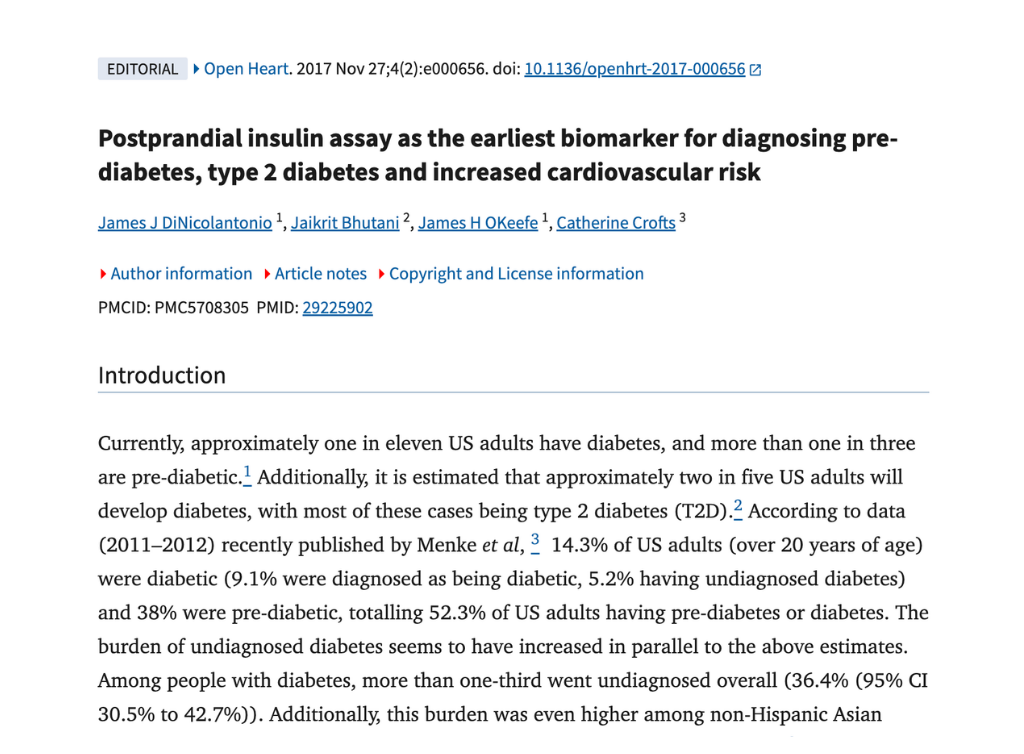
Article Review – Postprandial Insulin Assay as the Earliest Biomarker for Diagnosing Pre-Diabetes, Type 2 Diabetes and Increased Cardiovascular Risk

Article Review – Postprandial Insulin Assay as the Earliest Biomarker for Diagnosing Pre-Diabetes, Type 2 Diabetes and Increased Cardiovascular Risk

by James J DiNicolantonio, Jaikrit Bhutani, James H OKeefe, Catherine Crofts

This article is part of Opti Metabolics’ ongoing effort to translate complex metabolic research into clear, practical insights for readers without formal scientific or medical training.

Summary -

This editorial argues that measuring insulin levels after a glucose load (postprandial insulin) is a more sensitive early indicator of pre‑diabetes, type 2 diabetes, and cardiovascular risk than standard tests like fasting glucose, OGTT, or HbA1c. Early detection via insulin assays may offer critical opportunities to intervene before overt hyperglycemia develops.

Key Takeaways Explained for a Non-Medical Audience

– A substantial portion of adults are undiagnosed with diabetes or pre‑diabetes when using traditional screening methods.

– Fasting glucose, OGTT, and HbA1c fail to detect many early cases of metabolic dysfunction.

– Incorporating fasting insulin and especially post‑OGTT insulin measurements markedly increases detection sensitivity.

– Postprandial insulin levels rise early in the disease process, often before glucose abnormalities become apparent.

– Elevated insulin responses after meals reflect insulin resistance and β‑cell stress.

– Early detection allows timely lifestyle or dietary interventions to prevent disease progression.

– Hyperinsulinemia, even with normal blood glucose, is a driver of cardiovascular risk.

– Relying solely on glucose‑based criteria underestimates true disease burden in populations.

– Insulin assays offer actionable biomarkers for metabolic function rather than downstream glycemic outcomes.

– Detection at the hyperinsulinemia stage may prevent irreversible β‑cell decline.

– Post‑OGTT insulin testing offers insights into dynamic metabolic responses beyond static measures.

– Early metabolic dysfunction is reversible with appropriate lifestyle changes when identified early.

– Elevated postprandial insulin is an early signal of impaired metabolic resilience.

– Broader clinical adoption of insulin assay testing could shift preventive strategies toward root‑cause metabolic restoration.


Integrated Insights –

This article aligns directly with the core Opti Metabolics philosophy by emphasizing the importance of hyperinsulinemia as a primary marker of metabolic dysfunction. Using post‑prandial insulin assays supports early identification and root‑cause intervention—essential to reversing insulin resistance before glycemic deterioration.

Alignment with Broader Review Content –

– Elevated insulin exposure—even in the absence of hyperglycemia—is a mediator of metabolic inflammation, oxidative stress, and cardiovascular risk.

– Low‑carbohydrate or ketogenic dietary strategies reduce postprandial insulin spikes, aligning with early intervention goals.

– Avoiding pro‑inflammatory omega‑6‑rich seed oils and high‑glycemic carbohydrates further supports stabilization of insulin dynamics and metabolic health.

Reviewed and interpreted by the Opti Metabolics editorial team, with a focus on early metabolic risk detection and prevention.

Read the article to learn more: Postprandial Insulin Assay as the Earliest Biomarker for Diagnosing Pre-Diabetes, Type 2 Diabetes and Increased Cardiovascular Risk

Health & Medical Disclaimer –

Opti Metabolics does not provide medical diagnosis, treatment, or advice. Our program is for educational and informational purposes only and does not represent medical advice or the practice of medicine. These article summaries are intended to help readers understand metabolic health research and emerging scientific findings, but personal health decisions should always be made in consultation with a qualified healthcare provider.

Participants are strongly advised to consult their personal healthcare professional before making any dietary, lifestyle, or medication changes.

x
Opti Metabolics provides informational health insights and does not dispense medical advice, diagnose, treat, or cure any medical conditions. Always consult a qualified healthcare professional before making any health-related decisions.

Contact With Us!

Email: info@optimetabolics.com

Join Opti Metabolics

It’s time to take control of your health.

Eat Like a Human Again

Drop your name and email to receive the eBook that shows how returning to simple, whole foods can restore stable energy, support metabolic health, and help your body function the way it was designed to.
Name

The Fast Track to Frailty

Drop your name and email to receive the guide that helps you understand how GLP-1 weight loss changes your body, and why the scale alone never tells the full story.
Name

Starving for Nothing

Drop your name and email to receive the eBook that shows why “Eat Less, Move More” was never your fault. It was the wrong story, and now you get the right one.
Name