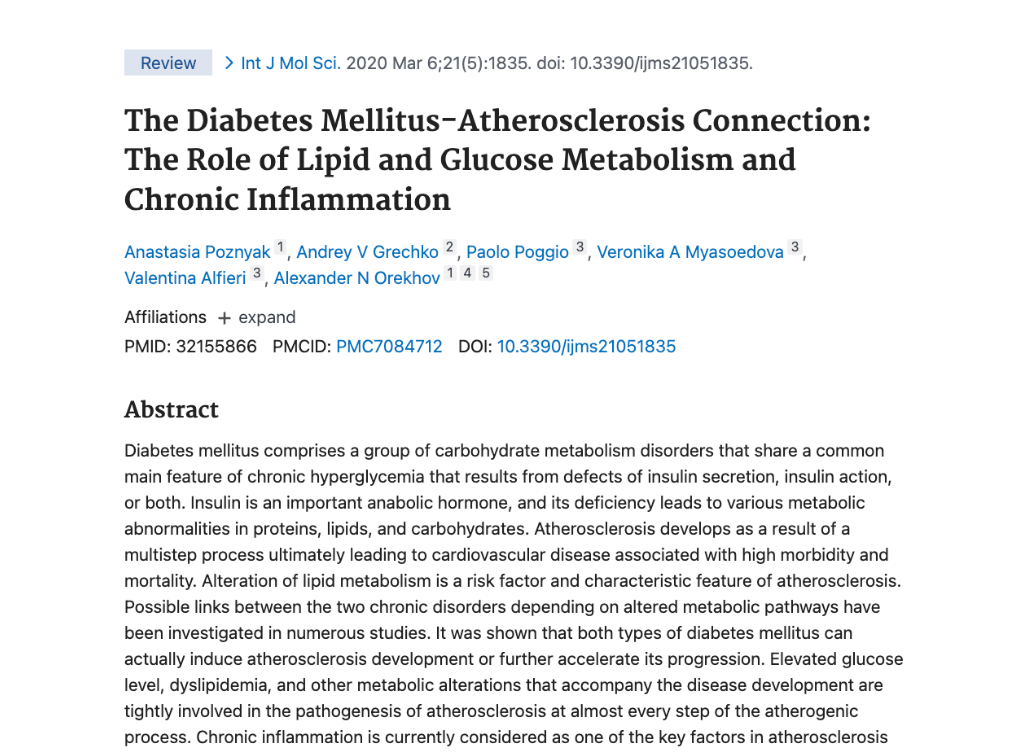
Article Review – The Diabetes Mellitus–Atherosclerosis Connection: The Role of Lipid and Glucose Metabolism and Chronic Inflammation

Article Review – The Diabetes Mellitus–Atherosclerosis Connection: The Role of Lipid and Glucose Metabolism and Chronic Inflammation

by Anastasia Poznyak, Andrey V Grechko, Paolo Poggio, Veronika A Myasoedova, Valentina Alfieri, Alexander N Orekhov

This article is part of Opti Metabolics’ ongoing effort to translate complex metabolic research into clear, practical insights for readers without formal scientific or medical training.

Summary -

This article explores the intertwined pathophysiology of diabetes mellitus and atherosclerosis, emphasizing how dysregulated glucose and lipid metabolism, along with chronic low-grade inflammation, contribute to vascular damage and cardiovascular disease. The authors detail the mechanisms by which insulin resistance, oxidative stress, and inflammatory signaling drive endothelial dysfunction, plaque formation, and metabolic deterioration, underscoring the urgent need for early intervention and lifestyle-based prevention.

Key Takeaways Explained for a Non-Medical Audience

– Insulin resistance plays a pivotal role in both type 2 diabetes and atherosclerosis development.

– Chronic hyperglycemia leads to endothelial dysfunction by increasing oxidative stress and advanced glycation end-products (AGEs).

– Abnormal lipid metabolism, particularly elevated LDL and decreased HDL, promotes plaque formation and vascular damage.

– Inflammation is a key link between diabetes and atherosclerosis, with cytokines like IL-6 and TNF-alpha contributing to disease progression.

– Macrophage activation and foam cell formation are central processes in both diabetic and atherosclerotic lesions.

– Oxidized LDL (OxLDL) is highly atherogenic and elevated in insulin-resistant individuals.

– Excessive glucose and free fatty acids activate innate immune responses that worsen insulin resistance.

– Increased levels of C-reactive protein and other inflammatory markers are predictive of cardiovascular events in diabetics.

– Adipose tissue dysfunction in obesity promotes the release of pro-inflammatory adipokines.

– Endothelial nitric oxide (NO) synthesis is impaired in insulin resistance, reducing vascular relaxation and increasing blood pressure.

– Mitochondrial dysfunction in metabolic tissues contributes to both oxidative stress and energy imbalance.

– The shared mechanisms suggest that diabetes and atherosclerosis are not separate conditions but manifestations of the same metabolic-vascular pathology.

– Early changes in insulin and lipid signaling precede structural vascular damage, highlighting the importance of early detection.

– Targeting metabolic inflammation and restoring insulin sensitivity may help prevent atherosclerosis in at-risk individuals.

– Diets high in refined carbohydrates and omega-6-rich seed oils exacerbate the inflammation-lipid-glucose axis.


Integrated Insights –

The article aligns closely with the Opti Metabolics framework, supporting the view that chronic diseases like atherosclerosis and diabetes are metabolically rooted. By addressing insulin resistance, poor lipid metabolism, and inflammatory triggers early, individuals can mitigate long-term vascular and metabolic risks through strategic lifestyle changes, particularly low-carbohydrate and anti-inflammatory dietary approaches.

Alignment with Broader Review Content –

– The article confirms that metabolic and inflammatory dysfunction underlies both cardiovascular and diabetic conditions.

– It reinforces the importance of early markers like OxLDL, CRP, fasting insulin, and triglycerides in evaluating risk.

– The role of pro-inflammatory diets and metabolic stress further validates the use of ketogenic and low-carb dietary strategies within Opti Metabolics.

Reviewed and interpreted by the Opti Metabolics editorial team, with a focus on early metabolic risk detection and prevention.

Read the article to learn more: The Diabetes Mellitus–Atherosclerosis Connection: The Role of Lipid and Glucose Metabolism and Chronic Inflammation

Health & Medical Disclaimer –

Opti Metabolics does not provide medical diagnosis, treatment, or advice. Our program is for educational and informational purposes only and does not represent medical advice or the practice of medicine. These article summaries are intended to help readers understand metabolic health research and emerging scientific findings, but personal health decisions should always be made in consultation with a qualified healthcare provider.

Participants are strongly advised to consult their personal healthcare professional before making any dietary, lifestyle, or medication changes.

x
Opti Metabolics provides informational health insights and does not dispense medical advice, diagnose, treat, or cure any medical conditions. Always consult a qualified healthcare professional before making any health-related decisions.

Contact With Us!

Email: info@optimetabolics.com

Join Opti Metabolics

It’s time to take control of your health.

Eat Like a Human Again

Drop your name and email to receive the eBook that shows how returning to simple, whole foods can restore stable energy, support metabolic health, and help your body function the way it was designed to.
Name

The Fast Track to Frailty

Drop your name and email to receive the guide that helps you understand how GLP-1 weight loss changes your body, and why the scale alone never tells the full story.
Name

Starving for Nothing

Drop your name and email to receive the eBook that shows why “Eat Less, Move More” was never your fault. It was the wrong story, and now you get the right one.
Name