Email: success@optimetabolics.com
This article is part of Opti Metabolics’ ongoing effort to translate complex metabolic research into clear, practical insights for readers without formal scientific or medical training.
This study analyzes nearly two decades of household food purchasing data and reveals that, although overall sugar purchases from packaged foods and beverages have declined in the U.S., most households still exceed recommended limits for added sugar intake. These findings highlight the persistence of excessive dietary sugar consumption and its contribution to poor metabolic health outcomes, underscoring the need for stronger public health strategies and personal dietary awareness.
– Between 2002 and 2020, there was a 15.1% decrease in total sugar purchased from packaged foods and beverages by U.S. households.
– Despite this decline, over 60% of households still exceeded the daily added sugar intake recommendation of 50 grams.
– Beverages accounted for the largest reduction in sugar purchased, primarily from sugar-sweetened soft drinks.
– Sugar from packaged foods declined more slowly than that from beverages, showing less responsiveness to reformulation efforts or consumer shifts.
– Households with children had consistently higher levels of sugar purchases across the entire time period.
– Socioeconomic disparities were evident, with low-income households purchasing higher levels of sugar-rich products.
– Racial and ethnic differences were observed in sugar purchase trends, indicating targeted marketing and access challenges.
– While overall trends showed reductions, certain categories such as sweet snacks, cereals, and baked goods remained major contributors to sugar intake.
– Reformulations by manufacturers helped reduce sugar in some products, but often replaced sugar with refined starches or other sweeteners, maintaining high glycemic load.
– The decline in sugar purchases coincided with increasing consumer awareness and policy efforts such as added sugar labeling.
– However, voluntary industry action has not been sufficient to bring most households below recommended sugar limits.
– The study suggests that packaged food continues to be a major vector of excessive carbohydrate intake contributing to insulin resistance.
– The persistence of high sugar consumption reflects systemic issues in food supply, marketing, and consumer education.
– Reducing household sugar intake further will likely require both regulatory intervention and public health strategies targeting metabolic literacy.
– The findings reinforce the urgency of dietary approaches that reduce refined sugars and support metabolic stability.
This study supports the Opti Metabolics framework by confirming that most U.S. households continue to consume excessive amounts of added sugar through packaged foods, a major driver of insulin resistance and systemic inflammation. Despite modest progress, metabolic health remains compromised due to continued overconsumption of sugar-dense products.
– Excessive dietary sugar continues to be a central factor in the development of insulin resistance, fatty liver, and other metabolic dysfunctions.
– Despite reformulation trends, the glycemic burden of many packaged foods remains high and contributes to chronic disease risk.
– Public and individual strategies focused on lowering added sugar are essential for preventing the cascade of metabolic imbalances.
Reviewed and interpreted by the Opti Metabolics editorial team, with a focus on early metabolic risk detection and prevention.
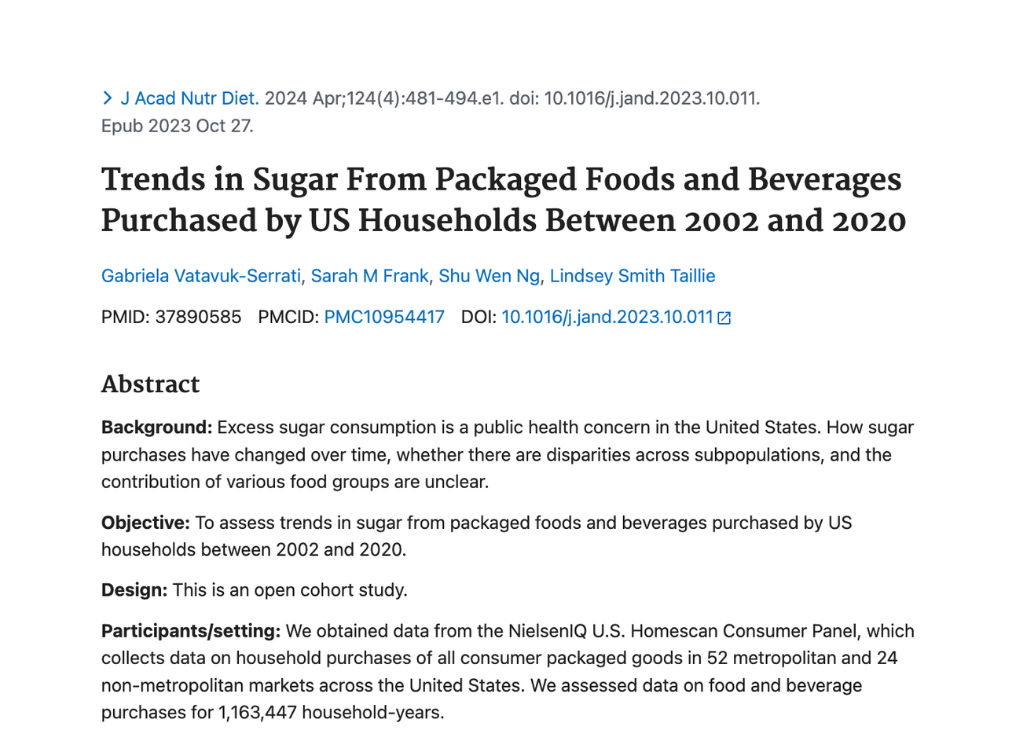
Trends in Sugar From Packaged Foods and Beverages Purchased by US Households Between 2002 and 2020
Opti Metabolics does not provide medical diagnosis, treatment, or advice. Our program is for educational and informational purposes only and does not represent medical advice or the practice of medicine. These article summaries are intended to help readers understand metabolic health research and emerging scientific findings, but personal health decisions should always be made in consultation with a qualified healthcare provider.
Participants are strongly advised to consult their personal healthcare professional before making any dietary, lifestyle, or medication changes.
Email: info@optimetabolics.com
It’s time to take control of your health.