Email: success@optimetabolics.com
This article is part of Opti Metabolics’ ongoing effort to translate complex metabolic research into clear, practical insights for readers without formal scientific or medical training.
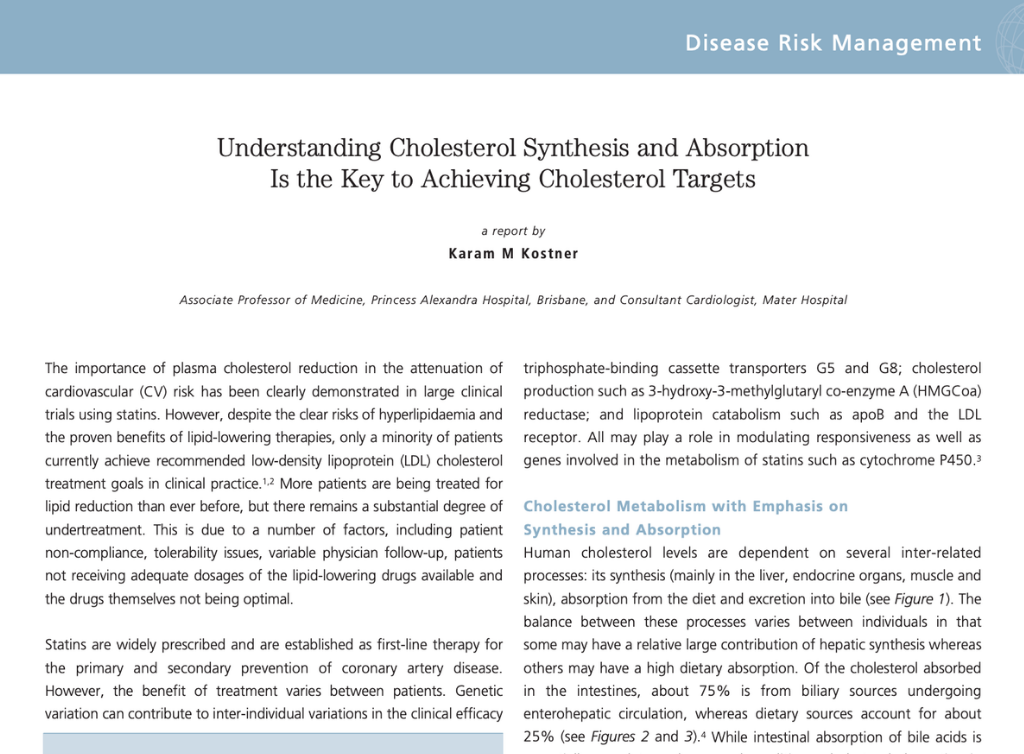
This article emphasizes that comprehending the interplay between cholesterol synthesis and absorption is essential for effectively reaching LDL cholesterol targets, highlighting individual variability in metabolism that affects responses to therapies like statins and ezetimibe. It argues for personalized approaches based on metabolic phenotypes to optimize lipid management and reduce cardiovascular risk. For metabolic health, this underscores the importance of addressing dietary influences on cholesterol dynamics, where mitigating insulin resistance through low-carbohydrate strategies can enhance natural regulatory processes and prevent chronic conditions linked to dyslipidemia.
– The importance of plasma cholesterol reduction in attenuating cardiovascular risk has been demonstrated in large clinical trials using statins, yet many patients fail to achieve LDL cholesterol treatment goals.
– Undertreatment stems from factors like patient non-compliance, tolerability issues, variable physician follow-up, and suboptimal drug dosages.
– Statins are first-line therapy for primary and secondary prevention of coronary artery disease, but treatment benefits vary due to genetic polymorphisms influencing drug responsiveness.
– Inhibiting cholesterol synthesis with statins increases cholesterol absorption, while decreasing absorption increases synthesis, complicating LDL target achievement.
– Approximately half of intestinal cholesterol is absorbed, with excess absorption leading to increased liver cholesterol storage, VLDL secretion, LDL formation, and downregulated LDL receptors.
– Human cholesterol levels depend on synthesis (mainly in liver and other organs), dietary absorption, and biliary excretion, with balances varying individually.
– About 75% of absorbed intestinal cholesterol comes from biliary sources, and 25% from diet, with absorption rates ranging from 29-81% (mean 56%) in healthy adults.
– Cholesterol absorption is negatively associated with synthesis, and both respond dynamically to diet, such as reduced efficiency with higher cholesterol intake.
– Dietary fat quality, particularly saturated versus unsaturated fats, impacts plasma cholesterol more than dietary cholesterol content itself.
– 15-25% of the population are hyper-responders to dietary cholesterol, showing greater plasma cholesterol increases.
– Metabolic phenotypes include absorbers (high absorption, low synthesis), synthesizers (high synthesis, low absorption), and mixed types, influencing therapy responses.
– Statins reduce synthesis markers but increase absorption markers, with poorer LDL responses in high absorbers.
– Ezetimibe inhibits cholesterol absorption by 54%, reducing LDL by an average of 20%, and is particularly effective in statin hypo-responders.
– Combining statins and ezetimibe can achieve LDL reductions over 65%, aiding stricter targets.
– Identifying patient phenotypes using sterol markers can guide personalized therapy to improve efficacy and reduce side effects.
The article’s discussion of cholesterol metabolism aligns with Opti Metabolics by illustrating how dysregulated lipid handling, often exacerbated by insulin resistance from high carbohydrate intake, contributes to cardiovascular disease. Low-carbohydrate or ketogenic diets can mitigate these issues by promoting better energy management, reducing inflammation from omega-6-rich oils, and supporting natural cholesterol regulation. This framework encourages well-formulated dietary interventions to complement pharmacological approaches for optimal metabolic health.
– Connects lipid metabolism variability to insulin resistance and oxidative stress, reinforcing how poor glycemic control underlies atherosclerotic progression.
– Highlights dietary influences on cholesterol, paralleling reviews on low-carb and ketogenic strategies to address inflammatory stresses and improve lipoprotein profiles.
– Supports personalized interventions, aligning with broader content on biomarkers like apolipoprotein B and non-HDL cholesterol for preventing heart disease and related conditions.
Reviewed and interpreted by the Opti Metabolics editorial team, with a focus on early metabolic risk detection and prevention.
Read the article to learn more: Understanding Cholesterol Synthesis and Absorption is the Key to Achieving Cholesterol Targets
Opti Metabolics does not provide medical diagnosis, treatment, or advice. Our program is for educational and informational purposes only and does not represent medical advice or the practice of medicine. These article summaries are intended to help readers understand metabolic health research and emerging scientific findings, but personal health decisions should always be made in consultation with a qualified healthcare provider.
Participants are strongly advised to consult their personal healthcare professional before making any dietary, lifestyle, or medication changes.
Email: info@optimetabolics.com
It’s time to take control of your health.