Email: success@optimetabolics.com
This article is part of Opti Metabolics’ ongoing effort to translate complex metabolic research into clear, practical insights for readers without formal scientific or medical training.
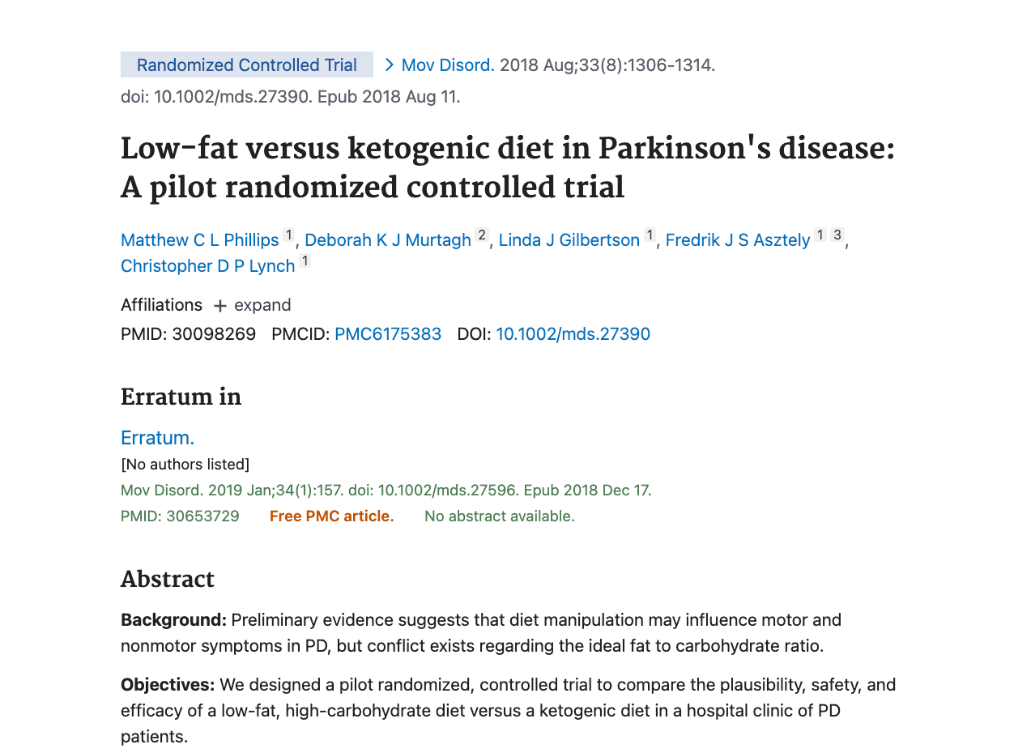
This pilot randomized controlled trial compared the effects of a low-fat diet and a ketogenic diet on patients with Parkinson’s disease (PD), finding that the ketogenic diet led to significantly greater improvements in motor and non-motor symptoms. The results suggest that metabolic therapies like ketogenic nutrition may offer disease-modifying potential for neurodegenerative conditions through enhanced mitochondrial function, reduced neuroinflammation, and improved metabolic resilience.
– Participants with PD were randomized to follow either a low-fat or ketogenic diet for 8 weeks.
– Both diets improved motor and non-motor symptoms, but the ketogenic group showed significantly greater clinical improvements.
– The ketogenic diet led to a 41% reduction in the MDS-UPDRS (Unified Parkinson’s Disease Rating Scale) Part I score, compared to an 11% reduction in the low-fat group.
– Non-motor symptoms such as fatigue, cognitive impairment, and urinary dysfunction improved more in the ketogenic group.
– Participants on the ketogenic diet achieved nutritional ketosis, confirmed by elevated serum β-hydroxybutyrate levels.
– Improvements were observed without weight loss, suggesting the benefits were not due to caloric restriction.
– The ketogenic group reported improved energy levels and mood, indicating enhanced brain energy metabolism.
– No serious adverse events were reported in either group, supporting the safety of both dietary approaches.
– The low-fat group had higher carbohydrate intake, which may have limited neuroprotective metabolic effects.
– Mitochondrial dysfunction and insulin resistance are implicated in PD pathophysiology and were potentially mitigated by the ketogenic diet.
– The study hypothesizes that ketones improve neuronal function by serving as an efficient fuel and by reducing oxidative stress.
– The ketogenic diet may reduce neuroinflammation by modulating immune activity and lowering reactive oxygen species.
– The trial supports the feasibility and tolerability of ketogenic interventions in a neurological patient population.
– While the study was short in duration, it demonstrated meaningful clinical outcomes, prompting the need for larger, longer-term studies.
– This work aligns with a growing body of evidence connecting metabolic dysfunction to neurodegeneration.
This study reinforces the Opti Metabolics framework by demonstrating that a low-carbohydrate, ketogenic approach can improve neurologic function through multiple mechanisms—enhancing mitochondrial efficiency, reducing inflammation, and supporting insulin sensitivity. It offers a compelling example of how metabolic therapies may go beyond symptom control to address underlying disease processes.
– Highlights the connection between insulin resistance, oxidative stress, and neurodegeneration.
– Supports the therapeutic role of ketogenic diets in managing chronic, progressive diseases.
– Emphasizes the importance of dietary macronutrient composition in influencing mitochondrial and metabolic health.
Reviewed and interpreted by the Opti Metabolics editorial team, with a focus on early metabolic risk detection and prevention.
Read the article to learn more: Low-Fat versus Ketogenic Diet in Parkinson’s Disease: A Pilot Randomized Controlled Trial
Opti Metabolics does not provide medical diagnosis, treatment, or advice. Our program is for educational and informational purposes only and does not represent medical advice or the practice of medicine. These article summaries are intended to help readers understand metabolic health research and emerging scientific findings, but personal health decisions should always be made in consultation with a qualified healthcare provider.
Participants are strongly advised to consult their personal healthcare professional before making any dietary, lifestyle, or medication changes.
Email: info@optimetabolics.com
It’s time to take control of your health.