Email: success@optimetabolics.com
This article is part of Opti Metabolics’ ongoing effort to translate complex metabolic research into clear, practical insights for readers without formal scientific or medical training.
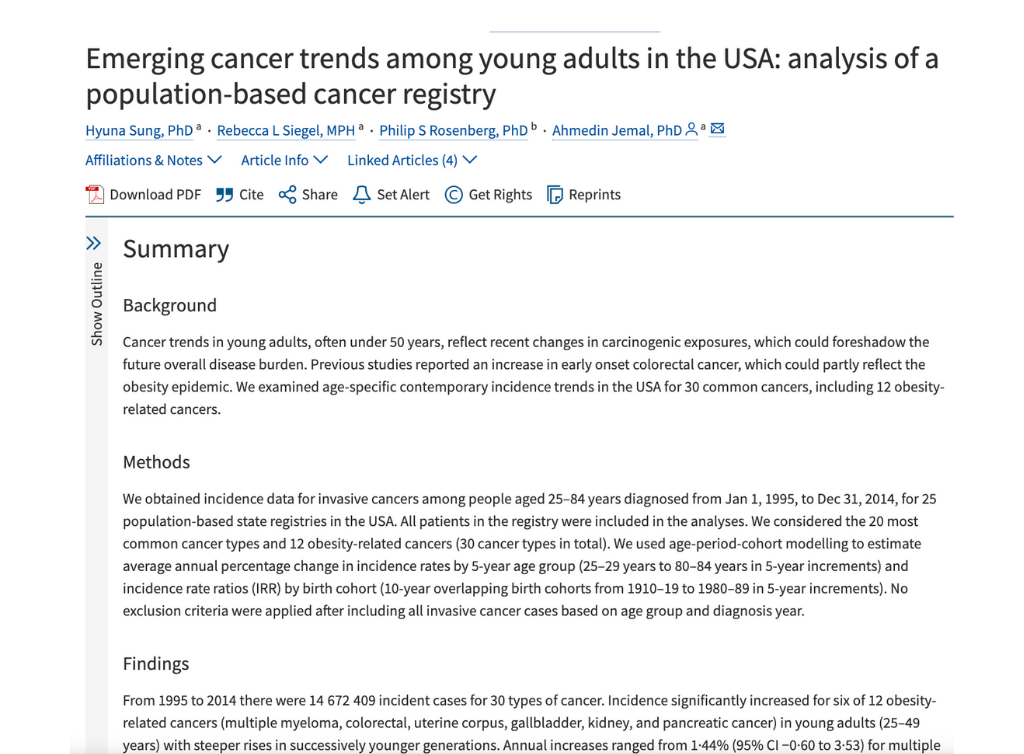
This article examines the rising incidence of obesity-related cancers among young adults in the USA, highlighting the role of early-life carcinogenic exposures, particularly excess body weight, in driving these trends. It underscores the need to address metabolic risk factors like insulin resistance and inflammation, which are linked to obesity and may contribute to the increasing cancer burden in younger populations.
– The study analyzed cancer incidence trends in the USA for 30 common cancers among people aged 25–84 years from 1995 to 2014, using data from 25 population-based state registries.
– Cancer incidence is increasing in young adults (under 50 years) for 12 obesity-related cancers, including colorectal, kidney, gallbladder, uterine corpus, and pancreatic cancers.
– The rise in early-onset colorectal cancer is particularly notable, potentially linked to the obesity epidemic.
– The risk of obesity-related cancers increases in a stepwise manner in successively younger birth cohorts.
– Incidence trends for non-obesity-related cancers, such as lung and cervical cancers, are generally stable or declining in younger adults.
– The increase in cancer incidence is stage-specific for some cancers, such as nonlocalized breast cancer in women aged 25–39 years.
– The study suggests that recent changes in carcinogenic exposures during early life or young adulthood are driving these trends.
– Obesity-related cancers account for a significant portion of the rising cancer burden in younger generations.
– The authors call for further research to identify specific exposures, including excess body weight and other risk factors, responsible for these trends.
– The data indicates that the rising incidence of certain cancers in young adults may foreshadow future overall disease burden.
– Improvements in cancer survival are being outpaced by the increasing incidence of obesity-related cancers in some cases, leading to rising mortality for cancers like colorectal and uterine corpus.
– The study highlights the need for targeted prevention strategies to address modifiable risk factors like obesity.
The article’s findings align with the Opti Metabolics framework, which emphasizes the role of insulin resistance and chronic inflammation—often exacerbated by obesity—in driving chronic diseases like cancer. Addressing metabolic health through low-carbohydrate or ketogenic diets could mitigate the risk of obesity-related cancers by reducing insulin resistance and inflammatory stress.
– The link between obesity and cancer incidence supports the Opti Metabolics view that excessive carbohydrate consumption contributes to insulin resistance, a key driver of metabolic dysfunction and chronic disease.
– The article’s focus on obesity-related cancers reinforces the importance of managing inflammation, potentially worsened by omega-6-rich seed oils, as a strategy to reduce cancer risk.
– Lifestyle interventions, such as low-carb or ketogenic diets, align with the study’s call for prevention strategies to address modifiable risk factors like excess body weight.
Reviewed and interpreted by the Opti Metabolics editorial team, with a focus on early metabolic risk detection and prevention.
Read the article to learn more: Emerging Cancer Trends Among Young Adults in the USA: Analysis of a Population-Based Cancer Registry
Opti Metabolics does not provide medical diagnosis, treatment, or advice. Our program is for educational and informational purposes only and does not represent medical advice or the practice of medicine. These article summaries are intended to help readers understand metabolic health research and emerging scientific findings, but personal health decisions should always be made in consultation with a qualified healthcare provider.
Participants are strongly advised to consult their personal healthcare professional before making any dietary, lifestyle, or medication changes.
Email: info@optimetabolics.com
Your results suggest early signs of metabolic dysfunction are emerging beneath the surface.
While you may feel healthy today, several biomarkers indicate increasing risk for insulin resistance, cardiovascular disease, and other chronic conditions if these patterns continue to progress.
The encouraging news is that these findings were identified before disease developed, creating an opportunity to improve your long-term health trajectory through targeted interventions.
No
Risk
Low
Risk
Medium Risk
High Risk
Higher Risk
Higher numbers indicate more biomarkers in each risk category.
We look upstream to identify and address the root drivers of chronic disease long before symptoms appear.
Excess insulin and poor cellular response drive metabolic dycfuntion and fat storage.
Imbalance between free radicals and your body's antioxidant defenses.
Chronic, low grade inflamation damages tissues and disrupts normal function.
Elevated cortisol and other stress hormones amplify the damaga and impair recovery.
Inherited factors can increase succeptbility and influence how your body responds.
Over time, these drivers create the foundation for chronic disease to take root.