Email: success@optimetabolics.com
This article is part of Opti Metabolics’ ongoing effort to translate complex metabolic research into clear, practical insights for readers without formal scientific or medical training.
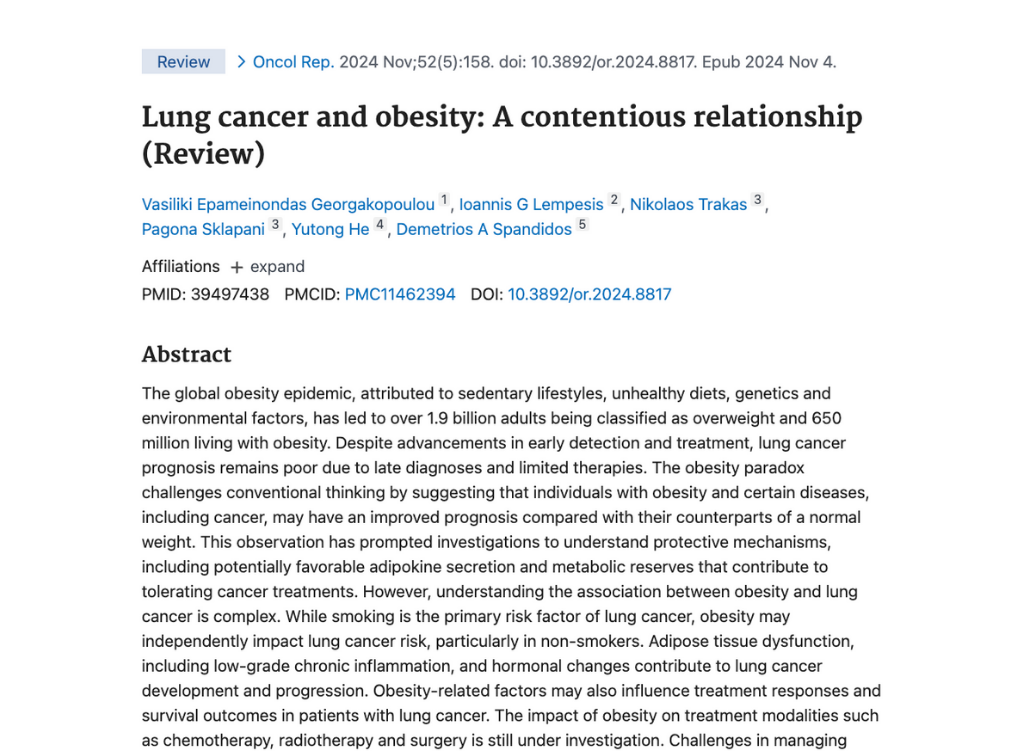
The article explores the complex relationship between obesity and lung cancer, highlighting the obesity paradox where higher body mass index may correlate with improved prognosis in some cancers, despite obesity’s role in promoting chronic inflammation and metabolic dysfunction. It emphasizes the need to understand underlying mechanisms like adipokine secretion and metabolic reserves to clarify this contentious link. These insights align with metabolic health principles, suggesting that managing obesity-related inflammation through diet and lifestyle could influence cancer outcomes.
– Obesity affects over 1.9 billion adults globally, driven by sedentary lifestyles, unhealthy diets, genetics, and environmental factors.
– Lung cancer prognosis remains poor due to late diagnoses and limited effective therapies.
– The obesity paradox suggests that individuals with obesity may have better outcomes in certain cancers, including lung cancer, compared to those with normal weight.
– This paradox challenges the assumption that obesity universally worsens health outcomes.
– Protective mechanisms in obesity may include favorable adipokine secretion, such as adiponectin, which has anti-inflammatory properties.
– Metabolic reserves in obese individuals may enhance tolerance to aggressive cancer treatments like chemotherapy.
– Chronic inflammation from obesity, potentially exacerbated by omega-6-rich diets, may still contribute to cancer development.
– Body mass index as a measure of obesity has limitations, with central obesity metrics being more relevant to lung cancer risk.
– Adipose tissue dysfunction (adiposopathy) can impair immune function and increase susceptibility to infections, potentially complicating cancer outcomes.
– The article calls for further research into molecular mechanisms linking obesity to lung cancer, such as inflammation and hormonal dysregulation.
– Lifestyle factors, including diet and physical activity, significantly influence obesity-related cancer risk and outcomes.
– The interplay of gut microbiota and obesity-related metabolites, like deoxycholic acid, may contribute to DNA damage and cancer risk.
– Inflammation-driven pathways in obesity may overlap with those in lung cancer progression.
– Understanding the obesity paradox could inform personalized treatment strategies for lung cancer patients with obesity.
The article’s findings resonate with Opti Metabolics’ focus on mitigating chronic inflammation and insulin resistance through low-carbohydrate or ketogenic diets to improve metabolic health. By addressing obesity-related inflammation, such dietary approaches could potentially reduce cancer-promoting pathways while supporting metabolic resilience. This aligns with the framework’s emphasis on natural, whole-food-based interventions to optimize health outcomes.
– Chronic inflammation, a key driver in obesity, is linked to cancer development, consistent with Opti Metabolics’ view of inflammation as a root cause of metabolic diseases.
– The article’s discussion of adiponectin and metabolic reserves supports the idea that improving body composition through diet can positively influence disease outcomes.
– Lifestyle interventions, such as reducing omega-6 intake and adopting low-carb diets, align with strategies to mitigate obesity-related risks highlighted in the review.
Reviewed and interpreted by the Opti Metabolics editorial team, with a focus on early metabolic risk detection and prevention.
Read the article to learn more: Lung Cancer and Obesity: A Contentious Relationship (Review)
Opti Metabolics does not provide medical diagnosis, treatment, or advice. Our program is for educational and informational purposes only and does not represent medical advice or the practice of medicine. These article summaries are intended to help readers understand metabolic health research and emerging scientific findings, but personal health decisions should always be made in consultation with a qualified healthcare provider.
Participants are strongly advised to consult their personal healthcare professional before making any dietary, lifestyle, or medication changes.
Email: info@optimetabolics.com
Your results suggest early signs of metabolic dysfunction are emerging beneath the surface.
While you may feel healthy today, several biomarkers indicate increasing risk for insulin resistance, cardiovascular disease, and other chronic conditions if these patterns continue to progress.
The encouraging news is that these findings were identified before disease developed, creating an opportunity to improve your long-term health trajectory through targeted interventions.
No
Risk
Low
Risk
Medium Risk
High Risk
Higher Risk
Higher numbers indicate more biomarkers in each risk category.
We look upstream to identify and address the root drivers of chronic disease long before symptoms appear.
Excess insulin and poor cellular response drive metabolic dycfuntion and fat storage.
Imbalance between free radicals and your body's antioxidant defenses.
Chronic, low grade inflamation damages tissues and disrupts normal function.
Elevated cortisol and other stress hormones amplify the damaga and impair recovery.
Inherited factors can increase succeptbility and influence how your body responds.
Over time, these drivers create the foundation for chronic disease to take root.