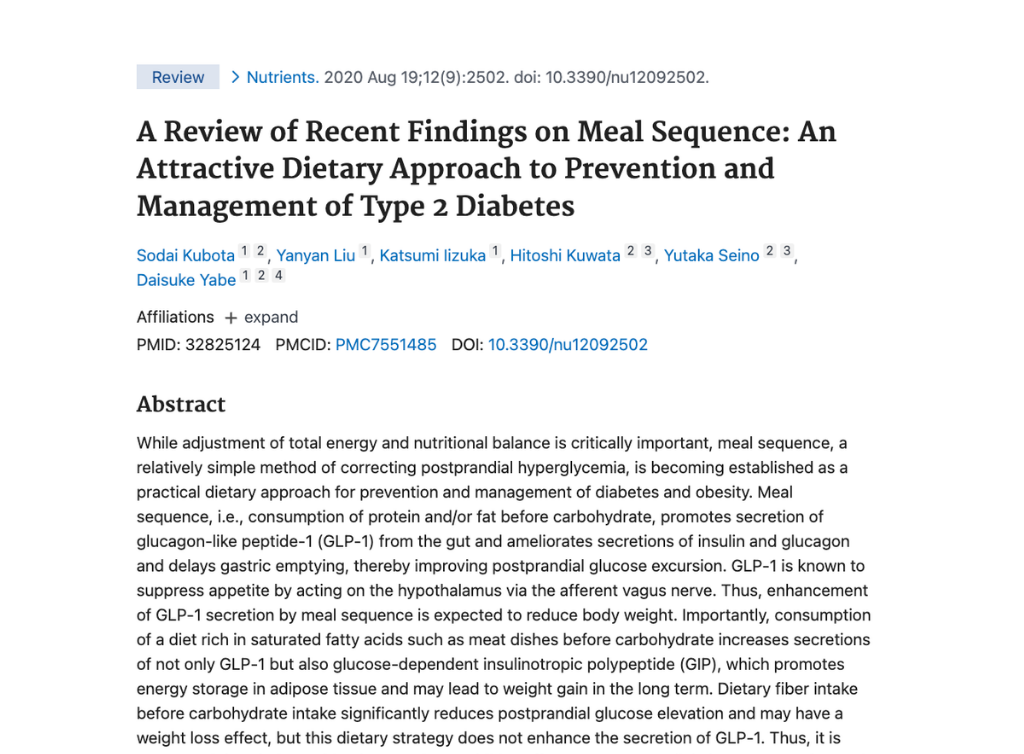
Article Review – A Review of Recent Findings on Meal Sequence: An Attractive Dietary Approach to Prevention and Management of Type 2 Diabetes

Article Review – A Review of Recent Findings on Meal Sequence: An Attractive Dietary Approach to Prevention and Management of Type 2 Diabetes

by Sodai Kubota, Yanyan Liu, Katsumi Iizuka, Hitoshi Kuwata, Yutaka Seino, Daisuke Yabe

This article is part of Opti Metabolics’ ongoing effort to translate complex metabolic research into clear, practical insights for readers without formal scientific or medical training.

Summary -

This article explores how the order in which foods are consumed during a meal can influence postprandial blood glucose and insulin responses, offering a simple yet effective strategy to improve glycemic control and manage type 2 diabetes. Adjusting meal sequence, particularly by consuming protein and vegetables before carbohydrates, may enhance insulin sensitivity and reduce metabolic stress, supporting overall metabolic health.

Key Takeaways Explained for a Non-Medical Audience

– Consuming protein and fiber-rich vegetables before carbohydrates blunts post-meal glucose spikes.

– This meal sequence approach improves insulin secretion dynamics and enhances glucose tolerance.

– Eating carbohydrates last delays glucose absorption and reduces postprandial insulin demand.

– Improved glycemic responses from meal sequencing may reduce insulin resistance over time.

– The strategy is simple, cost-effective, and easily integrated into daily dietary habits.

– Meal sequence impacts gut hormone release, including incretins that modulate insulin response.

– Lower postprandial glucose and insulin peaks reduce oxidative stress and inflammation.

– This dietary approach can complement low-carbohydrate or ketogenic diets for better metabolic control.

– Avoiding excessive omega-6-rich seed oils remains important to reduce inflammation alongside meal sequencing.

– The timing and order of nutrient intake support metabolic flexibility and reduce metabolic overload.

– Meal sequencing may protect beta-cell function by lowering insulin secretion demands.

– The approach shows promise in both prevention and management of type 2 diabetes.

– Combining meal sequencing with natural, nutrient-dense foods can optimize metabolic health outcomes.

– Personalized meal timing and sequencing can enhance adherence and effectiveness.

– Future research is warranted to explore long-term benefits and applications across diverse populations.


Integrated Insights –

This article reinforces the importance of dietary strategies that improve insulin sensitivity by controlling glycemic and inflammatory responses. Meal sequencing aligns with Opti Metabolics’ focus on reducing insulin resistance through natural, low-carbohydrate patterns that limit metabolic stress and inflammation from diet.

Alignment with Broader Review Content –

– Highlights the role of dietary patterns in modulating insulin resistance and metabolic health.

– Supports low-carbohydrate and nutrient-dense eating approaches that minimize postprandial glycemic load.

– Emphasizes the reduction of chronic inflammatory stresses through both food quality and meal timing strategies.

Reviewed and interpreted by the Opti Metabolics editorial team, with a focus on early metabolic risk detection and prevention.

Read the article to learn more: A Review of Recent Findings on Meal Sequence: An Attractive Dietary Approach to Prevention and Management of Type 2 Diabetes

Health & Medical Disclaimer –

Opti Metabolics does not provide medical diagnosis, treatment, or advice. Our program is for educational and informational purposes only and does not represent medical advice or the practice of medicine. These article summaries are intended to help readers understand metabolic health research and emerging scientific findings, but personal health decisions should always be made in consultation with a qualified healthcare provider.

Participants are strongly advised to consult their personal healthcare professional before making any dietary, lifestyle, or medication changes.

x
Opti Metabolics provides informational health insights and does not dispense medical advice, diagnose, treat, or cure any medical conditions. Always consult a qualified healthcare professional before making any health-related decisions.

Contact With Us!

Email: info@optimetabolics.com

Join Opti Metabolics

It’s time to take control of your health.

Eat Like a Human Again

Drop your name and email to receive the eBook that shows how returning to simple, whole foods can restore stable energy, support metabolic health, and help your body function the way it was designed to.
Name

The Fast Track to Frailty

Drop your name and email to receive the guide that helps you understand how GLP-1 weight loss changes your body, and why the scale alone never tells the full story.
Name

Starving for Nothing

Drop your name and email to receive the eBook that shows why “Eat Less, Move More” was never your fault. It was the wrong story, and now you get the right one.
Name