Email: success@optimetabolics.com
This article is part of Opti Metabolics’ ongoing effort to translate complex metabolic research into clear, practical insights for readers without formal scientific or medical training.
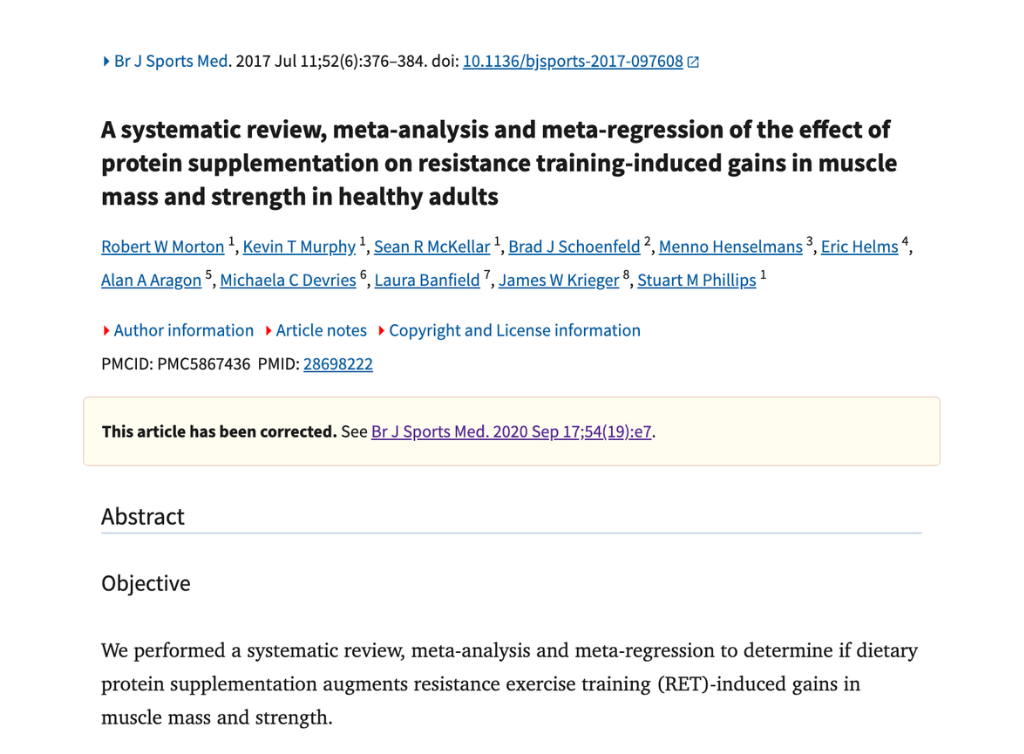
This comprehensive analysis demonstrates that dietary protein supplementation meaningfully augments muscle strength and size during prolonged resistance training in healthy adults. It also identifies that gains plateau beyond a daily protein intake of approximately 1.6 g/kg/day, highlighting the importance of optimizing intake without unnecessary excess.
– Protein supplementation during resistance training significantly increases one-repetition maximum strength by about 2.5 kg versus control.
– Fat‑free mass increases by approximately 0.3 kg with additional protein during prolonged training.
– Muscle fiber cross-sectional area and mid‑femur muscle size both show measurable increases with protein supplementation.
– Benefits of supplementation diminish with advancing age, indicating less efficacy in older adults.
– Individuals experienced in resistance training derive greater gains—up to 0.75 kg more fat-free mass—versus novices.
– A breakpoint around 1.6 g protein per kg body weight per day marks the threshold beyond which further protein intake yields no additional muscle gains.
– Data span 49 randomized controlled trials with a combined total of 1,863 participants, strengthening generalizability.
– Meta-regression methods reinforce that resistance training itself is the dominant driver, with protein acting as a potent enhancer.
– Cross-sectional muscle hypertrophy and strength benefits appear consistent across studies with varied designs and durations.
– The dose-response relationship supports tailoring intake relative to training status and age.
– Excessive protein beyond the plateau level provides limited incremental benefit and may burden metabolic processing unnecessarily.
– Lower basal protein intake individuals benefit most from supplementation up to the plateau.
– Protein quality and timing were less central to conclusions than total daily intake within optimal range.
– Sustainable training plus targeted protein intake yields maximal adaptation efficiency.
– Personalized nutrition that factors in age and training status is key for optimizing outcomes.
This research underscores the Opti Metabolics focus on metabolic efficiency—highlighting how a targeted, moderate protein strategy supports strength and muscle adaptation without overloading metabolic systems. Pairing resistance training with protein optimized to about 1.6 g/kg/day enables enhanced anabolic response while minimizing metabolic stress.
– Optimizing macronutrient intake—such as ensuring adequate but not excessive protein—supports metabolic flexibility and reduces glycemic disturbances from overconsumption.
– Avoiding unnecessary excess (e.g., overconsumption of protein or omega‑6-rich seed oils) aligns with reducing chronic inflammatory and oxidative stress.
– Combining high-quality nutrition—low in inflammatory fats—with resistance training reinforces mitochondrial function, insulin sensitivity, and overall metabolic resilience.
Reviewed and interpreted by the Opti Metabolics editorial team, with a focus on early metabolic risk detection and prevention.
Read the article to learn more: A Systematic Review, Meta-Analysis and Meta-Regression of the Effect of Protein Supplementation on Resistance Training-Induced Gains in Muscle Mass and Strength in Healthy Adults
Opti Metabolics does not provide medical diagnosis, treatment, or advice. Our program is for educational and informational purposes only and does not represent medical advice or the practice of medicine. These article summaries are intended to help readers understand metabolic health research and emerging scientific findings, but personal health decisions should always be made in consultation with a qualified healthcare provider.
Participants are strongly advised to consult their personal healthcare professional before making any dietary, lifestyle, or medication changes.
Email: info@optimetabolics.com
Your results suggest early signs of metabolic dysfunction are emerging beneath the surface.
While you may feel healthy today, several biomarkers indicate increasing risk for insulin resistance, cardiovascular disease, and other chronic conditions if these patterns continue to progress.
The encouraging news is that these findings were identified before disease developed, creating an opportunity to improve your long-term health trajectory through targeted interventions.
No
Risk
Low
Risk
Medium Risk
High Risk
Higher Risk
Higher numbers indicate more biomarkers in each risk category.
We look upstream to identify and address the root drivers of chronic disease long before symptoms appear.
Excess insulin and poor cellular response drive metabolic dycfuntion and fat storage.
Imbalance between free radicals and your body's antioxidant defenses.
Chronic, low grade inflamation damages tissues and disrupts normal function.
Elevated cortisol and other stress hormones amplify the damaga and impair recovery.
Inherited factors can increase succeptbility and influence how your body responds.
Over time, these drivers create the foundation for chronic disease to take root.