Opti Metabolics 11652 Jollyville Road Austin, TX 78759

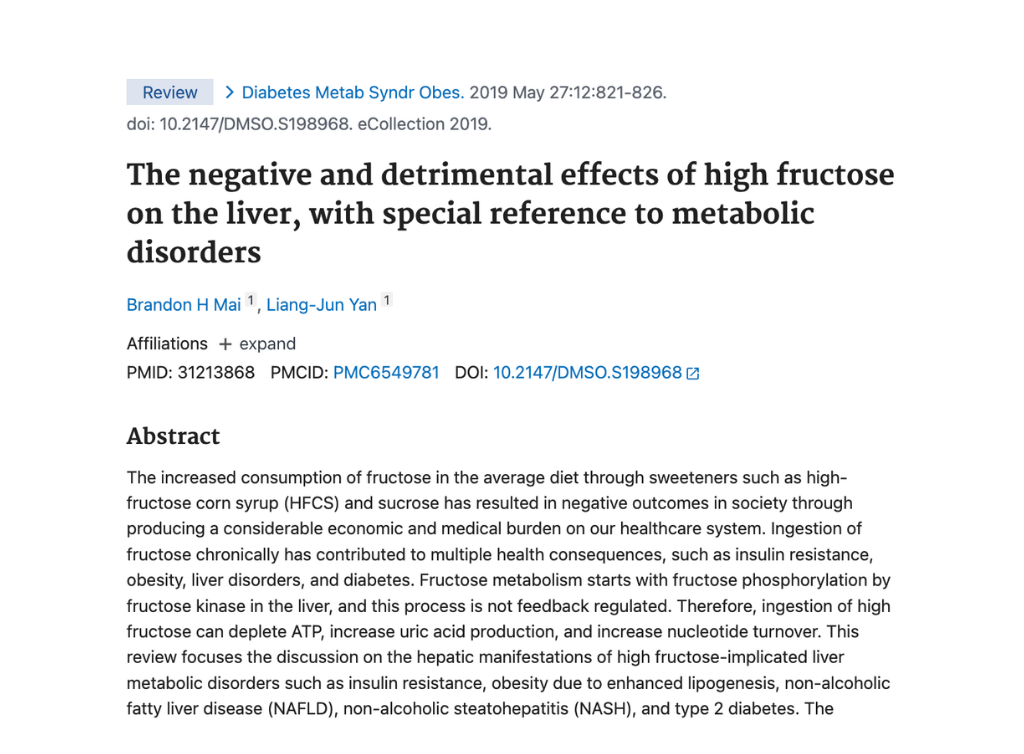
Article Review – The Negative and Detrimental Effects of High Fructose on the Liver, with Special Reference to Metabolic Disorders

Article Review – The Negative and Detrimental Effects of High Fructose on the Liver, with Special Reference to Metabolic Disorders

by Brandon H Mai, Liang-Jun Yan

This article is part of Opti Metabolics’ ongoing effort to translate complex metabolic research into clear, practical insights for readers without formal scientific or medical training.

Summary -

This article examines the profound and damaging impact of high fructose consumption on liver health, with a particular emphasis on its role in promoting metabolic dysfunctions such as insulin resistance and non-alcoholic fatty liver disease (NAFLD). The findings underscore how chronic exposure to fructose impairs liver metabolism, fosters oxidative stress, and contributes to the onset of systemic metabolic disorders.

Key Takeaways Explained for a Non-Medical Audience

– High fructose intake bypasses normal glycolytic regulation, leading to unregulated hepatic fructose metabolism.

– Fructose is primarily metabolized in the liver, where it rapidly depletes ATP and promotes lipogenesis.

– This excessive lipogenesis contributes to hepatic steatosis, a hallmark of non-alcoholic fatty liver disease (NAFLD).

– Chronic fructose intake increases uric acid production, which induces mitochondrial oxidative stress and inflammation.

– Fructose impairs insulin signaling pathways, contributing to hepatic insulin resistance.

– Persistent insulin resistance leads to elevated circulating insulin and worsens systemic glucose management.

– Fructose consumption does not stimulate insulin or leptin to the same extent as glucose, reducing satiety and promoting overconsumption.

– Excess fructose enhances gut permeability and endotoxemia, which exacerbate liver inflammation.

– Fructose-induced oxidative stress depletes antioxidant defense systems such as glutathione.

– Hepatic inflammation and mitochondrial dysfunction are central drivers of fructose-related liver injury.

– Animal studies show that high-fructose diets cause metabolic syndrome phenotypes, including dyslipidemia and obesity.

– Human epidemiological studies correlate high fructose intake with increased risk of NAFLD and type 2 diabetes.

– Fructose metabolism generates toxic byproducts that worsen liver stress and impair metabolic flexibility.

– The synergistic effect of fructose with omega-6 seed oils may compound oxidative and inflammatory damage.

– Reducing dietary fructose intake has been shown to improve liver enzymes and markers of metabolic health.


Integrated Insights –

This article reinforces the Opti Metabolics principle that fructose, particularly in processed forms such as high-fructose corn syrup, plays a central role in driving insulin resistance, mitochondrial dysfunction, and liver-centered metabolic disease. Reducing fructose exposure is essential to restoring metabolic homeostasis and preventing progression toward chronic illnesses.

Alignment with Broader Review Content –

– Supports the understanding that excessive carbohydrate intake, especially fructose, is a key factor in insulin resistance and metabolic impairment.

– Highlights the role of mitochondrial oxidative stress, aligning with the core metabolic stress model described in The Purple Zone.

– Emphasizes liver-centered pathology as a root cause of broader systemic disease, reinforcing the liver’s central role in metabolic health restoration.

Reviewed and interpreted by the Opti Metabolics editorial team, with a focus on early metabolic risk detection and prevention.

Read the article to learn more: The Negative and Detrimental Effects of High Fructose on the Liver, with Special Reference to Metabolic Disorders

Health & Medical Disclaimer –

Opti Metabolics does not provide medical diagnosis, treatment, or advice. Our program is for educational and informational purposes only and does not represent medical advice or the practice of medicine. These article summaries are intended to help readers understand metabolic health research and emerging scientific findings, but personal health decisions should always be made in consultation with a qualified healthcare provider.

Participants are strongly advised to consult their personal healthcare professional before making any dietary, lifestyle, or medication changes.

x
Opti Metabolics provides informational health insights and does not dispense medical advice, diagnose, treat, or cure any medical conditions. Always consult a qualified healthcare professional before making any health-related decisions.

Contact With Us!

Email: info@optimetabolics.com

Join Opti Metabolics

It’s time to take control of your health.

Eat Like a Human Again

Drop your name and email to receive the eBook that shows how returning to simple, whole foods can restore stable energy, support metabolic health, and help your body function the way it was designed to.
Name

The Fast Track to Frailty

Drop your name and email to receive the guide that helps you understand how GLP-1 weight loss changes your body, and why the scale alone never tells the full story.
Name

Starving for Nothing

Drop your name and email to receive the eBook that shows why “Eat Less, Move More” was never your fault. It was the wrong story, and now you get the right one.
Name