Email: success@optimetabolics.com
This article is part of Opti Metabolics’ ongoing effort to translate complex metabolic research into clear, practical insights for readers without formal scientific or medical training.
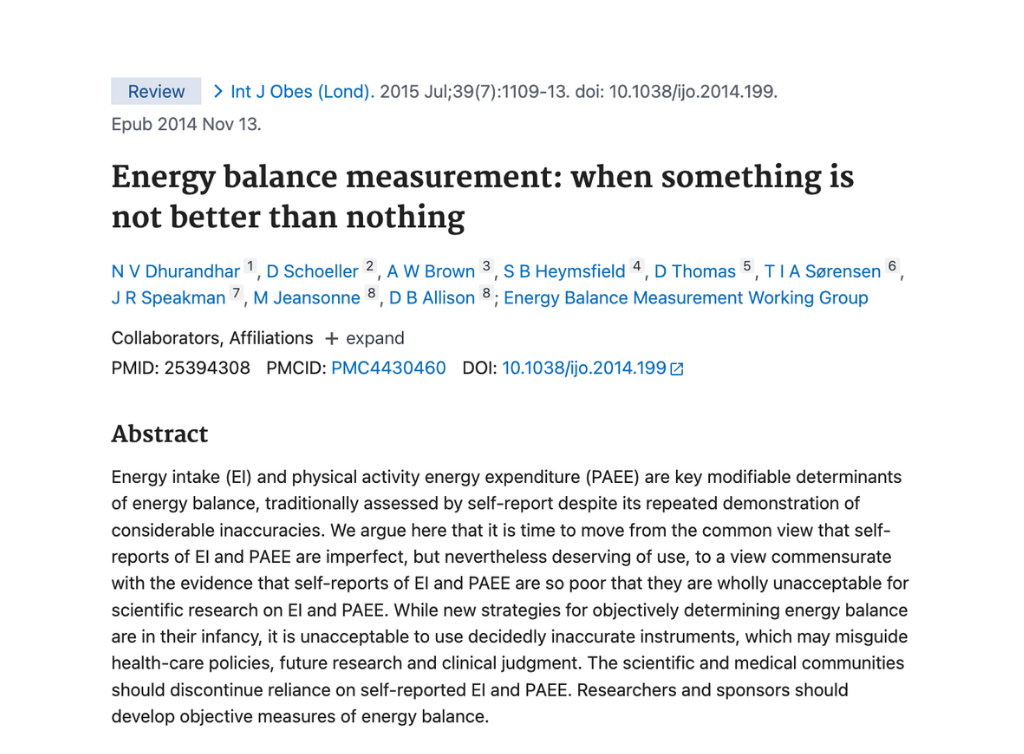
This article critiques the reliance on flawed methods of measuring energy balance in obesity research, cautioning that inaccurate or oversimplified metrics may lead to incorrect conclusions and ineffective public health strategies. It argues that “something is not better than nothing” when it comes to data quality, urging greater scientific rigor in how energy intake and expenditure are assessed, especially in the context of complex metabolic diseases.
– Energy balance (calories in vs. calories out) is difficult to measure accurately, and oversimplified assessments can mislead research and policy.
– Many widely used methods to estimate dietary intake and physical activity are subject to significant error and bias.
– The article emphasizes that inaccurate data can be more harmful than having no data at all, especially when guiding clinical decisions.
– Reliance on self-reported food intake frequently underestimates caloric consumption and overstates dietary compliance.
– Body weight changes result from complex biological processes, not just simple arithmetic of calorie differences.
– Insulin signaling, hormonal balance, and metabolic adaptations play a substantial role in determining energy storage and expenditure.
– Measurement tools must be validated and appropriate for the specific research context to avoid confounding findings.
– Observational studies using poor-quality energy balance metrics often fail to produce reliable, actionable insights.
– The article highlights the danger of overconfidence in flawed data, which can reinforce ineffective or misleading narratives about weight management.
– Standard calorie-focused approaches can distract from underlying metabolic dysfunction, particularly insulin resistance.
– Accurate measurements are essential to understand the biological drivers of obesity and to develop effective interventions.
– Flawed energy balance models often ignore the qualitative effects of different macronutrients, especially carbohydrates.
– The body’s compensatory mechanisms, including reduced resting metabolic rate and increased hunger, are not reflected in simple energy equations.
– There is a call for better tools and interdisciplinary collaboration to advance understanding of obesity beyond outdated calorie models.
– Misinterpretation of energy balance data can perpetuate stigma and blame toward individuals struggling with obesity.
This article aligns with the Opti Metabolics emphasis on moving beyond calorie-counting models to focus on metabolic health drivers such as insulin resistance, inflammation, and hormonal regulation. It supports The Purple Zone’s principle that metabolic dysfunction must be addressed at the root, not masked with oversimplified tools or flawed dietary tracking.
– Energy balance oversimplification ignores the role of insulin and carbohydrate quality in metabolic disease.
– The article reinforces the need for accurate, meaningful data to guide personalized metabolic interventions.
– Hormonal and inflammatory influences on weight gain are consistent with Opti Metabolics’ foundational principles.
Reviewed and interpreted by the Opti Metabolics editorial team, with a focus on early metabolic risk detection and prevention.
Read the article to learn more: Energy Balance Measurement: When Something is Not Better than Nothing
Opti Metabolics does not provide medical diagnosis, treatment, or advice. Our program is for educational and informational purposes only and does not represent medical advice or the practice of medicine. These article summaries are intended to help readers understand metabolic health research and emerging scientific findings, but personal health decisions should always be made in consultation with a qualified healthcare provider.
Participants are strongly advised to consult their personal healthcare professional before making any dietary, lifestyle, or medication changes.
Email: info@optimetabolics.com
It’s time to take control of your health.