Email: success@optimetabolics.com
This article is part of Opti Metabolics’ ongoing effort to translate complex metabolic research into clear, practical insights for readers without formal scientific or medical training.
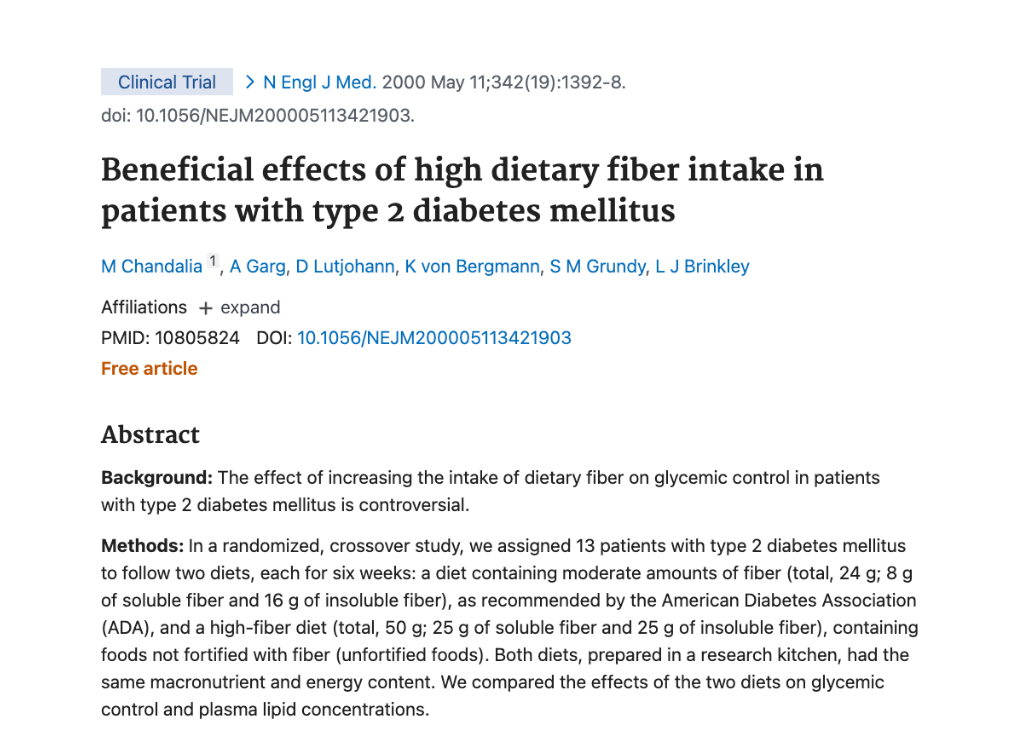
This study demonstrates that a high-fiber diet, particularly rich in soluble fiber, significantly improves glycemic control, insulin sensitivity, and lipid profiles in patients with type 2 diabetes. The results support the therapeutic potential of whole-food, fiber-rich dietary interventions in managing metabolic dysfunction.
– Participants consuming 50 g of fiber daily (with 25 g soluble fiber) had significantly better blood glucose control than those consuming 24 g.
– The high-fiber diet lowered postprandial blood glucose and insulin levels without adverse gastrointestinal effects.
– Fasting plasma glucose and glycosylated hemoglobin (HbA1c) levels were significantly reduced in the high-fiber group.
– LDL cholesterol decreased significantly with increased fiber intake, independent of weight loss.
– No significant changes in body weight or caloric intake occurred, indicating benefits were specific to fiber rather than caloric restriction.
– The high-fiber diet enhanced insulin sensitivity, reducing the insulin area under the curve during meal testing.
– Fecal bile acid excretion increased in the high-fiber group, suggesting improved cholesterol metabolism.
– Serum plant sterol concentrations decreased, reflecting reduced intestinal cholesterol absorption.
– The beneficial effects were observed over just six weeks, indicating relatively rapid metabolic improvements.
– The study focused on natural food sources (e.g., legumes, vegetables, fruits) rather than supplements.
– Improved lipid and glycemic markers occurred without changes in total fat or saturated fat intake.
– Soluble fiber was more effective than insoluble fiber in lowering glucose and cholesterol levels.
– High-fiber diets may modulate hepatic glucose production and insulin signaling through gut microbiota or fermentation byproducts (e.g., SCFAs).
– The authors suggest fiber intake above current standard recommendations may be necessary for optimal metabolic effects.
This study aligns with Opti Metabolics’ emphasis on improving insulin sensitivity through whole-food nutrition. While carbohydrates are typically restricted in our model, fiber-rich, low-glycemic sources—particularly soluble fibers—can be leveraged within a lower-carbohydrate context to support metabolic health and reduce insulin demand.
– Reinforces the value of natural, unprocessed dietary interventions that enhance insulin sensitivity and reduce glucose variability.
– Supports the inclusion of fermentable fibers that improve lipid metabolism and reduce LDL cholesterol without pharmaceutical intervention.
– Aligns with the Opti Metabolics principle that metabolic improvements can occur independent of weight loss, through targeted dietary changes.
Reviewed and interpreted by the Opti Metabolics editorial team, with a focus on early metabolic risk detection and prevention.
Read the article to learn more: Beneficial Effects of High Dietary Fiber Intake in Patients with Type 2 Diabetes Mellitus
Opti Metabolics does not provide medical diagnosis, treatment, or advice. Our program is for educational and informational purposes only and does not represent medical advice or the practice of medicine. These article summaries are intended to help readers understand metabolic health research and emerging scientific findings, but personal health decisions should always be made in consultation with a qualified healthcare provider.
Participants are strongly advised to consult their personal healthcare professional before making any dietary, lifestyle, or medication changes.
Email: info@optimetabolics.com
It’s time to take control of your health.