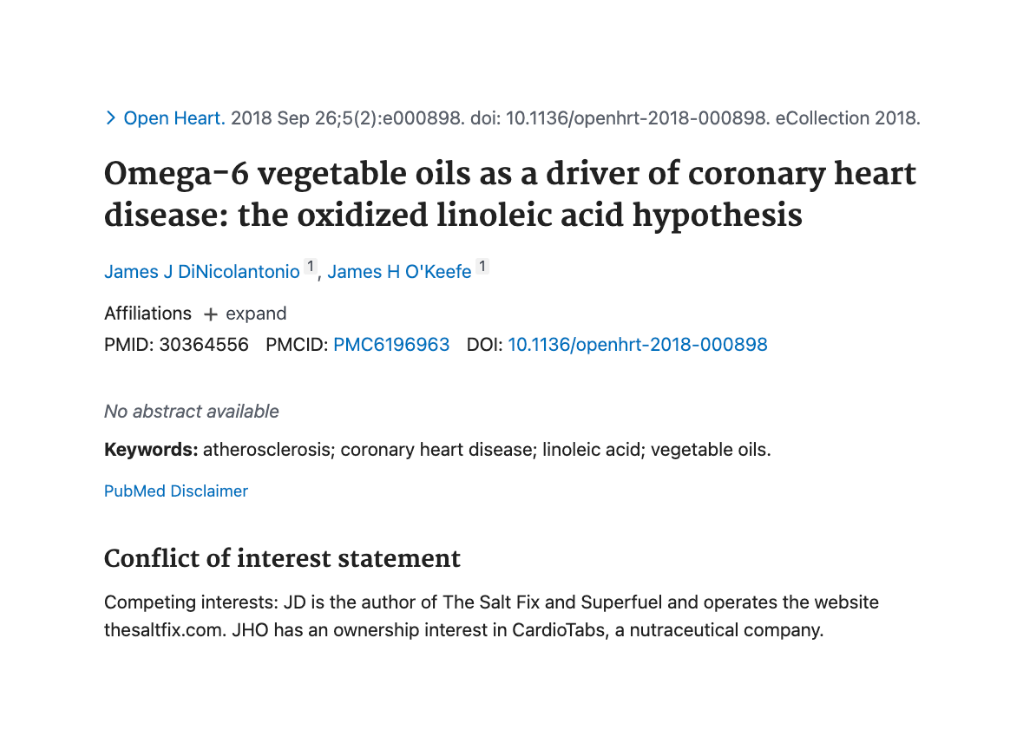
Article Review – Omega-6 Vegetable Oils as a Driver of Coronary Heart Disease: The Oxidized Linoleic Acid Hypothesis

Article Review – Omega-6 Vegetable Oils as a Driver of Coronary Heart Disease: The Oxidized Linoleic Acid Hypothesis

by James J. DiNicolantonio, James H. O’Keefe

This article is part of Opti Metabolics’ ongoing effort to translate complex metabolic research into clear, practical insights for readers without formal scientific or medical training.

Summary -

This article presents compelling evidence that the widespread consumption of omega-6-rich vegetable oils—particularly those high in linoleic acid (LA)—may be a major driver of coronary heart disease (CHD). The authors argue that the oxidative breakdown products of LA, not saturated fat or cholesterol, are key contributors to atherosclerosis, inflammation, and metabolic dysfunction, thereby challenging conventional dietary guidelines.

Key Takeaways Explained for a Non-Medical Audience

– Linoleic acid, the primary fatty acid in seed oils like soybean, corn, and sunflower oil, is highly prone to oxidation in the body.

– Oxidized linoleic acid metabolites (OXLAMs) are cytotoxic and pro-inflammatory, contributing to endothelial dysfunction and vascular damage.

– The rise in vegetable oil consumption in the 20th century parallels the increase in heart disease, despite reductions in saturated fat and cholesterol intake.

– Excess dietary omega-6 oils disrupt cellular membranes and mitochondrial function, promoting oxidative stress and metabolic instability.

– OXLAMs are found in high concentrations in atherosclerotic plaques and may initiate or accelerate their formation.

– The article challenges the historical demonization of saturated fat, pointing to seed oils—not animal fats—as the more dangerous dietary component.

– LA accumulation is especially problematic because it integrates into body fat stores and cell membranes, persisting for months or years.

– A high omega-6 to omega-3 ratio is linked with increased inflammation, impaired insulin signaling, and chronic disease risk.

– Experimental models show that animals fed high-LA diets develop atherosclerosis, oxidative stress, and lipid peroxidation—even without high cholesterol.

– The authors note that reducing omega-6 intake, rather than lowering LDL-C, may yield better outcomes for preventing CHD.

– Diets lower in seed oils and higher in natural saturated fats, omega-3s, and antioxidants can help stabilize lipids and prevent inflammation.

– OXLAMs may also play a role in promoting cancer, neurodegeneration, and liver disease, suggesting broader implications of excess omega-6 intake.

– The oxidized linoleic acid hypothesis better explains the failure of low-fat dietary interventions to reduce CHD in population studies.

– Clinical focus should shift toward identifying and minimizing dietary sources of oxidizable fats rather than relying on statins or cholesterol-lowering drugs alone.

– Public health guidelines have overlooked the damaging role of industrial seed oils and should be re-evaluated in light of emerging metabolic science.


Integrated Insights –

This article powerfully supports the Opti Metabolics view that chronic inflammation and oxidative stress—not cholesterol per se—are the primary drivers of cardiovascular disease. It reinforces the importance of eliminating omega-6 seed oils and stabilizing metabolic function through dietary intervention.

Alignment with Broader Review Content –

– The pro-inflammatory and oxidative effects of omega-6 oils align with our framework that identifies seed oils as key contributors to metabolic dysfunction.

-The article’s focus on mitochondrial damage, insulin resistance, and inflammation links directly to our broader interpretation of cardiovascular pathology.

– Its call to prioritize natural, unprocessed fats over industrial oils mirrors our ketogenic and low-carb dietary recommendations.

Reviewed and interpreted by the Opti Metabolics editorial team, with a focus on early metabolic risk detection and prevention.

Read the article to learn more: Omega-6 Vegetable Oils as a Driver of Coronary Heart Disease: The Oxidized Linoleic Acid Hypothesis

Health & Medical Disclaimer –

Opti Metabolics does not provide medical diagnosis, treatment, or advice. Our program is for educational and informational purposes only and does not represent medical advice or the practice of medicine. These article summaries are intended to help readers understand metabolic health research and emerging scientific findings, but personal health decisions should always be made in consultation with a qualified healthcare provider.

Participants are strongly advised to consult their personal healthcare professional before making any dietary, lifestyle, or medication changes.

x
Opti Metabolics provides informational health insights and does not dispense medical advice, diagnose, treat, or cure any medical conditions. Always consult a qualified healthcare professional before making any health-related decisions.

Contact With Us!

Email: info@optimetabolics.com

Join Opti Metabolics

It’s time to take control of your health.

Eat Like a Human Again

Drop your name and email to receive the eBook that shows how returning to simple, whole foods can restore stable energy, support metabolic health, and help your body function the way it was designed to.
Name

The Fast Track to Frailty

Drop your name and email to receive the guide that helps you understand how GLP-1 weight loss changes your body, and why the scale alone never tells the full story.
Name

Starving for Nothing

Drop your name and email to receive the eBook that shows why “Eat Less, Move More” was never your fault. It was the wrong story, and now you get the right one.
Name