Email: success@optimetabolics.com
This article is part of Opti Metabolics’ ongoing effort to translate complex metabolic research into clear, practical insights for readers without formal scientific or medical training.
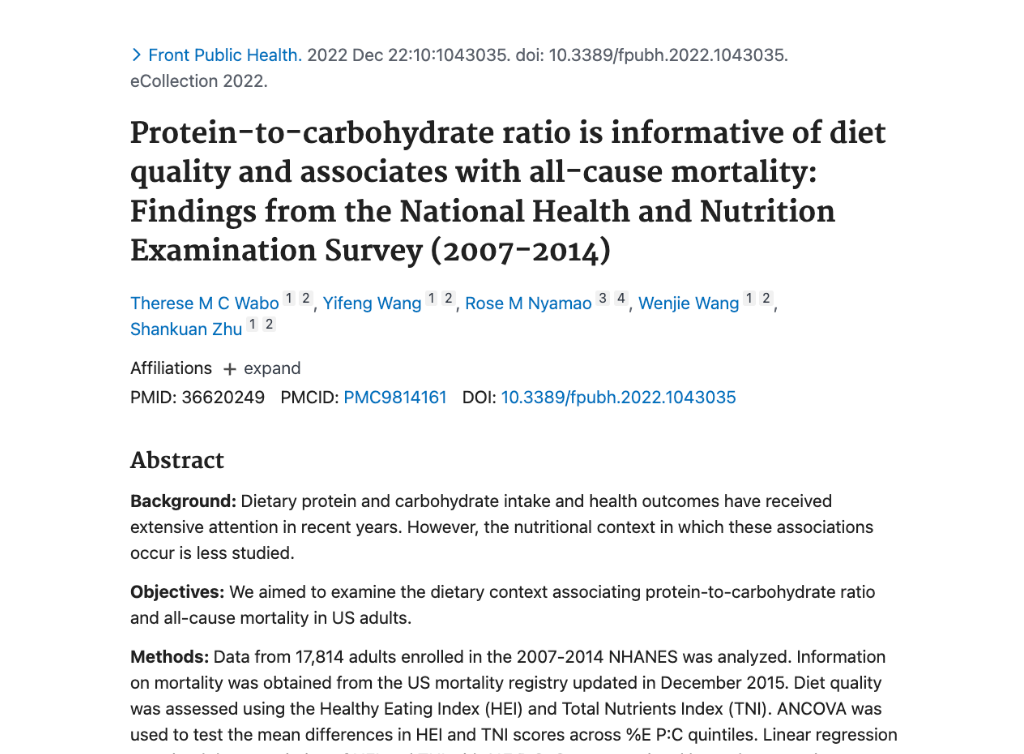
This study evaluates the relationship between dietary protein-to-carbohydrate ratio and all-cause mortality, revealing that a higher protein-to-carbohydrate ratio correlates with improved survival outcomes. The findings suggest that diets with balanced macronutrient composition, favoring protein over excess carbohydrates, support metabolic health and reduce risk factors linked to chronic disease.
– Higher protein-to-carbohydrate ratios in the diet are associated with lower all-cause mortality risk.
– Excessive carbohydrate intake, especially from refined sources, is linked to poor metabolic outcomes.
– Diet quality improves as the protein-to-carbohydrate ratio increases, indicating better nutrient balance.
– Elevated carbohydrate consumption can exacerbate insulin resistance and metabolic dysfunction.
– Protein intake supports muscle mass maintenance and metabolic rate, which are protective factors.
– Low protein-to-carbohydrate ratios correspond with higher rates of obesity, diabetes, and cardiovascular disease.
– Adjusting macronutrient ratios may be a practical strategy to improve long-term health and survival.
– The ratio serves as a useful dietary marker beyond absolute macronutrient quantities.
– Diets with better protein-to-carbohydrate balance often align with lower inflammatory profiles.
– Maintaining higher protein relative to carbohydrates can stabilize blood sugar and reduce glycemic variability.
– The findings support dietary patterns that limit refined carbohydrates and emphasize whole foods.
– Nutritional interventions targeting this ratio may complement existing metabolic health strategies.
– The study reinforces the link between diet composition, metabolic regulation, and chronic disease risk.
– Findings are consistent across demographic subgroups, indicating broad applicability.
– Optimizing protein-to-carbohydrate ratios aligns with strategies to mitigate insulin resistance.
This article strengthens the Opti Metabolics framework by highlighting the importance of macronutrient balance, particularly the protein-to-carbohydrate ratio, in managing insulin resistance and metabolic health. It supports low-carbohydrate and well-formulated dietary approaches that reduce metabolic stress and promote stable blood glucose regulation through natural nutrition optimization.
– Reinforces the principle that excessive carbohydrate consumption drives insulin resistance and metabolic disease.
– Supports dietary strategies that prioritize protein intake and limit high-glycemic carbohydrates to reduce inflammation.
– Aligns with the core philosophy that well-balanced diets featuring natural ingredients optimize metabolic function and prevent chronic illness.
Reviewed and interpreted by the Opti Metabolics editorial team, with a focus on early metabolic risk detection and prevention.
Read the article to learn more: Protein-to-Carbohydrate Ratio is Informative of Diet Quality and Associates with All-Cause Mortality: Findings from the National Health and Nutrition Examination Survey (2007-2014)
Opti Metabolics does not provide medical diagnosis, treatment, or advice. Our program is for educational and informational purposes only and does not represent medical advice or the practice of medicine. These article summaries are intended to help readers understand metabolic health research and emerging scientific findings, but personal health decisions should always be made in consultation with a qualified healthcare provider.
Participants are strongly advised to consult their personal healthcare professional before making any dietary, lifestyle, or medication changes.
Email: info@optimetabolics.com
It’s time to take control of your health.