Email: success@optimetabolics.com
This article is part of Opti Metabolics’ ongoing effort to translate complex metabolic research into clear, practical insights for readers without formal scientific or medical training.
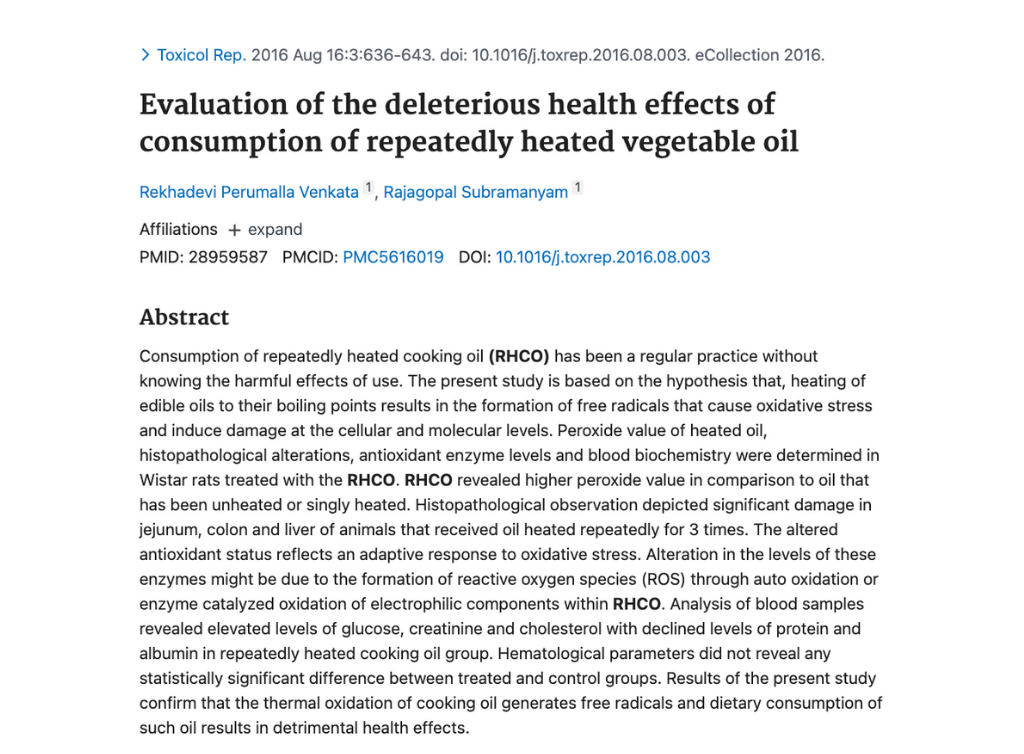
The article investigates the harmful effects of consuming repeatedly heated cooking oil, demonstrating that it generates free radicals, induces oxidative stress, and causes cellular and molecular damage, particularly in the liver, jejunum, and colon. These changes elevate blood biochemical markers and contribute to chronic diseases, aligning with the need to avoid inflammatory seed oils to support metabolic health. Avoiding such oils and adopting low-carbohydrate or ketogenic diets may mitigate these risks.
– Repeatedly heated cooking oil generates reactive oxygen species, leading to oxidative stress.
– The study used Wistar rats to assess the impact of repeatedly heated vegetable oil compared to unheated or singly heated oil.
– Oils heated multiple times showed higher peroxide values, indicating greater lipid oxidation.
– Histopathological analysis revealed significant damage to the jejunum, colon, and liver in rats fed repeatedly heated oil.
– Rats fed oil heated three times had elevated glucose, cholesterol, and creatinine levels compared to those fed unheated or singly heated oil.
– Oxidative stress markers, such as superoxide dismutase and glutathione peroxidase, increased significantly in rats fed repeatedly heated oil.
– Catalase levels decreased in rats fed repeatedly heated oil, indicating impaired antioxidant defense.
– The study found altered hematological parameters, suggesting potential impacts on blood cell function.
– Repeated heating of oils at high temperatures (160–190°C) changes viscosity, color, and smoke point, producing toxic compounds.
– The practice of reusing cooking oil is common to reduce costs but poses significant health risks.
– No prior studies in Hyderabad had evaluated the intensity of repeatedly heated oil consumption.
– The article highlights the need for public awareness about the dangers of consuming foods prepared with repeatedly heated oils.
– Lipid peroxidation from repeatedly heated oils damages cell membranes, leading to membrane disintegrity.
– The study suggests further research is needed to explore DNA adduct formation and repair mechanisms related to heated oil consumption.
– Repeatedly heated oils may contribute to chronic diseases like cancer due to oxidative stress and cellular damage.
The findings underscore the role of repeatedly heated vegetable oils, rich in omega-6 fatty acids, in promoting inflammation and oxidative stress, which are central to insulin resistance and metabolic dysfunction within the Opti Metabolics framework. These oils exacerbate chronic inflammatory stresses, aligning with the need for dietary strategies like low-carbohydrate or ketogenic approaches to reduce metabolic harm. Avoiding such oils supports optimal metabolic health by minimizing oxidative damage and inflammation.
– Repeatedly heated oils, high in omega-6, contribute to chronic inflammatory stresses, a key driver of insulin resistance and related diseases.
– The observed cellular damage and lipid peroxidation align with the Opti Metabolics emphasis on avoiding inflammatory dietary components to prevent chronic conditions.
– The study’s findings support the use of natural, unprocessed fats and low-carbohydrate diets to mitigate oxidative stress and metabolic dysfunction.
Reviewed and interpreted by the Opti Metabolics editorial team, with a focus on early metabolic risk detection and prevention.
Read the article to learn more: Evaluation of the Deleterious Health Effects of Consumption of Repeatedly Heated Vegetable Oil
Opti Metabolics does not provide medical diagnosis, treatment, or advice. Our program is for educational and informational purposes only and does not represent medical advice or the practice of medicine. These article summaries are intended to help readers understand metabolic health research and emerging scientific findings, but personal health decisions should always be made in consultation with a qualified healthcare provider.
Participants are strongly advised to consult their personal healthcare professional before making any dietary, lifestyle, or medication changes.
Email: info@optimetabolics.com
Your results suggest early signs of metabolic dysfunction are emerging beneath the surface.
While you may feel healthy today, several biomarkers indicate increasing risk for insulin resistance, cardiovascular disease, and other chronic conditions if these patterns continue to progress.
The encouraging news is that these findings were identified before disease developed, creating an opportunity to improve your long-term health trajectory through targeted interventions.
No
Risk
Low
Risk
Medium Risk
High Risk
Higher Risk
Higher numbers indicate more biomarkers in each risk category.
We look upstream to identify and address the root drivers of chronic disease long before symptoms appear.
Excess insulin and poor cellular response drive metabolic dycfuntion and fat storage.
Imbalance between free radicals and your body's antioxidant defenses.
Chronic, low grade inflamation damages tissues and disrupts normal function.
Elevated cortisol and other stress hormones amplify the damaga and impair recovery.
Inherited factors can increase succeptbility and influence how your body responds.
Over time, these drivers create the foundation for chronic disease to take root.