Email: success@optimetabolics.com
This article is part of Opti Metabolics’ ongoing effort to translate complex metabolic research into clear, practical insights for readers without formal scientific or medical training.
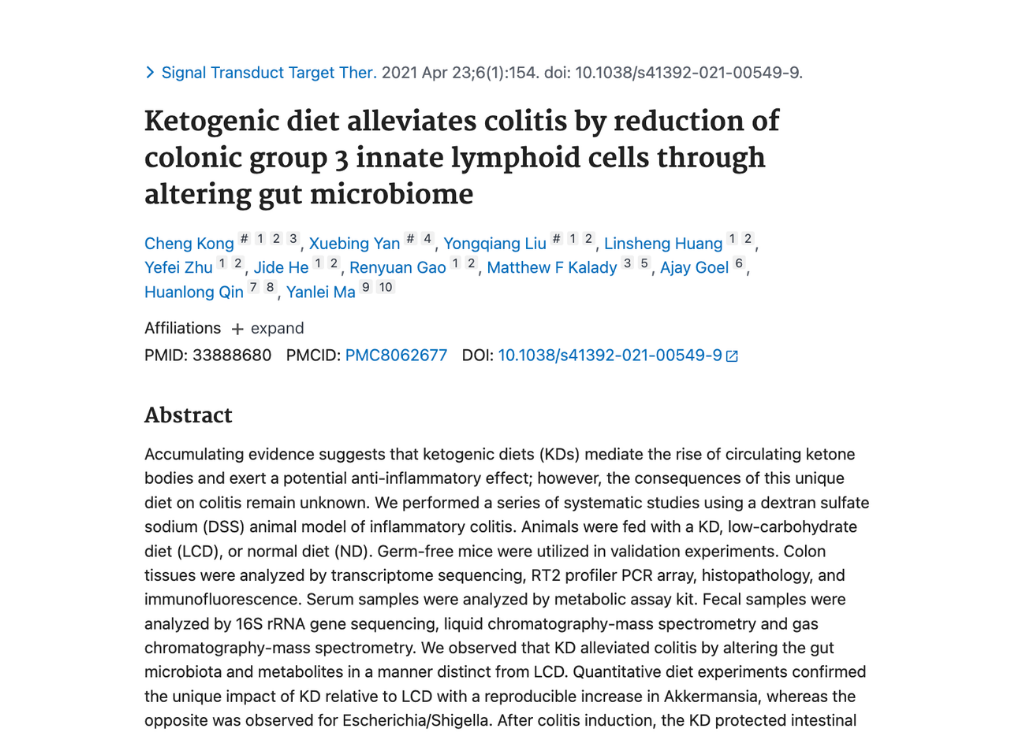
This study demonstrates that a ketogenic diet (KD) can significantly alleviate colitis symptoms by altering the gut microbiome and reducing pro-inflammatory group 3 innate lymphoid cells (ILC3s) in the colon. The findings highlight the therapeutic potential of ketogenic nutrition in managing inflammatory bowel conditions through immune modulation and microbiome restructuring.
– The ketogenic diet reduced inflammation and clinical severity in multiple mouse models of colitis.
– KD led to a marked decrease in the number of colonic ILC3s, a key immune cell type that drives mucosal inflammation.
– ILC3 reduction was associated with decreased production of IL-17 and IL-22, both involved in pro-inflammatory pathways.
– The gut microbiome was significantly reshaped by the ketogenic diet, showing increased abundance of beneficial microbial taxa such as Akkermansia and Lactobacillus.
– Antibiotic treatment eliminated the protective effect of KD, confirming the microbiota’s central role in mediating the benefits.
– Ketogenic diet upregulated short-chain fatty acid-producing bacteria, supporting intestinal barrier function and reducing immune activation.
– The colonic epithelium showed reduced damage and improved histological structure in the KD-fed group.
– KD-fed mice exhibited lower levels of systemic inflammation, suggesting a whole-body anti-inflammatory effect.
– The findings indicate that diet-induced metabolic changes can regulate immune responses independent of pharmaceutical intervention.
– ILC3s, while essential for some host defenses, may become pathogenic in dysbiotic or metabolically stressed environments—conditions improved by KD.
– Gene expression analysis confirmed suppression of multiple pro-inflammatory signaling pathways in colonic tissue under KD.
– KD downregulated markers of oxidative stress and increased expression of protective antioxidant genes.
– A high-carbohydrate, standard diet failed to produce these benefits and maintained higher levels of ILC3s and inflammatory mediators.
– The study suggests a direct link between dietary macronutrient composition, microbial ecology, and immune homeostasis.
– These findings may have relevance not only for colitis but for broader chronic inflammatory diseases driven by immune-microbiome dysregulation.
This article aligns strongly with the Opti Metabolics framework, providing direct evidence that carbohydrate-restricted, ketogenic dietary patterns can rebalance immune signaling and restore gut homeostasis. Through improving microbiota composition and reducing inflammatory immune cell populations, ketogenic diets demonstrate metabolic and immunological synergy that may extend to other chronic disease contexts.
– Confirms that chronic inflammation and immune dysfunction can be driven by excess carbohydrates and corrected through nutritional ketosis.
– Reinforces the connection between metabolic inputs and immune system outputs, particularly within the gut-immune axis.
– Supports the view that natural, nutrient-guided interventions can provide powerful, non-pharmaceutical disease-modifying effects.
Reviewed and interpreted by the Opti Metabolics editorial team, with a focus on early metabolic risk detection and prevention.
Read the article to learn more: Ketogenic Diet Alleviates Colitis by Reduction of Colonic Group 3 Innate Lymphoid Cells through Altering Gut Microbiome
Opti Metabolics does not provide medical diagnosis, treatment, or advice. Our program is for educational and informational purposes only and does not represent medical advice or the practice of medicine. These article summaries are intended to help readers understand metabolic health research and emerging scientific findings, but personal health decisions should always be made in consultation with a qualified healthcare provider.
Participants are strongly advised to consult their personal healthcare professional before making any dietary, lifestyle, or medication changes.
Email: info@optimetabolics.com
Your results suggest early signs of metabolic dysfunction are emerging beneath the surface.
While you may feel healthy today, several biomarkers indicate increasing risk for insulin resistance, cardiovascular disease, and other chronic conditions if these patterns continue to progress.
The encouraging news is that these findings were identified before disease developed, creating an opportunity to improve your long-term health trajectory through targeted interventions.
No
Risk
Low
Risk
Medium Risk
High Risk
Higher Risk
Higher numbers indicate more biomarkers in each risk category.
We look upstream to identify and address the root drivers of chronic disease long before symptoms appear.
Excess insulin and poor cellular response drive metabolic dycfuntion and fat storage.
Imbalance between free radicals and your body's antioxidant defenses.
Chronic, low grade inflamation damages tissues and disrupts normal function.
Elevated cortisol and other stress hormones amplify the damaga and impair recovery.
Inherited factors can increase succeptbility and influence how your body responds.
Over time, these drivers create the foundation for chronic disease to take root.