Email: success@optimetabolics.com
This article is part of Opti Metabolics’ ongoing effort to translate complex metabolic research into clear, practical insights for readers without formal scientific or medical training.
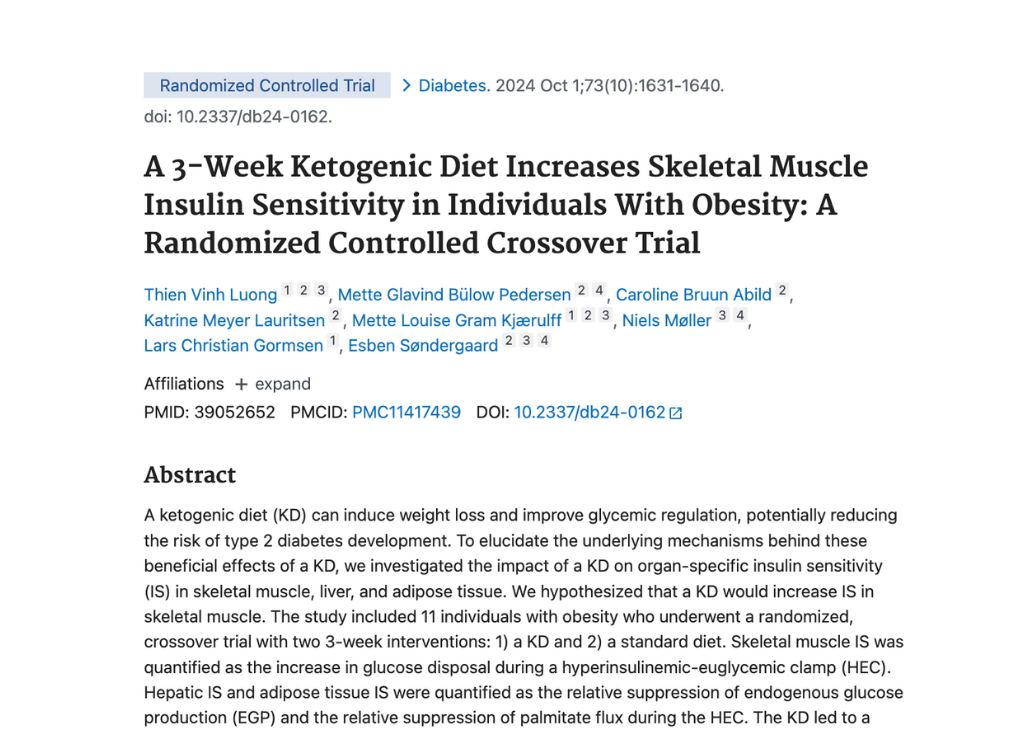
This study demonstrates that a short-term ketogenic diet significantly improves skeletal muscle insulin sensitivity in individuals with obesity, highlighting its potential to reverse insulin resistance rapidly. These findings underscore the metabolic benefits of carbohydrate restriction in restoring glucose regulation and reducing metabolic stress, which are critical for preventing chronic diseases linked to poor metabolic health.
– A three-week ketogenic diet intervention improved skeletal muscle insulin sensitivity in obese participants.
– Insulin sensitivity gains occurred independently of changes in body weight, indicating metabolic improvements beyond fat loss.
– Ketogenic diet reduced fasting insulin levels and enhanced glucose uptake in muscle tissue.
– Participants experienced lowered circulating insulin concentrations, reflecting improved systemic metabolic function.
– The diet significantly decreased carbohydrate intake while increasing fat consumption, favoring ketone production.
– Enhanced fat oxidation and ketogenesis contributed to improved metabolic flexibility.
– The ketogenic diet reduced markers of metabolic inflammation and oxidative stress.
– Improvements in insulin signaling pathways were observed at the cellular level in skeletal muscle.
– Reduced reliance on glucose metabolism alleviated the burden of hyperinsulinemia common in obesity.
– The study supports carbohydrate restriction as a therapeutic approach for insulin resistance and related metabolic dysfunctions.
– Short duration suggests that early metabolic adaptations can occur rapidly with dietary intervention.
– Omega-6-rich seed oils were minimized, likely contributing to reduced inflammation and improved insulin action.
– The diet’s natural, whole-food emphasis aligns with reduced metabolic stress and improved mitochondrial efficiency.
– These metabolic shifts promote long-term benefits for energy management and disease prevention.
– Personalized dietary interventions that emphasize ketogenic principles may optimize outcomes in metabolic health restoration.
This research reinforces the core Opti Metabolics philosophy that insulin resistance, driven by excessive carbohydrate intake and metabolic stress, can be effectively countered through ketogenic dietary strategies. By improving skeletal muscle insulin sensitivity and reducing inflammation, such interventions address fundamental metabolic dysfunctions contributing to chronic disease risk.
– Validates low-carbohydrate ketogenic diets as powerful tools to reverse insulin resistance.
– Highlights the role of reduced omega-6 seed oil consumption in mitigating inflammatory metabolic stress.
– Supports the integration of metabolic flexibility enhancement into comprehensive metabolic health strategies.
Reviewed and interpreted by the Opti Metabolics editorial team, with a focus on early metabolic risk detection and prevention.
Read the article to learn more: A Three-Week Ketogenic Diet Increases Skeletal Muscle Insulin Sensitivity in Individuals with Obesity – A Randomized, Controlled Crossover Trial
Opti Metabolics does not provide medical diagnosis, treatment, or advice. Our program is for educational and informational purposes only and does not represent medical advice or the practice of medicine. These article summaries are intended to help readers understand metabolic health research and emerging scientific findings, but personal health decisions should always be made in consultation with a qualified healthcare provider.
Participants are strongly advised to consult their personal healthcare professional before making any dietary, lifestyle, or medication changes.
Email: info@optimetabolics.com
It’s time to take control of your health.