Email: success@optimetabolics.com
This article is part of Opti Metabolics’ ongoing effort to translate complex metabolic research into clear, practical insights for readers without formal scientific or medical training.
This article examines the complex relationship between reactive oxygen species (ROS) and antioxidant defenses, emphasizing that oxidative stress arises not from the presence of ROS alone but from an imbalance between ROS production and antioxidant capacity. It highlights that indiscriminate use of synthetic antioxidants may not always be beneficial and that targeted strategies to support redox balance must consider timing, context, and underlying metabolic health.
– ROS play a dual role: damaging in excess but essential for signaling, immunity, and cellular adaptation in moderation.
– Oxidative stress results from a disrupted balance between ROS generation and antioxidant defenses, not ROS presence alone.
– The body’s endogenous antioxidant systems (e.g., superoxide dismutase, glutathione) are tightly regulated and critical for health.
– Overuse of synthetic antioxidants may blunt beneficial ROS signaling involved in cell repair and metabolic regulation.
– Antioxidants may interfere with adaptive responses to exercise, caloric restriction, or other hormetic stressors.
– ROS-induced oxidative stress is implicated in aging, neurodegeneration, cancer, and metabolic disorders such as diabetes.
– Metabolic dysfunction and insulin resistance increase ROS production through mitochondrial overload and inflammatory pathways.
– Omega-6-rich seed oils contribute to oxidative stress by increasing lipid peroxidation and promoting inflammatory cascades.
– Natural compounds from whole foods (e.g., polyphenols) often exhibit adaptive, mild pro-oxidant effects that support endogenous resilience.
– Timing, dosage, and type of antioxidant matter significantly—blanket antioxidant therapy may yield unintended effects.
– Supporting mitochondrial health reduces excessive ROS at the source rather than merely neutralizing them afterward.
– Lifestyle interventions like low-carb and ketogenic diets may reduce oxidative stress by improving mitochondrial efficiency and reducing glucose-driven ROS.
– In disease contexts with severe oxidative burden, carefully selected antioxidant support may help rebalance redox states.
– Nutritional strategies that enhance the body’s own antioxidant capacity are generally preferable to high-dose synthetic supplementation.
– Redox balance is a dynamic and personalized target, closely tied to metabolic health and inflammation.
The article reinforces Opti Metabolics’ emphasis on restoring balance through metabolic and mitochondrial optimization rather than relying on reductionist supplementation. Addressing root causes like insulin resistance and inflammation is more effective than merely suppressing symptoms of oxidative stress with synthetic antioxidants.
– Excessive carbohydrate intake and metabolic stress are upstream causes of mitochondrial ROS production and redox imbalance.
– Omega-6 seed oils fuel lipid peroxidation and chronic inflammation, worsening oxidative stress at the cellular level.
– Natural, nutrient-dense, low-carb dietary strategies enhance endogenous antioxidant systems and reduce need for external interventions.
Reviewed and interpreted by the Opti Metabolics editorial team, with a focus on early metabolic risk detection and prevention.
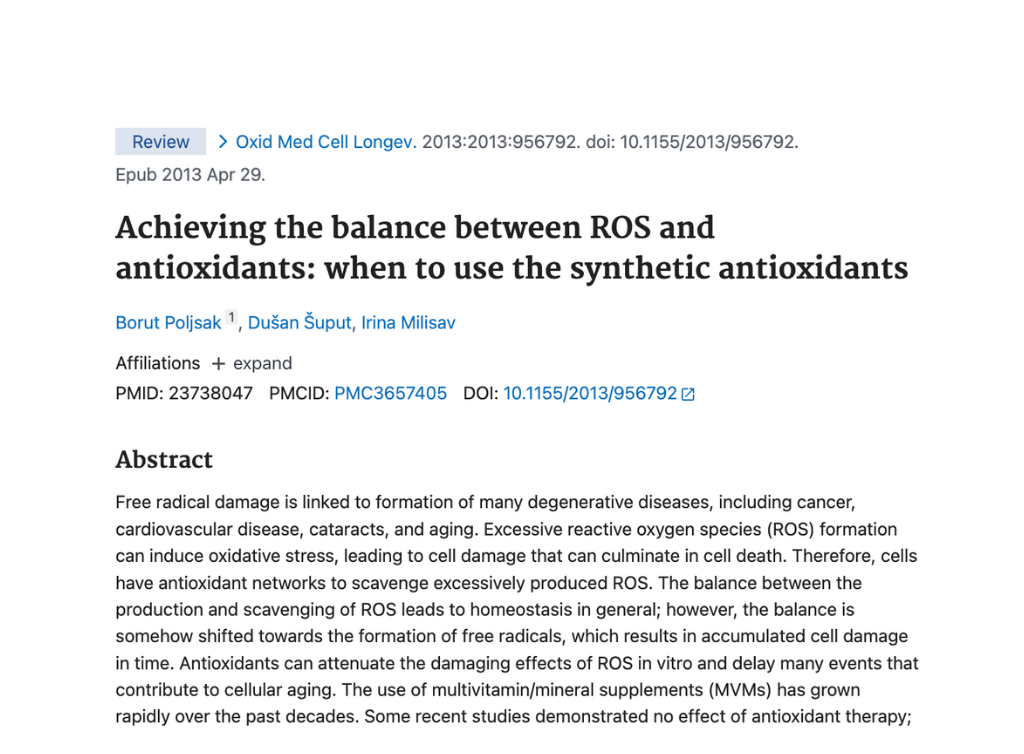
Read the article to learn more: Achieving the Balance between ROS and Antioxidants: When to Use the Synthetic Antioxidants
Opti Metabolics does not provide medical diagnosis, treatment, or advice. Our program is for educational and informational purposes only and does not represent medical advice or the practice of medicine. These article summaries are intended to help readers understand metabolic health research and emerging scientific findings, but personal health decisions should always be made in consultation with a qualified healthcare provider.
Participants are strongly advised to consult their personal healthcare professional before making any dietary, lifestyle, or medication changes.
Email: info@optimetabolics.com
Your results suggest early signs of metabolic dysfunction are emerging beneath the surface.
While you may feel healthy today, several biomarkers indicate increasing risk for insulin resistance, cardiovascular disease, and other chronic conditions if these patterns continue to progress.
The encouraging news is that these findings were identified before disease developed, creating an opportunity to improve your long-term health trajectory through targeted interventions.
No
Risk
Low
Risk
Medium Risk
High Risk
Higher Risk
Higher numbers indicate more biomarkers in each risk category.
We look upstream to identify and address the root drivers of chronic disease long before symptoms appear.
Excess insulin and poor cellular response drive metabolic dycfuntion and fat storage.
Imbalance between free radicals and your body's antioxidant defenses.
Chronic, low grade inflamation damages tissues and disrupts normal function.
Elevated cortisol and other stress hormones amplify the damaga and impair recovery.
Inherited factors can increase succeptbility and influence how your body responds.
Over time, these drivers create the foundation for chronic disease to take root.