Email: success@optimetabolics.com
This article is part of Opti Metabolics’ ongoing effort to translate complex metabolic research into clear, practical insights for readers without formal scientific or medical training.
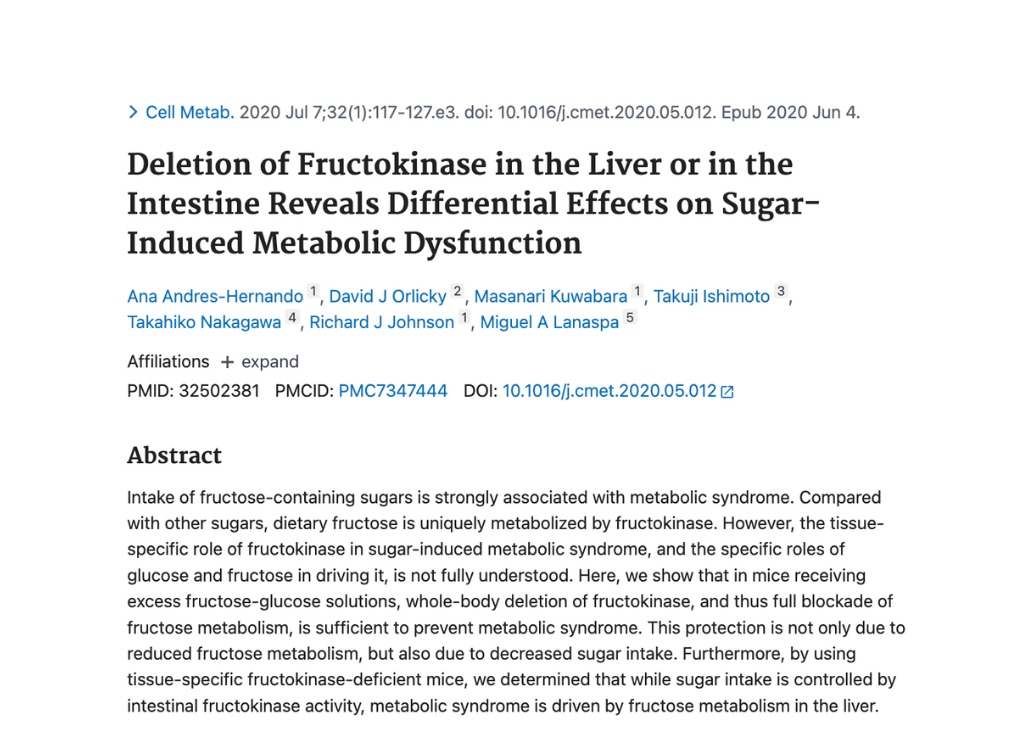
This study investigates the distinct roles of fructokinase deletion in the liver versus the intestine on sugar-induced metabolic dysfunction, highlighting how sugar metabolism in different tissues contributes to insulin resistance and related metabolic disturbances. Findings emphasize tissue-specific mechanisms by which excessive sugar intake drives metabolic disease, offering insights into potential targeted interventions to improve metabolic health.
– Fructokinase is critical for fructose metabolism and its deletion alters sugar processing in a tissue-specific manner.
– Deleting fructokinase in the liver reduces sugar-induced fat accumulation and insulin resistance more effectively than intestinal deletion.
– Intestinal fructokinase deletion decreases systemic inflammation and gut permeability, impacting metabolic dysfunction.
– Sugar metabolism in the liver predominantly contributes to lipid dysregulation and insulin resistance.
– Intestinal fructokinase activity influences metabolic endotoxemia and inflammatory pathways.
– Both liver and intestinal fructokinase pathways modulate glucose homeostasis but via different mechanisms.
– Excessive fructose metabolism in these tissues exacerbates oxidative stress and chronic inflammation.
– Targeting fructokinase could be a strategic approach to mitigating sugar-related metabolic diseases.
– The study supports limiting fructose intake to prevent metabolic stress and insulin resistance.
– Differential tissue roles suggest personalized therapeutic strategies depending on metabolic dysfunction profile.
– Findings reinforce the impact of dietary sugars on systemic metabolic health beyond simple caloric excess.
– Intervention at the metabolic enzyme level may complement dietary and lifestyle modifications.
– Results underscore the importance of considering organ-specific metabolism in metabolic disease research.
– The interaction between sugar metabolism and inflammation is central to chronic disease development.
– Optimizing metabolic pathways through natural compounds or dietary interventions could reduce disease burden.
This research aligns closely with the Opti Metabolics framework by elucidating how excessive carbohydrate intake, particularly fructose, impairs metabolic pathways differently in liver and intestinal tissues, driving insulin resistance and inflammation. The findings support approaches that reduce sugar consumption and favor metabolic health through targeted nutritional strategies that modulate key enzymatic processes, consistent with low-carbohydrate and ketogenic diet principles.
– Highlights the metabolic consequences of excessive carbohydrate consumption, a core driver of insulin resistance and chronic disease in Opti
– Metabolics philosophy.
Reinforces the importance of reducing fructose and sugar intake to alleviate metabolic and inflammatory stress.
– Supports the use of well-formulated natural interventions to improve tissue-specific metabolic function and reduce disease risk.
Reviewed and interpreted by the Opti Metabolics editorial team, with a focus on early metabolic risk detection and prevention.
Read the article to learn more: Deletion of Fructokinase in the Liver or in the Intestine Reveals Differential Effects on Sugar-Induced Metabolic Dysfunction
Opti Metabolics does not provide medical diagnosis, treatment, or advice. Our program is for educational and informational purposes only and does not represent medical advice or the practice of medicine. These article summaries are intended to help readers understand metabolic health research and emerging scientific findings, but personal health decisions should always be made in consultation with a qualified healthcare provider.
Participants are strongly advised to consult their personal healthcare professional before making any dietary, lifestyle, or medication changes.
Email: info@optimetabolics.com
It’s time to take control of your health.