Email: success@optimetabolics.com
This article is part of Opti Metabolics’ ongoing effort to translate complex metabolic research into clear, practical insights for readers without formal scientific or medical training.
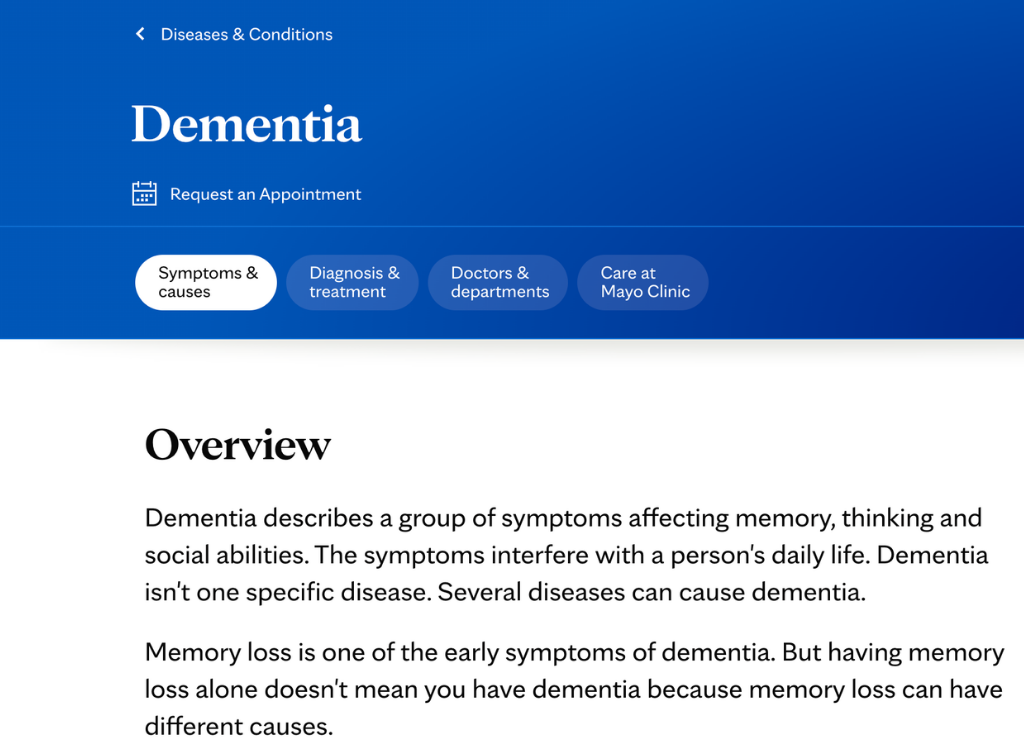
The Mayo Clinic’s exploration of dementia, particularly Alzheimer’s disease, underscores its complex etiology involving progressive cognitive decline, with lifestyle and metabolic factors playing significant roles in risk modification. The article emphasizes the need for a standardized framework to clarify terminology and enhance clinical communication, aligning with preventive strategies that address metabolic health.
– Dementia is characterized by progressive memory, cognitive, and intellectual decline, with Alzheimer’s disease being the most common form, accounting for 60–70% of cases.
– No specific treatment exists to reverse Alzheimer’s disease, but managing metabolic derangements can improve patient alertness and overall health.
– The diagnosis of Alzheimer’s is made through clinical and ancillary evaluations, ruling out other causes of dementia.
– Cortical neurons in Alzheimer’s patients show paired helical filaments and a severe decline in cholinergic activity due to loss of neurons in deep cerebral structures.
– Cerebral blood flow impairment in dementia is linked to decreased neuronal metabolism, which may be assessed using advanced imaging like positron-emission tomography.
– Safety concerns, such as disorientation and impaired judgment, increase risks for accidents in dementia patients, necessitating careful management.
– Discontinuing unnecessary medications in elderly dementia patients can enhance alertness and reduce complications.
– Lifestyle interventions, including physical activity and a nutrient-rich diet, are critical for optimizing brain health and potentially slowing cognitive decline.
– The Mayo Clinic advocates for a new framework to standardize dementia nomenclature, improving communication among clinicians, researchers, and patients.
– The proposed framework aims to clarify whether dementia is defined clinically, biologically, or through a combination of both.
– Beta testing of the new framework will involve clinicians and patients to assess its effectiveness in explaining dementia diagnoses.
– Metabolic factors, such as glucose metabolism, are highlighted as key areas of research for their role in dementia progression.
– The article notes that dementia’s preclinical phase can last years, providing a window for early preventive interventions.
– Women are disproportionately affected by dementia, experiencing higher disability and mortality rates, and providing most informal care.
The Mayo Clinic’s findings align with the Opti Metabolics framework by emphasizing the role of metabolic health, particularly glucose metabolism, in dementia prevention and management. Addressing insulin resistance and optimizing nutrient intake through low-carbohydrate or ketogenic diets could mitigate cognitive decline, supporting the framework’s focus on metabolic optimization.
– The emphasis on glucose metabolism as a factor in dementia progression supports the Opti Metabolics view that insulin resistance, driven by excessive carbohydrate consumption, underlies chronic conditions like Alzheimer’s.
– The call for lifestyle interventions, including nutrient-rich diets, aligns with recommendations to reduce omega-6-rich seed oils and adopt ketogenic or low-carb diets to lower inflammation and metabolic stress.
– The article’s focus on early intervention during the preclinical phase complements the Purple Zone’s proactive approach to managing metabolic and inflammatory stresses before clinical symptoms manifest.
Reviewed and interpreted by the Opti Metabolics editorial team, with a focus on early metabolic risk detection and prevention.
Read the article to learn more: Dementia
Opti Metabolics does not provide medical diagnosis, treatment, or advice. Our program is for educational and informational purposes only and does not represent medical advice or the practice of medicine. These article summaries are intended to help readers understand metabolic health research and emerging scientific findings, but personal health decisions should always be made in consultation with a qualified healthcare provider.
Participants are strongly advised to consult their personal healthcare professional before making any dietary, lifestyle, or medication changes.
Email: info@optimetabolics.com
Your results suggest early signs of metabolic dysfunction are emerging beneath the surface.
While you may feel healthy today, several biomarkers indicate increasing risk for insulin resistance, cardiovascular disease, and other chronic conditions if these patterns continue to progress.
The encouraging news is that these findings were identified before disease developed, creating an opportunity to improve your long-term health trajectory through targeted interventions.
No
Risk
Low
Risk
Medium Risk
High Risk
Higher Risk
Higher numbers indicate more biomarkers in each risk category.
We look upstream to identify and address the root drivers of chronic disease long before symptoms appear.
Excess insulin and poor cellular response drive metabolic dycfuntion and fat storage.
Imbalance between free radicals and your body's antioxidant defenses.
Chronic, low grade inflamation damages tissues and disrupts normal function.
Elevated cortisol and other stress hormones amplify the damaga and impair recovery.
Inherited factors can increase succeptbility and influence how your body responds.
Over time, these drivers create the foundation for chronic disease to take root.