Opti Metabolics 11652 Jollyville Road Austin, TX 78759

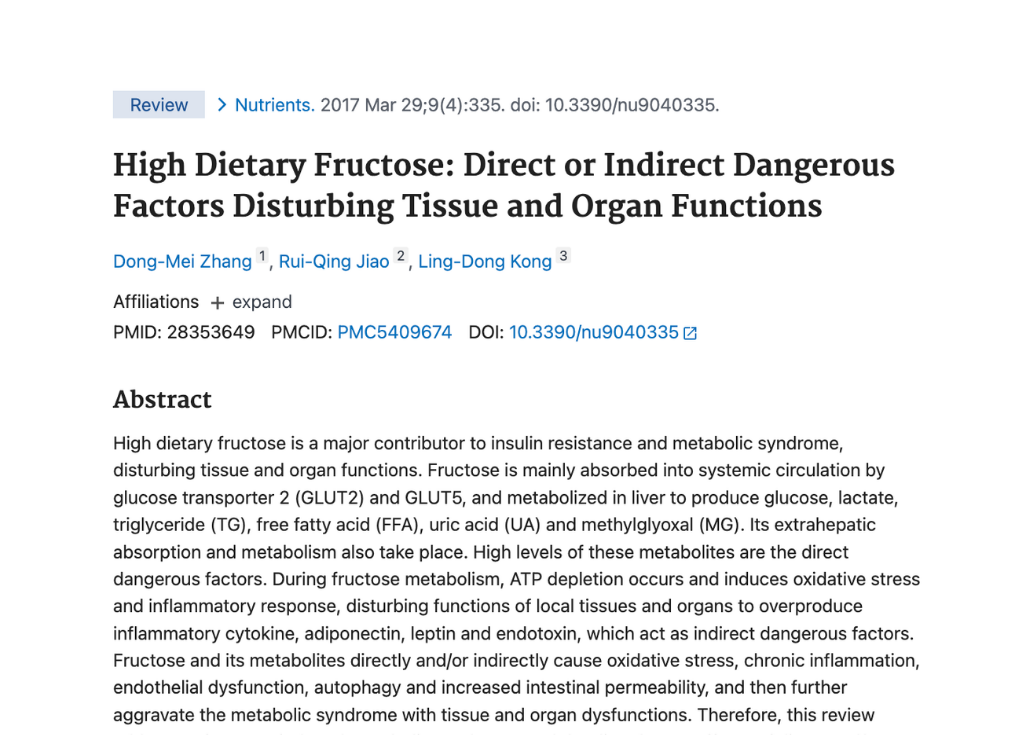
Article Review – High Dietary Fructose: Direct or Indirect Dangerous Factors Disturbing Tissue and Organ Functions

Article Review – High Dietary Fructose: Direct or Indirect Dangerous Factors Disturbing Tissue and Organ Functions

by Dong-Mei Zhang, Rui-Qing Jiao, Ling-Dong Kong

This article is part of Opti Metabolics’ ongoing effort to translate complex metabolic research into clear, practical insights for readers without formal scientific or medical training.

Summary -

This article explores the wide-ranging and damaging effects of high dietary fructose on multiple organ systems, emphasizing both direct toxicological impacts and indirect consequences through metabolic dysregulation. It presents fructose as a central dietary factor contributing to systemic inflammation, organ dysfunction, and chronic metabolic disease, particularly through its disruption of hepatic, cardiovascular, renal, and gut function.

Key Takeaways Explained for a Non-Medical Audience

– Excess fructose is primarily metabolized in the liver, where it promotes de novo lipogenesis and hepatic fat accumulation.

– High fructose intake increases oxidative stress by overwhelming mitochondrial function and depleting cellular antioxidants.

– Chronic fructose consumption is strongly linked to non-alcoholic fatty liver disease (NAFLD) and hepatic insulin resistance.

– Fructose elevates uric acid levels, which further disrupt endothelial function and increase cardiovascular risk.

– Fructose-induced lipid accumulation contributes to vascular inflammation and atherosclerosis.

– High dietary fructose is associated with kidney damage through increased intrarenal oxidative stress and inflammatory signaling.

– Fructose impairs intestinal barrier integrity, leading to endotoxemia and systemic low-grade inflammation.

– It modifies the gut microbiota composition in ways that promote metabolic dysfunction.

– Fructose intake influences adipokine levels, decreasing adiponectin and increasing leptin resistance, both of which worsen insulin sensitivity.

– Animal studies demonstrate that high-fructose diets accelerate tissue fibrosis in the liver, heart, and kidneys.

– Fructose suppresses the expression of genes involved in fatty acid oxidation, impairing metabolic flexibility.

– Fructose consumption enhances advanced glycation end-product (AGE) formation, which damages cellular structures.

– The article suggests fructose’s role extends beyond the liver to systemic metabolic and organ-level dysfunction.

– Excessive intake also promotes hypothalamic inflammation, which can alter appetite regulation and energy homeostasis.

– Dietary fructose amplifies the harmful metabolic effects of high-fat or high-omega-6 diets through synergistic mechanisms.


Integrated Insights –

This article strongly supports the Opti Metabolics view that high dietary fructose intake acts as a metabolic disruptor across multiple organ systems, with central effects on the liver, kidneys, cardiovascular tissue, and gut. Reducing fructose consumption is critical for restoring organ function and metabolic resilience, particularly within a low-carbohydrate, anti-inflammatory dietary framework.

Alignment with Broader Review Content –

– Reinforces the foundational role of fructose in the development of insulin resistance and chronic metabolic disease.

– Aligns with The Purple Zone’s recognition of liver-centric metabolic dysfunction as a driver of systemic disease.

– Supports the model that metabolic stress from fructose and seed oils is amplified by mitochondrial overload and chronic inflammation.

Reviewed and interpreted by the Opti Metabolics editorial team, with a focus on early metabolic risk detection and prevention.

Read the article to learn more: High Dietary Fructose: Direct or Indirect Dangerous Factors Disturbing Tissue and Organ Functions

Health & Medical Disclaimer –

Opti Metabolics does not provide medical diagnosis, treatment, or advice. Our program is for educational and informational purposes only and does not represent medical advice or the practice of medicine. These article summaries are intended to help readers understand metabolic health research and emerging scientific findings, but personal health decisions should always be made in consultation with a qualified healthcare provider.

Participants are strongly advised to consult their personal healthcare professional before making any dietary, lifestyle, or medication changes.

x
Opti Metabolics provides informational health insights and does not dispense medical advice, diagnose, treat, or cure any medical conditions. Always consult a qualified healthcare professional before making any health-related decisions.

Contact With Us!

Email: info@optimetabolics.com

Join Opti Metabolics

It’s time to take control of your health.

Eat Like a Human Again

Drop your name and email to receive the eBook that shows how returning to simple, whole foods can restore stable energy, support metabolic health, and help your body function the way it was designed to.
Name

The Fast Track to Frailty

Drop your name and email to receive the guide that helps you understand how GLP-1 weight loss changes your body, and why the scale alone never tells the full story.
Name

Starving for Nothing

Drop your name and email to receive the eBook that shows why “Eat Less, Move More” was never your fault. It was the wrong story, and now you get the right one.
Name