Email: success@optimetabolics.com
This article is part of Opti Metabolics’ ongoing effort to translate complex metabolic research into clear, practical insights for readers without formal scientific or medical training.
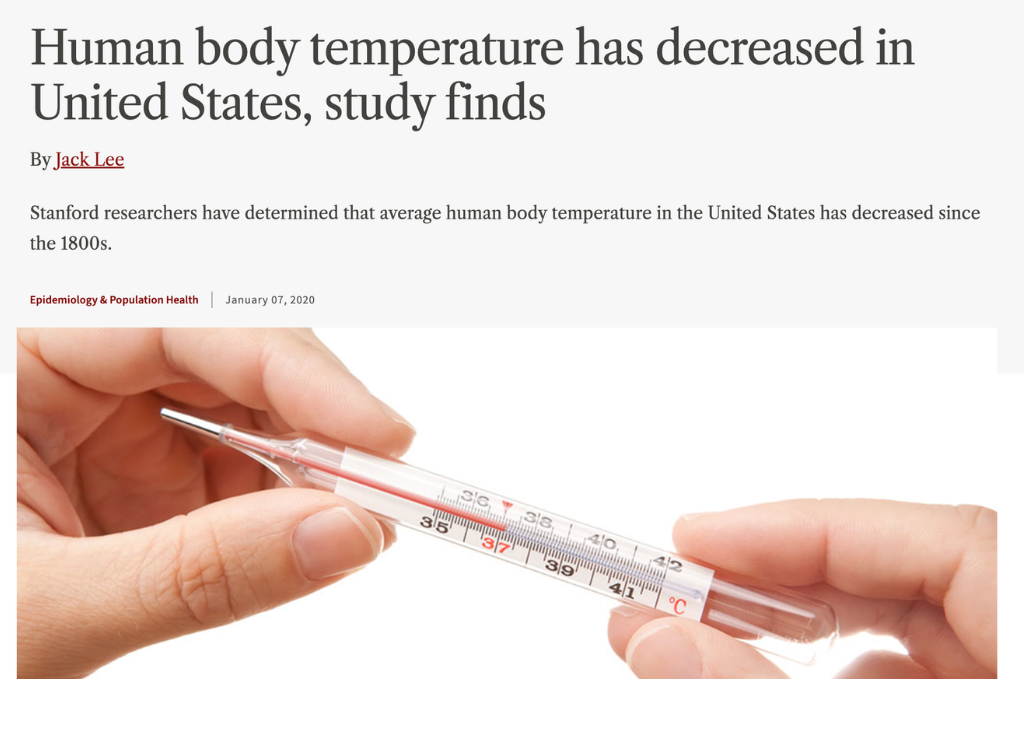
A longitudinal study analyzing body temperature records over 150 years reveals that average human body temperature in the U.S. has steadily declined, dropping by about 0.03°C per decade since the 19th century. This shift is believed to reflect a broad decrease in metabolic rate, possibly influenced by reduced chronic infection, widespread use of anti-inflammatory medications, improved living conditions, and changes in body composition and metabolic health.
– Average human body temperature has decreased from the historical standard of 98.6°F to approximately 97.5°F.
– The study used data from Civil War veterans, NHANES surveys, and the Stanford STRIDE database to analyze long-term temperature trends.
– Each birth decade was associated with a measurable decline in average body temperature, independent of measurement method.
– The decline in temperature may reflect reduced metabolic rates in modern populations.
– Improvements in public health and reductions in chronic infections likely contribute to lower basal inflammation.
– Widespread use of anti-inflammatory drugs such as NSAIDs may also suppress low-grade inflammation, influencing temperature regulation.
– Lower average body temperature may be a proxy indicator for reduced chronic immune activation over time.
– Modern humans exhibit higher survival rates but also higher incidences of metabolic diseases, potentially due to metabolic adaptations.
– The decrease in body temperature may also reflect increasing sedentary behavior and loss of muscle mass.
– Changes in thyroid hormone regulation and mitochondrial efficiency could contribute to reduced resting thermogenesis.
– The findings support a shift in baseline human physiology linked to lifestyle and environmental conditions.
– Researchers caution against using a single “normal” temperature threshold for clinical diagnostics.
– Declining body temperature may signify not only reduced infection burden but also slower, less efficient metabolic function in some individuals.
– The study calls for more personalized approaches to interpreting vital signs and understanding individual metabolic status.
– These findings emphasize the interconnectedness of immune health, inflammation, metabolic rate, and lifestyle factors.
The observed decline in average body temperature may signal a broader reduction in metabolic vigor, reflecting chronic low-grade inflammation, altered body composition, and shifts in energy regulation. From an Opti Metabolics perspective, this trend underscores the importance of restoring healthy metabolic function through nutrient-dense, anti-inflammatory, low-carbohydrate lifestyles.
– Supports the view that modern metabolic health is characterized by dysfunction, despite apparent improvements in infectious disease control.
– Highlights the relationship between chronic inflammation and metabolic downregulation, consistent with Opti Metabolics’ focus on root-cause restoration.
– Reinforces the importance of functional metrics—such as fasting insulin, triglyceride-glucose index, and inflammatory markers—over isolated vitals.
Reviewed and interpreted by the Opti Metabolics editorial team, with a focus on early metabolic risk detection and prevention.
Read the article to learn more: Human Body Temperature Has Decreased in United States, Study Finds
Opti Metabolics does not provide medical diagnosis, treatment, or advice. Our program is for educational and informational purposes only and does not represent medical advice or the practice of medicine. These article summaries are intended to help readers understand metabolic health research and emerging scientific findings, but personal health decisions should always be made in consultation with a qualified healthcare provider.
Participants are strongly advised to consult their personal healthcare professional before making any dietary, lifestyle, or medication changes.
Email: info@optimetabolics.com
It’s time to take control of your health.