Opti Metabolics 11652 Jollyville Road Austin, TX 78759

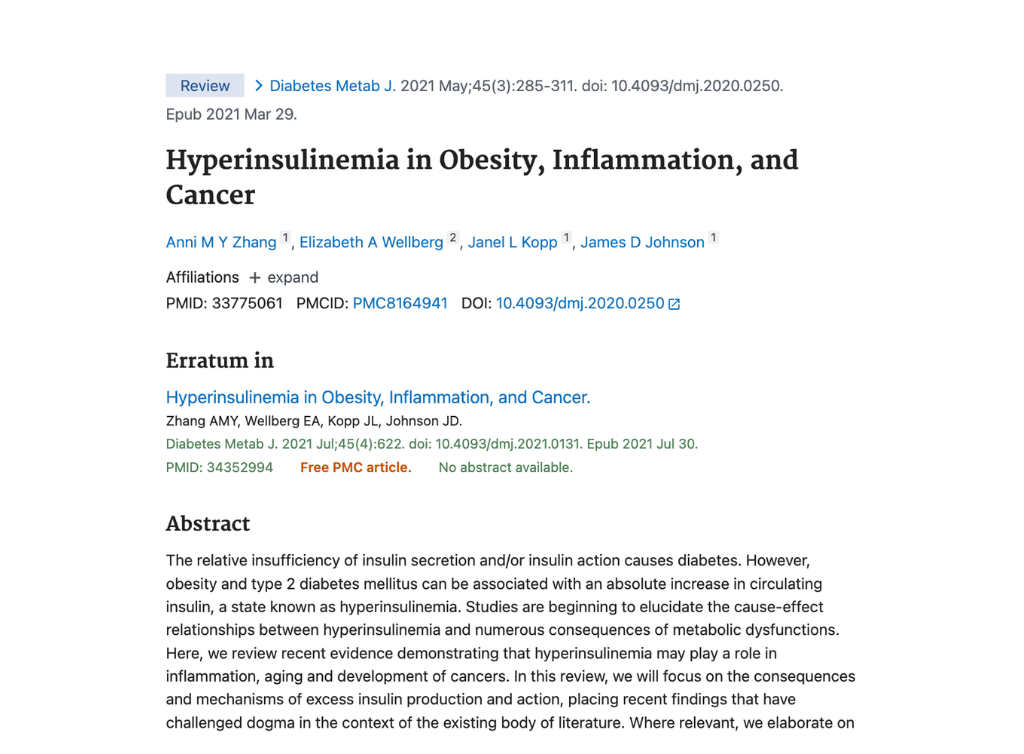
Article Review – Hyperinsulinemia in Obesity, Inflammation, and Cancer

Article Review – Hyperinsulinemia in Obesity, Inflammation, and Cancer

by Anni M Y Zhang, Elizabeth A Wellberg, Janel L Kopp, James D Johnson

This article is part of Opti Metabolics’ ongoing effort to translate complex metabolic research into clear, practical insights for readers without formal scientific or medical training.

Summary -

This article explores how chronically elevated insulin levels—hyperinsulinemia—serve as a central driver linking obesity, systemic inflammation, and cancer development. It details mechanisms by which excess insulin fuels inflammatory signaling and tumor progression, reinforcing the necessity of metabolic interventions to prevent chronic disease.

Key Takeaways Explained for a Non-Medical Audience

– Hyperinsulinemia is a hallmark of obesity and is both a result and driver of insulin resistance, perpetuating metabolic dysfunction.

– Elevated insulin levels act directly on cancer-prone cells—especially pancreatic acinar cells—to promote early tumor formation and inflammation.

– Hyperinsulinemia enhances IL‑17–driven inflammation in obesity, facilitating aggressive prostate cancer progression through impaired GSK3‑mediated regulation of IL‑17RA.

– Obesity-associated elevation in insulin supports tumor growth in models of colon and breast cancer by increasing glucose uptake and oxidation in tumor cells.

– Interventions that lower insulin—such as ketogenic low-carbohydrate diets, metformin, or SGLT2 inhibitors—can suppress tumor growth and metabolic dysfunction.

– In nonobese individuals, hyperinsulinemia independently predicts higher cancer-related mortality, underscoring its risk beyond overweight status.

– Insulin stimulates pro-inflammatory NF-κB signaling and cytokine production (e.g., IL-6, TNF-α), promoting an environment conducive to cancer development.

– Insulin and insulin-like growth factor 1 (IGF-1) exert mitogenic effects, supporting malignant cell proliferation and survival.

– Obesity-related organ enlargement, partially driven by hyperinsulinemia, may increase cancer risk by expanding the number of susceptible cells.

– Chronic insulin elevation fosters oxidative stress, vascular dysfunction, and hormone imbalances that collectively support carcinogenesis.

– Targeting insulin signaling pathways offers a promising preventive strategy against obesity-associated cancers.

Hyperinsulinemia contributes to an inflammatory microenvironment through macrophage polarization and cytokine release.

– Insulin-driven metabolic reprogramming may aid tumor survival by enhancing nutrient uptake and energy utilization in malignant tissues.


Integrated Insights –

This article affirms the Opti Metabolics principle that hyperinsulinemia—borne of excessive carbohydrate intake and poor metabolic health—is not merely a byproduct but a causal agent in inflammation and cancer progression. Interventions aimed at reducing insulin exposure align tightly with our prevention-focused, root-cause methodology.

Alignment with Broader Review Content –

– Persistent insulin elevation exacerbates insulin resistance, inflammatory signaling, and oxidative stress, driving systemic metabolic disruption.

– Nutrient-dense, low-carbohydrate or ketogenic approaches reduce hyperinsulinemia and mitigate pro-cancerous inflammatory cascades.

– Avoiding metabolic stressors—such as omega-6-rich seed oils—is vital, alongside dietary strategies designed to lower insulin exposure and restore metabolic balance.

Reviewed and interpreted by the Opti Metabolics editorial team, with a focus on early metabolic risk detection and prevention.

Read the article to learn more: Hyperinsulinemia in Obesity, Inflammation, and Cancer

Health & Medical Disclaimer –

Opti Metabolics does not provide medical diagnosis, treatment, or advice. Our program is for educational and informational purposes only and does not represent medical advice or the practice of medicine. These article summaries are intended to help readers understand metabolic health research and emerging scientific findings, but personal health decisions should always be made in consultation with a qualified healthcare provider.

Participants are strongly advised to consult their personal healthcare professional before making any dietary, lifestyle, or medication changes.

x
Opti Metabolics provides informational health insights and does not dispense medical advice, diagnose, treat, or cure any medical conditions. Always consult a qualified healthcare professional before making any health-related decisions.

Contact With Us!

Email: info@optimetabolics.com

Join Opti Metabolics

It’s time to take control of your health.

Eat Like a Human Again

Drop your name and email to receive the eBook that shows how returning to simple, whole foods can restore stable energy, support metabolic health, and help your body function the way it was designed to.
Name

The Fast Track to Frailty

Drop your name and email to receive the guide that helps you understand how GLP-1 weight loss changes your body, and why the scale alone never tells the full story.
Name

Starving for Nothing

Drop your name and email to receive the eBook that shows why “Eat Less, Move More” was never your fault. It was the wrong story, and now you get the right one.
Name