Opti Metabolics 11652 Jollyville Road Austin, TX 78759

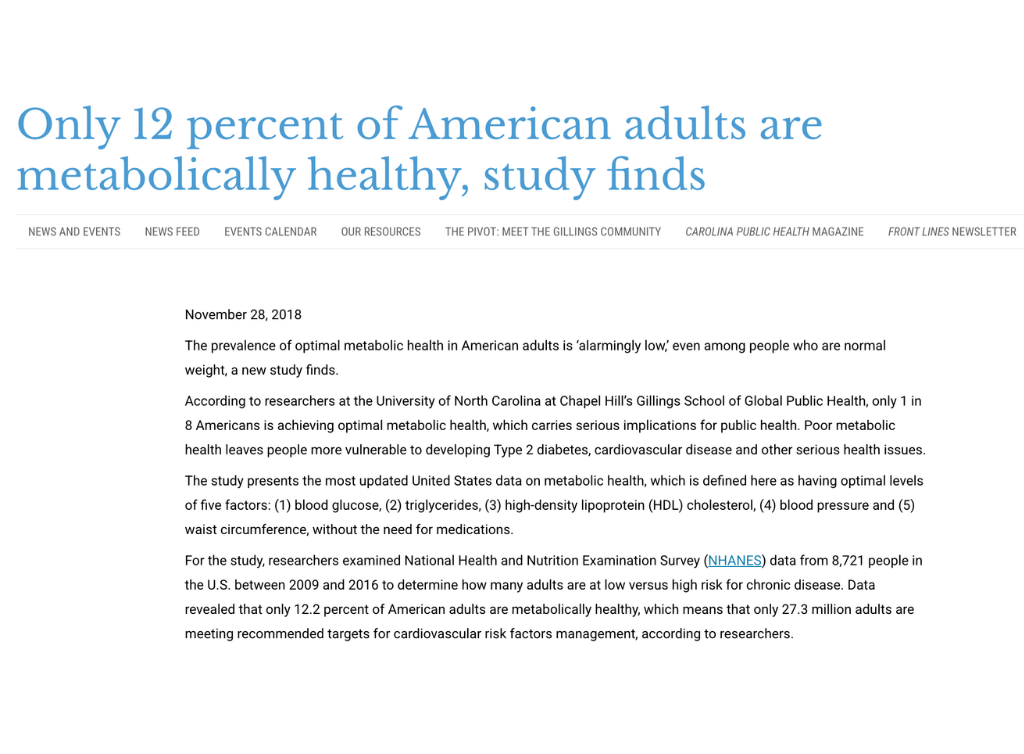
Article Review – Only 12 Percent of American Adults are Metabolically Healthy, Carolina Study Finds

Article Review – Only 12 Percent of American Adults are Metabolically Healthy, Carolina Study Finds

by UNC Gillings School of Global Public Health

This article is part of Opti Metabolics’ ongoing effort to translate complex metabolic research into clear, practical insights for readers without formal scientific or medical training.

Summary -

A study from the UNC Gillings School of Global Public Health reveals that only 12% of American adults meet the criteria for optimal metabolic health, highlighting widespread dysfunction in blood sugar, cholesterol, blood pressure, adiposity, and inflammation markers. These findings point to an urgent need for preventative strategies targeting lifestyle and dietary habits that contribute to insulin resistance and chronic metabolic diseases.

Key Takeaways Explained for a Non-Medical Audience

– Only 1 in 8 adults in the U.S. is considered metabolically healthy.

– Metabolic health was defined using five criteria: waist circumference, blood pressure, fasting glucose, triglycerides, and HDL cholesterol.

– The majority of American adults are either overweight or obese, compounding metabolic dysfunction.

– Those with higher education levels and those who were physically active had better odds of metabolic health.

– Metabolic health was worse in older age groups, men, smokers, and individuals with lower income.

– Poor metabolic health was prevalent even in individuals with normal weight, indicating the limits of BMI as a sole health indicator.

– The study calls for public health efforts that go beyond weight loss and address the root causes of metabolic dysfunction.

– Chronic diseases like type 2 diabetes, cardiovascular disease, and NAFLD are tied to the same underlying metabolic issues.

– A significant number of people meet the diagnostic criteria for metabolic syndrome, yet remain undiagnosed and untreated.

– The findings emphasize that current health care strategies may not be adequately identifying or addressing early metabolic risks.

– The prevalence of poor metabolic health is considered a major threat to public health and economic sustainability.

– A shift toward identifying early-stage metabolic dysfunction rather than waiting for disease manifestation is needed.

– The study supports the use of comprehensive metabolic markers rather than isolated values to assess health.

– Health disparities in metabolic outcomes reflect broader socioeconomic and structural inequalities.

– Diets high in refined carbohydrates and inflammatory seed oils contribute significantly to metabolic disease development.


Integrated Insights –

This study underscores a critical disconnect between current health guidelines and the real metabolic status of the U.S. population. By recognizing insulin resistance and chronic inflammation as central drivers of disease, the Opti Metabolics approach provides a targeted framework for reversing these trends through low-carbohydrate, anti-inflammatory interventions.

Alignment with Broader Review Content –

– The article confirms that metabolic dysfunction underlies many chronic conditions, aligning with the Opti Metabolics focus on root-cause solutions.

– The findings support a shift from weight-centric approaches to metabolically focused strategies, consistent with The Purple Zone principle of nuanced, personalized health.

– Evidence of widespread metabolic impairment in seemingly “healthy-weight” individuals validates the need for deeper biomarker assessment, such as fasting insulin, triglyceride-glucose index, and hs-CRP.

Reviewed and interpreted by the Opti Metabolics editorial team, with a focus on early metabolic risk detection and prevention.

Read the article to learn more: Only 12 Percent of American Adults are Metabolically Healthy, Carolina Study Finds

Health & Medical Disclaimer –

Opti Metabolics does not provide medical diagnosis, treatment, or advice. Our program is for educational and informational purposes only and does not represent medical advice or the practice of medicine. These article summaries are intended to help readers understand metabolic health research and emerging scientific findings, but personal health decisions should always be made in consultation with a qualified healthcare provider.

Participants are strongly advised to consult their personal healthcare professional before making any dietary, lifestyle, or medication changes.

x
Opti Metabolics provides informational health insights and does not dispense medical advice, diagnose, treat, or cure any medical conditions. Always consult a qualified healthcare professional before making any health-related decisions.

Contact With Us!

Email: info@optimetabolics.com

Metabolic Snapshot Assessment

Metabolic Snapshot Assessment

Prepared for

Metabolic Marty

Assessment Date

June 2,2026

Identifying Metabolic Risk Before It Becomes Disease

Executive Summary

Your results suggest early signs of metabolic dysfunction are emerging beneath the surface.

While you may feel healthy today, several biomarkers indicate increasing risk for insulin resistance, cardiovascular disease, and other chronic conditions if these patterns continue to progress.

The encouraging news is that these findings were identified before disease developed, creating an opportunity to improve your long-term health trajectory through targeted interventions.

Metabolic Age

20

Metabolic Age

your age

60

Metabolic Age

Years
+ 2 .0

Older than your chronological age

Biomarker risk distrubution

No
Risk

31

Low
Risk

22

Medium Risk

9

High Risk

9

Higher Risk

10

Higher numbers indicate more biomarkers in each risk category.

Your Top Priority areas

See What's Driving Your Risk
Understand how your biomarkers and habits are shaping your future health.
See What's Driving Your Risk
Understand how your biomarkers and habits are shaping your future health.
See What's Driving Your Risk
Understand how your biomarkers and habits are shaping your future health.

The Optic Metabolic Lens

We look upstream to identify and address the root drivers of chronic disease long before symptoms appear.

1. Insulin Resistance

Excess insulin and poor cellular response drive metabolic dycfuntion and fat storage.

2. Oxidative stress

Imbalance between free radicals and your body's antioxidant defenses.

3. Inflamation

Chronic, low grade inflamation damages tissues and disrupts normal function.

4. Stress Physiology

Elevated cortisol and other stress hormones amplify the damaga and impair recovery.

5. Genetic Risk

Inherited factors can increase succeptbility and influence how your body responds.

6. Disease Progression

Over time, these drivers create the foundation for chronic disease to take root.

Eat Like a Human Again

Drop your name and email to receive the eBook that shows how returning to simple, whole foods can restore stable energy, support metabolic health, and help your body function the way it was designed to.
Name

The Fast Track to Frailty

Drop your name and email to receive the guide that helps you understand how GLP-1 weight loss changes your body, and why the scale alone never tells the full story.
Name

Starving for Nothing

Drop your name and email to receive the eBook that shows why “Eat Less, Move More” was never your fault. It was the wrong story, and now you get the right one.
Name