Email: success@optimetabolics.com
This article is part of Opti Metabolics’ ongoing effort to translate complex metabolic research into clear, practical insights for readers without formal scientific or medical training.
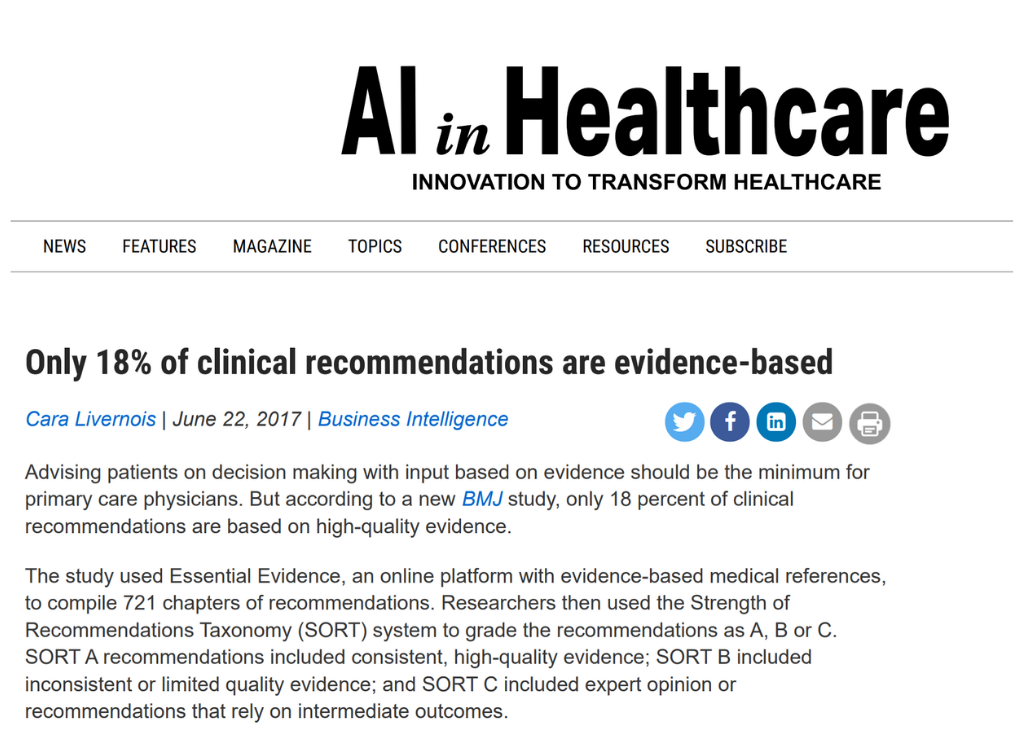
This article reveals that a strikingly low percentage of clinical recommendations are grounded in strong scientific evidence, highlighting significant gaps in the reliability of many medical guidelines. For metabolic health, this underscores the importance of critically evaluating interventions, particularly those related to diet and lifestyle, to ensure they address core metabolic dysfunctions like insulin resistance and inflammation.
– Only 18% of clinical practice recommendations have solid evidence backing them.
– Many guidelines rely on expert opinion or lower-quality studies rather than rigorous randomized controlled trials.
– This lack of evidence-based recommendations raises concerns about the effectiveness and safety of some standard medical practices.
– Insufficient research on metabolic conditions and nutrition contributes to uncertainty in managing chronic diseases.
– Variability in clinical recommendations may lead to inconsistent patient outcomes.
– Overreliance on pharmaceutical interventions without addressing underlying metabolic causes is common.
– The article stresses the need for more high-quality studies on lifestyle and dietary interventions.
– A personalized approach to healthcare is necessary, given the limitations of broad guidelines.
– Emphasizing metabolic markers and root causes can improve treatment effectiveness.
– Preventive strategies focusing on insulin resistance and inflammation are often underrepresented in current guidelines.
– Natural, well-formulated nutritional approaches, such as low-carbohydrate or ketogenic diets, deserve further investigation and integration.
– The prevalence of omega-6 seed oils in the diet and their inflammatory impact are rarely addressed in clinical recommendations.
– Improved evidence-based guidelines could better support interventions that target metabolic health at its core.
– Patient education and informed decision-making are critical in navigating uncertain or conflicting advice.
– There is a growing need for medical research to align more closely with real-world metabolic health challenges.
This article aligns with Opti Metabolics’ emphasis on addressing root metabolic dysfunctions rather than relying solely on standard protocols that may lack evidence. It highlights the necessity of focusing on insulin resistance and inflammation through diet and lifestyle strategies that are supported by emerging science, reinforcing the value of personalized, metabolic-centered care.
– Insulin resistance and inflammation are fundamental to many chronic diseases but are inadequately addressed in most clinical guidelines.
– Well-formulated, low-carb and ketogenic dietary approaches align better with metabolic health principles than many conventional recommendations.
– The role of omega-6 seed oils in promoting metabolic stress is an underappreciated factor needing greater clinical awareness.
Reviewed and interpreted by the Opti Metabolics editorial team, with a focus on early metabolic risk detection and prevention.
Read the article to learn more: Only 18% of Clinical Recommendations are Evidence-Based
Opti Metabolics does not provide medical diagnosis, treatment, or advice. Our program is for educational and informational purposes only and does not represent medical advice or the practice of medicine. These article summaries are intended to help readers understand metabolic health research and emerging scientific findings, but personal health decisions should always be made in consultation with a qualified healthcare provider.
Participants are strongly advised to consult their personal healthcare professional before making any dietary, lifestyle, or medication changes.
Email: info@optimetabolics.com
Your results suggest early signs of metabolic dysfunction are emerging beneath the surface.
While you may feel healthy today, several biomarkers indicate increasing risk for insulin resistance, cardiovascular disease, and other chronic conditions if these patterns continue to progress.
The encouraging news is that these findings were identified before disease developed, creating an opportunity to improve your long-term health trajectory through targeted interventions.
No
Risk
Low
Risk
Medium Risk
High Risk
Higher Risk
Higher numbers indicate more biomarkers in each risk category.
We look upstream to identify and address the root drivers of chronic disease long before symptoms appear.
Excess insulin and poor cellular response drive metabolic dycfuntion and fat storage.
Imbalance between free radicals and your body's antioxidant defenses.
Chronic, low grade inflamation damages tissues and disrupts normal function.
Elevated cortisol and other stress hormones amplify the damaga and impair recovery.
Inherited factors can increase succeptbility and influence how your body responds.
Over time, these drivers create the foundation for chronic disease to take root.