Email: success@optimetabolics.com
This article is part of Opti Metabolics’ ongoing effort to translate complex metabolic research into clear, practical insights for readers without formal scientific or medical training.
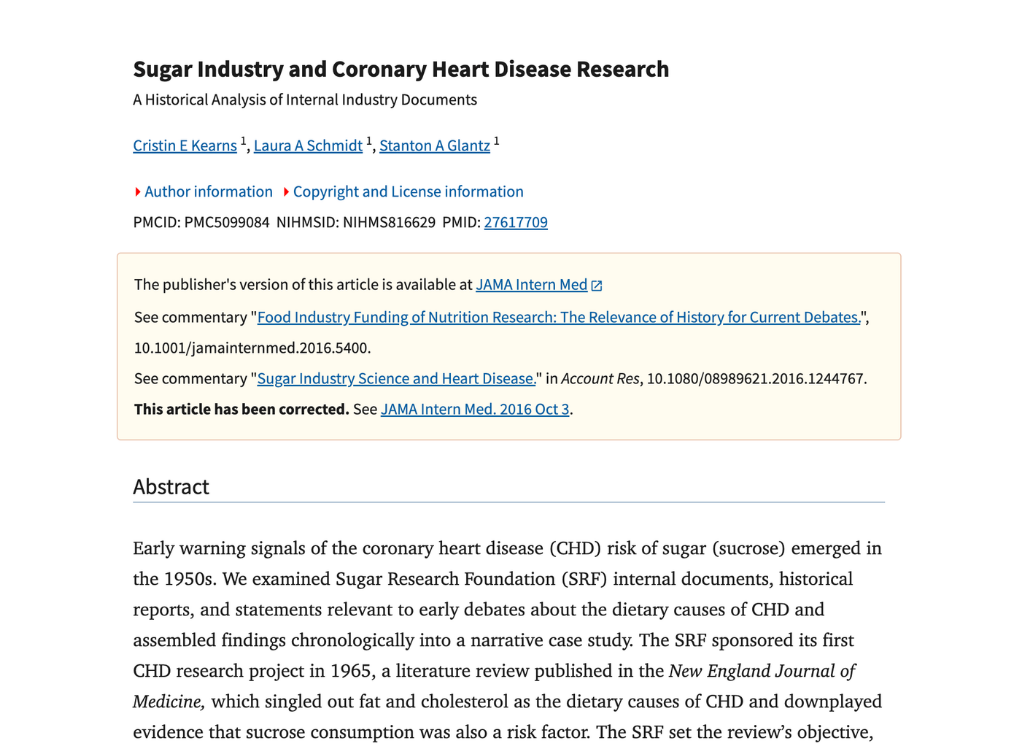
This article reveals how the sugar industry significantly influenced decades of nutritional science by downplaying the role of sugar in coronary heart disease and shifting the blame to dietary fat. The findings underscore the importance of unbiased research in understanding the metabolic drivers of chronic disease and reinforce the need to re-evaluate public health guidelines through a lens that accurately reflects root causes like insulin resistance.
– Internal documents show that the Sugar Research Foundation (SRF) paid prominent Harvard researchers in the 1960s to publish a literature review that downplayed sugar’s role in heart disease.
– The industry-sponsored review emphasized dietary fat and cholesterol as the primary causes of coronary heart disease (CHD), diverting attention from sugar.
– The SRF selected the studies to be included in the review and actively influenced its conclusions.
– This manipulation of scientific discourse contributed to decades of public health messaging that focused on low-fat diets rather than reducing sugar intake.
– The funded review was published without disclosure of the sugar industry’s involvement, raising concerns about transparency and bias in scientific research.
– The SRF’s goal was to “protect sugar’s reputation” and maintain its commercial viability.
– Independent research that emerged later showed stronger associations between sugar consumption, insulin resistance, and metabolic dysfunction.
– Suppression of unfavorable findings may have delayed critical public awareness and policy shifts that could have mitigated chronic disease trends.
– The findings highlight systemic vulnerabilities in research funding and publication practices that allow industry interests to shape scientific consensus.
– This historical distortion has contributed to widespread confusion about the true dietary drivers of CHD and related metabolic conditions.
– The article underscores the necessity of re-examining established nutritional dogmas through independently funded, mechanistically sound research.
– Sugar’s role in raising triglycerides and promoting liver fat accumulation was overlooked in earlier dietary guidelines.
– This incident set a precedent for other industries to fund selective science to influence public health narratives.
– Excessive sugar consumption, now well-established as a contributor to insulin resistance and systemic inflammation, was largely ignored in policy for decades.
– The article supports a broader reevaluation of dietary recommendations with greater emphasis on metabolic health over macronutrient ratios.
The article directly reinforces the core Opti Metabolics philosophy: that insulin resistance, not dietary fat, is a key underlying driver of cardiovascular and metabolic disease. It also exposes how flawed dietary guidance—rooted in manipulated science—has led to decades of poor metabolic outcomes in the general population.
– The sugar industry’s deflection away from insulin resistance mirrors the long-standing failure to address root causes of metabolic dysfunction.
– Excessive carbohydrate intake, particularly from added sugars, impairs glucose regulation and drives systemic inflammation and fatty liver development.
– Correcting these patterns with low-carbohydrate, anti-inflammatory strategies can restore metabolic health and reduce chronic disease risk.
Reviewed and interpreted by the Opti Metabolics editorial team, with a focus on early metabolic risk detection and prevention.
Read the article to learn more: Sugar Industry and Coronary Heart Disease Research
Opti Metabolics does not provide medical diagnosis, treatment, or advice. Our program is for educational and informational purposes only and does not represent medical advice or the practice of medicine. These article summaries are intended to help readers understand metabolic health research and emerging scientific findings, but personal health decisions should always be made in consultation with a qualified healthcare provider.
Participants are strongly advised to consult their personal healthcare professional before making any dietary, lifestyle, or medication changes.
Email: info@optimetabolics.com
Your results suggest early signs of metabolic dysfunction are emerging beneath the surface.
While you may feel healthy today, several biomarkers indicate increasing risk for insulin resistance, cardiovascular disease, and other chronic conditions if these patterns continue to progress.
The encouraging news is that these findings were identified before disease developed, creating an opportunity to improve your long-term health trajectory through targeted interventions.
No
Risk
Low
Risk
Medium Risk
High Risk
Higher Risk
Higher numbers indicate more biomarkers in each risk category.
We look upstream to identify and address the root drivers of chronic disease long before symptoms appear.
Excess insulin and poor cellular response drive metabolic dycfuntion and fat storage.
Imbalance between free radicals and your body's antioxidant defenses.
Chronic, low grade inflamation damages tissues and disrupts normal function.
Elevated cortisol and other stress hormones amplify the damaga and impair recovery.
Inherited factors can increase succeptbility and influence how your body responds.
Over time, these drivers create the foundation for chronic disease to take root.