Email: success@optimetabolics.com
This article is part of Opti Metabolics’ ongoing effort to translate complex metabolic research into clear, practical insights for readers without formal scientific or medical training.
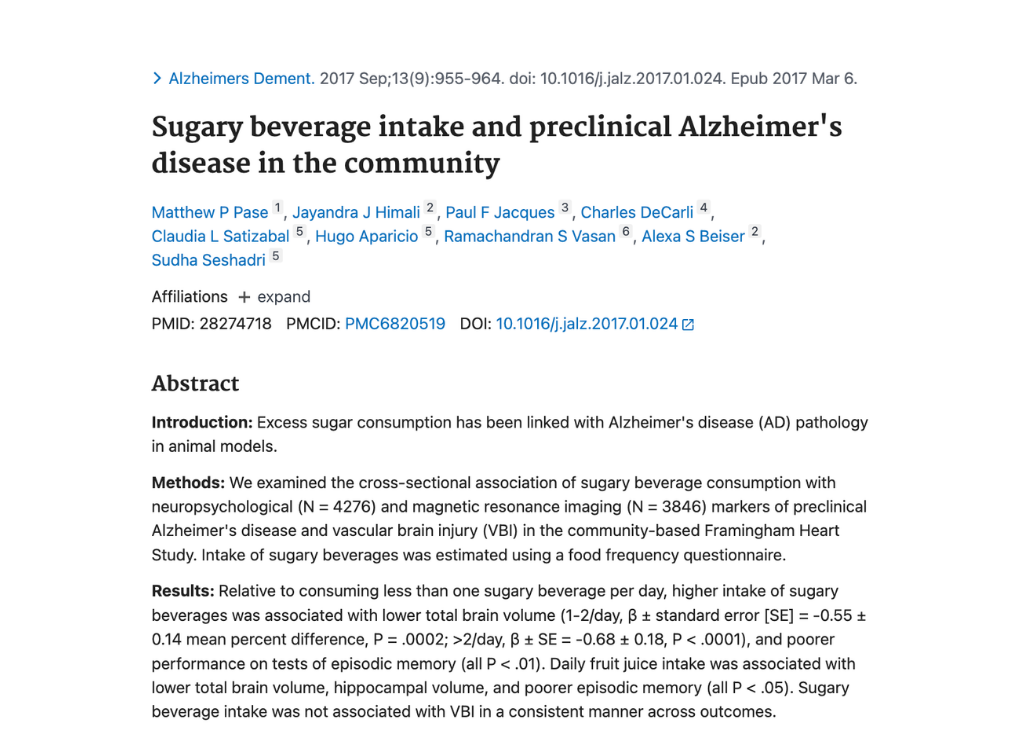
This study links higher intake of sugar-sweetened beverages to markers of preclinical Alzheimer’s disease, including brain atrophy and poorer memory function. The findings suggest that excess dietary sugar may initiate or accelerate neurodegenerative changes long before clinical symptoms of Alzheimer’s appear.
– Greater sugary beverage consumption was associated with lower total brain volume and smaller hippocampal volume, key regions affected in early Alzheimer’s.
– Individuals with higher intake also scored lower on tests of episodic memory and verbal recall.
– Brain imaging revealed early structural changes in participants who regularly consumed sugary drinks.
– The associations were observed even in cognitively normal individuals, indicating a preclinical phase of disease.
– Framingham Heart Study Offspring cohort data was used, involving middle-aged to older adults.
– Sugar-sweetened beverages may contribute to neurodegeneration through insulin resistance, vascular damage, and oxidative stress.
– The study found a dose-response relationship, where higher intake correlated with greater brain volume loss.
– No similar associations were found with diet soda in this specific analysis, although other studies have identified risks.
– Excess glucose may impair cerebral blood flow and disrupt glucose transport across the blood–brain barrier.
– Insulin resistance in the brain can interfere with neuronal signaling and clearance of beta-amyloid proteins.
– These metabolic effects may begin years or decades before overt symptoms of dementia are detectable.
– Cognitive decline may be mediated by chronic inflammation, endothelial dysfunction, and glycation-related damage.
– Lifestyle and dietary patterns that reduce sugar intake may preserve cognitive function over the long term.
– The study highlights the importance of early prevention strategies to address modifiable dietary risks.
– Even modest reductions in sugary drink consumption may help maintain brain structure and memory performance as people age.
This article supports the Opti Metabolics framework by connecting excess carbohydrate intake—specifically from sugary drinks—to early brain changes associated with Alzheimer’s disease. It reinforces the value of metabolic interventions in preserving long-term cognitive health.
– The brain is highly sensitive to insulin signaling, and its disruption can accelerate neurodegenerative processes.
– High-glycemic, sugar-rich foods promote systemic and cerebral inflammation, both of which are implicated in Alzheimer’s pathology.
– Nutritional strategies focused on low-carbohydrate or ketogenic diets may improve brain metabolism and delay cognitive decline.
Reviewed and interpreted by the Opti Metabolics editorial team, with a focus on early metabolic risk detection and prevention.
Read the article to learn more: Sugary Beverage Intake and Preclinical Alzheimer’s Disease in the Community
Opti Metabolics does not provide medical diagnosis, treatment, or advice. Our program is for educational and informational purposes only and does not represent medical advice or the practice of medicine. These article summaries are intended to help readers understand metabolic health research and emerging scientific findings, but personal health decisions should always be made in consultation with a qualified healthcare provider.
Participants are strongly advised to consult their personal healthcare professional before making any dietary, lifestyle, or medication changes.
Email: info@optimetabolics.com
Your results suggest early signs of metabolic dysfunction are emerging beneath the surface.
While you may feel healthy today, several biomarkers indicate increasing risk for insulin resistance, cardiovascular disease, and other chronic conditions if these patterns continue to progress.
The encouraging news is that these findings were identified before disease developed, creating an opportunity to improve your long-term health trajectory through targeted interventions.
No
Risk
Low
Risk
Medium Risk
High Risk
Higher Risk
Higher numbers indicate more biomarkers in each risk category.
We look upstream to identify and address the root drivers of chronic disease long before symptoms appear.
Excess insulin and poor cellular response drive metabolic dycfuntion and fat storage.
Imbalance between free radicals and your body's antioxidant defenses.
Chronic, low grade inflamation damages tissues and disrupts normal function.
Elevated cortisol and other stress hormones amplify the damaga and impair recovery.
Inherited factors can increase succeptbility and influence how your body responds.
Over time, these drivers create the foundation for chronic disease to take root.