Opti Metabolics 11652 Jollyville Road Austin, TX 78759

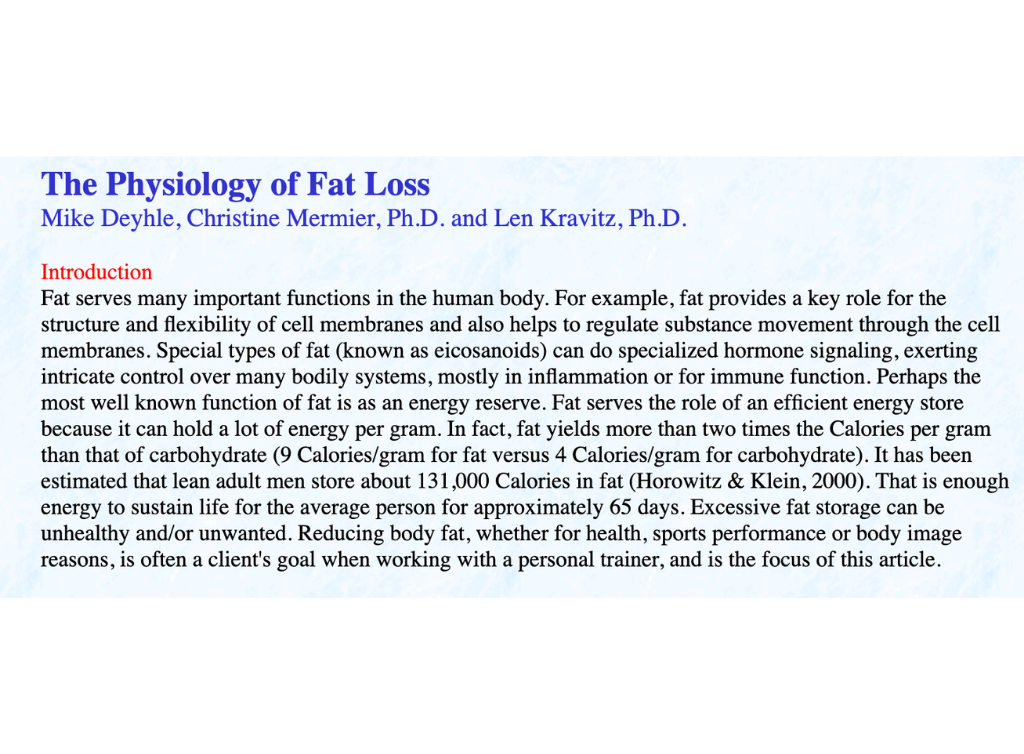
Article Review – The Physiology of Fat Loss

Article Review – The Physiology of Fat Loss

by Mike Deyhle, Christine Mermier, PhD, Len Kravitz, PhD

This article is part of Opti Metabolics’ ongoing effort to translate complex metabolic research into clear, practical insights for readers without formal scientific or medical training.

Summary -

This article outlines the complex physiological mechanisms underlying fat loss, emphasizing how hormonal regulation, energy balance, and metabolic flexibility interact to influence body composition. Effective fat loss depends not only on calorie deficit but also on improving insulin sensitivity, minimizing inflammation, and optimizing metabolic pathways to support sustainable energy utilization and fat mobilization.

Key Takeaways Explained for a Non-Medical Audience

– Fat loss is driven by creating a sustained energy deficit that promotes mobilization of stored triglycerides from adipose tissue.

– Hormones such as insulin, leptin, and cortisol play critical roles in regulating fat storage and release.

– Insulin resistance impairs fat mobilization by promoting glucose over fat oxidation, contributing to metabolic inflexibility.

– Improving insulin sensitivity enhances the body’s ability to switch between carbohydrate and fat metabolism efficiently.

– Excessive carbohydrate intake, particularly from refined sources, exacerbates insulin resistance and promotes fat storage.

– Chronic inflammation, often linked to omega-6-rich seed oils and poor metabolic health, impairs hormonal signaling and fat metabolism.

– Increasing metabolic rate through physical activity, especially resistance training and high-intensity interval training, supports fat loss and preserves lean mass.

– Nutrient timing and meal composition influence hormonal responses and energy partitioning during fat loss.

– Ketogenic and low-carbohydrate diets improve fat oxidation and reduce insulin spikes, facilitating more efficient fat loss.

– Sleep quality and circadian rhythm alignment are important for hormonal balance and metabolic health during fat loss efforts.

– Stress management is essential as elevated cortisol can promote abdominal fat accumulation and hinder fat loss.

– Fat loss involves not just reducing fat mass but also maintaining or improving lean muscle mass to sustain metabolic rate.

– Adaptations to caloric restriction include reductions in resting metabolic rate that can be minimized with appropriate exercise and nutrition strategies.

– Adequate intake of natural, minimally processed nutrients supports metabolic health and reduces inflammatory burden during fat loss.

– Personalized approaches considering hormonal status, metabolic health, and lifestyle factors yield better and more sustainable fat loss outcomes.


Integrated Insights –

This article aligns with the Opti Metabolics framework by emphasizing the central role of insulin resistance and inflammation—exacerbated by diet and lifestyle factors—in fat metabolism and chronic disease risk. Targeting metabolic flexibility through dietary carbohydrate reduction, managing omega-6 intake, and optimizing hormonal balance fits core principles for preventing and reversing metabolic dysfunction.

Alignment with Broader Review Content –

– Reinforces the impact of insulin resistance on impaired fat mobilization and chronic disease.

– Supports low-carbohydrate and ketogenic strategies to improve metabolic flexibility and reduce inflammation.

– Highlights the integration of exercise, sleep, and stress management as critical components in addressing metabolic health holistically.

Reviewed and interpreted by the Opti Metabolics editorial team, with a focus on early metabolic risk detection and prevention.

Read the article to learn more: The Physiology of Fat Loss

Health & Medical Disclaimer –

Opti Metabolics does not provide medical diagnosis, treatment, or advice. Our program is for educational and informational purposes only and does not represent medical advice or the practice of medicine. These article summaries are intended to help readers understand metabolic health research and emerging scientific findings, but personal health decisions should always be made in consultation with a qualified healthcare provider.

Participants are strongly advised to consult their personal healthcare professional before making any dietary, lifestyle, or medication changes.

x
Opti Metabolics provides informational health insights and does not dispense medical advice, diagnose, treat, or cure any medical conditions. Always consult a qualified healthcare professional before making any health-related decisions.

Contact With Us!

Email: info@optimetabolics.com

Join Opti Metabolics

It’s time to take control of your health.

Eat Like a Human Again

Drop your name and email to receive the eBook that shows how returning to simple, whole foods can restore stable energy, support metabolic health, and help your body function the way it was designed to.
Name

The Fast Track to Frailty

Drop your name and email to receive the guide that helps you understand how GLP-1 weight loss changes your body, and why the scale alone never tells the full story.
Name

Starving for Nothing

Drop your name and email to receive the eBook that shows why “Eat Less, Move More” was never your fault. It was the wrong story, and now you get the right one.
Name