Email: success@optimetabolics.com
This article is part of Opti Metabolics’ ongoing effort to translate complex metabolic research into clear, practical insights for readers without formal scientific or medical training.
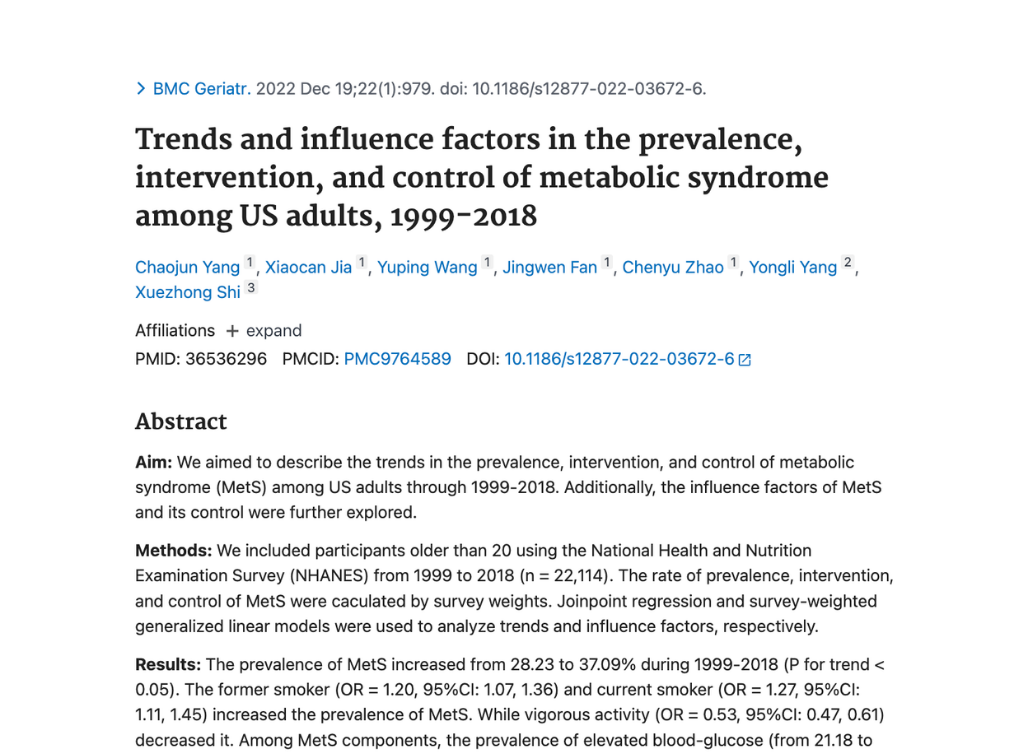
This study analyzed data from the National Health and Nutrition Examination Survey (NHANES) from 1999 to 2018 and found that the prevalence of metabolic syndrome among U.S. adults has steadily increased, reaching over one-third of the population. Despite greater public awareness and medical intervention, control rates remain inadequate, particularly among younger adults, men, and individuals with lower education and income levels.
– The prevalence of metabolic syndrome in U.S. adults rose from 27.6% in 1999–2000 to 36.9% in 2017–2018.
– Abdominal obesity and elevated fasting blood glucose were the primary contributors to the increase.
– Control and intervention rates for metabolic syndrome components remain suboptimal.
– Younger adults aged 20–39 showed increasing rates of metabolic syndrome, indicating early onset of metabolic dysfunction.
– Men consistently had higher rates of metabolic syndrome compared to women.
– Individuals with lower educational attainment and income were more likely to have metabolic syndrome.
– Non-Hispanic Black and Hispanic populations experienced disproportionately higher burdens of metabolic syndrome.
– Although some improvements were seen in managing high triglycerides and low HDL cholesterol, gains were modest.
– Rates of elevated blood pressure remained relatively stable, but fasting glucose levels increased notably over the study period.
– The growing prevalence underscores the need for early prevention strategies focused on lifestyle and nutrition.
– Interventions must prioritize root-cause metabolic issues such as insulin resistance and systemic inflammation.
– Reliance on traditional risk factor management without addressing dietary and metabolic contributors limits success.
– The study highlights persistent disparities in metabolic health outcomes tied to socioeconomic and demographic factors.
– The results suggest that current public health policies may not adequately address the metabolic roots of chronic disease.
– Researchers called for comprehensive, multifactorial approaches to reverse the trends of metabolic syndrome.
This long-term review demonstrates a worsening trend in metabolic health across nearly two decades, especially among younger and socioeconomically vulnerable populations. The Opti Metabolics framework addresses this crisis directly by targeting insulin resistance, reducing carbohydrate overload, and eliminating inflammatory seed oils to reverse early metabolic dysfunction.
– Validates the central role of insulin resistance and poor glucose control in the rising prevalence of metabolic syndrome.
– Emphasizes the need for dietary strategies aligned with ketogenic or low-carbohydrate models to achieve meaningful reversal.
– Supports The Purple Zone’s approach of integrating socioeconomic and behavioral factors into personalized, sustainable interventions.
Reviewed and interpreted by the Opti Metabolics editorial team, with a focus on early metabolic risk detection and prevention.
Read the article to learn more: Trends and Influence Factors in the Prevalence, Intervention, and Control of Metabolic Syndrome among US Adults, 1999-2018
Opti Metabolics does not provide medical diagnosis, treatment, or advice. Our program is for educational and informational purposes only and does not represent medical advice or the practice of medicine. These article summaries are intended to help readers understand metabolic health research and emerging scientific findings, but personal health decisions should always be made in consultation with a qualified healthcare provider.
Participants are strongly advised to consult their personal healthcare professional before making any dietary, lifestyle, or medication changes.
Email: info@optimetabolics.com
Your results suggest early signs of metabolic dysfunction are emerging beneath the surface.
While you may feel healthy today, several biomarkers indicate increasing risk for insulin resistance, cardiovascular disease, and other chronic conditions if these patterns continue to progress.
The encouraging news is that these findings were identified before disease developed, creating an opportunity to improve your long-term health trajectory through targeted interventions.
No
Risk
Low
Risk
Medium Risk
High Risk
Higher Risk
Higher numbers indicate more biomarkers in each risk category.
We look upstream to identify and address the root drivers of chronic disease long before symptoms appear.
Excess insulin and poor cellular response drive metabolic dycfuntion and fat storage.
Imbalance between free radicals and your body's antioxidant defenses.
Chronic, low grade inflamation damages tissues and disrupts normal function.
Elevated cortisol and other stress hormones amplify the damaga and impair recovery.
Inherited factors can increase succeptbility and influence how your body responds.
Over time, these drivers create the foundation for chronic disease to take root.