Opti Metabolics 11652 Jollyville Road Austin, TX 78759

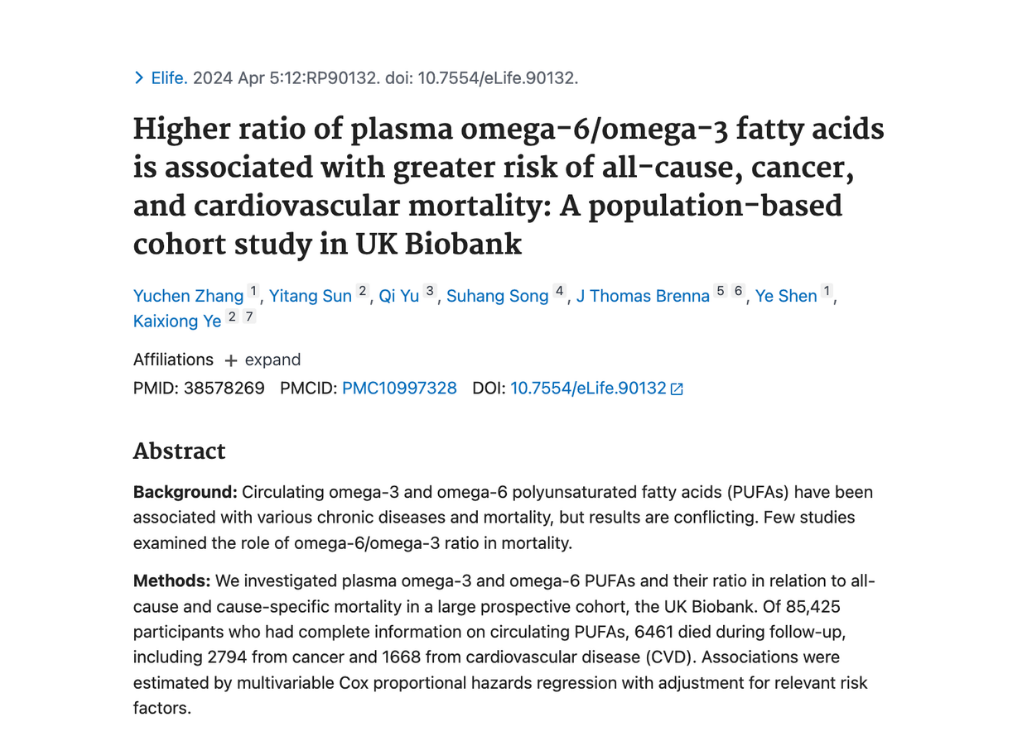
Article Review – Higher Ratio of Plasma Omega-6/Omega-3 Fatty Acids is Associated with Greater Risk of All-Cause, Cancer, and Cardiovascular Mortality: A Population-Based Cohort Study in UK Biobank

Article Review – Higher Ratio of Plasma Omega-6/Omega-3 Fatty Acids is Associated with Greater Risk of All-Cause, Cancer, and Cardiovascular Mortality: A Population-Based Cohort Study in UK Biobank

by Yuchen Zhang, Yitang Sun, Qi Yu, Suhang Song, J Thomas Brenna, Ye Shen, Kaixiong Ye

This article is part of Opti Metabolics’ ongoing effort to translate complex metabolic research into clear, practical insights for readers without formal scientific or medical training.

Summary -

This study demonstrates that a higher plasma ratio of omega-6 to omega-3 fatty acids correlates with increased risks of all-cause mortality, as well as cancer and cardiovascular deaths. The findings emphasize the metabolic and inflammatory consequences of imbalanced fatty acid profiles and highlight the importance of optimizing dietary fat composition for long-term health and disease prevention.

Key Takeaways Explained for a Non-Medical Audience

– Elevated plasma omega-6 to omega-3 fatty acid ratio is independently associated with higher all-cause mortality risk.

– Increased omega-6/omega-3 ratio also predicts greater risk of cancer-related death.

– Cardiovascular mortality risk rises significantly with a higher omega-6/omega-3 plasma ratio.

– Imbalanced fatty acid profiles promote systemic inflammation and oxidative stress, contributing to disease progression.

– A high omega-6 intake relative to omega-3 exacerbates insulin resistance and metabolic dysfunction.

– Omega-3 fatty acids offer protective effects by counteracting inflammation and improving lipid metabolism.

– Population-wide dietary patterns favoring omega-6-rich seed oils contribute to unfavorable omega-6/omega-3 ratios.

– Balancing fatty acid intake toward higher omega-3 levels supports better metabolic regulation and reduces chronic disease risk.

– The study supports reducing excessive consumption of processed seed oils high in omega-6.

– Improving the omega-6/omega-3 ratio aligns with lowering chronic inflammatory stresses implicated in cancer and cardiovascular diseases.

– The ratio impacts multiple metabolic biomarkers including lipid profiles and insulin sensitivity measures.

– Dietary intervention strategies focusing on natural fats and omega-3 supplementation can restore healthier fatty acid balance.

– The ratio may serve as a clinically relevant biomarker for assessing chronic disease risk and guiding personalized nutrition.

– Integrating fatty acid balance with carbohydrate restriction can synergistically improve insulin resistance and inflammation.

– The findings provide population-level evidence supporting the Opti Metabolics approach to metabolic health optimization.


Integrated Insights –

This article underscores the critical role of fatty acid balance in metabolic health, echoing the Opti Metabolics emphasis on limiting omega-6 seed oils and promoting omega-3 intake. The observed links between omega-6/omega-3 ratio and mortality reinforce the need for dietary strategies that improve metabolic resilience through nutrient quality and macronutrient composition, including low-carbohydrate and ketogenic approaches.

Alignment with Broader Review Content –

– Validates the detrimental impact of omega-6 dominance on inflammation, insulin resistance, and chronic disease risk.

– Highlights the protective role of omega-3 fatty acids consistent with Opti Metabolics supplementation principles.

– Supports integrated dietary strategies combining low omega-6 intake and carbohydrate moderation for metabolic optimization.

Reviewed and interpreted by the Opti Metabolics editorial team, with a focus on early metabolic risk detection and prevention.

Read the article to learn more: Higher Ratio of Plasma Omega-6/Omega-3 Fatty Acids is Associated with Greater Risk of All-Cause, Cancer, and Cardiovascular Mortality: A Population-Based Cohort Study in UK Biobank

Health & Medical Disclaimer –

Opti Metabolics does not provide medical diagnosis, treatment, or advice. Our program is for educational and informational purposes only and does not represent medical advice or the practice of medicine. These article summaries are intended to help readers understand metabolic health research and emerging scientific findings, but personal health decisions should always be made in consultation with a qualified healthcare provider.

Participants are strongly advised to consult their personal healthcare professional before making any dietary, lifestyle, or medication changes.

x
Opti Metabolics provides informational health insights and does not dispense medical advice, diagnose, treat, or cure any medical conditions. Always consult a qualified healthcare professional before making any health-related decisions.

Contact With Us!

Email: info@optimetabolics.com

Join Opti Metabolics

It’s time to take control of your health.

Eat Like a Human Again

Drop your name and email to receive the eBook that shows how returning to simple, whole foods can restore stable energy, support metabolic health, and help your body function the way it was designed to.
Name

The Fast Track to Frailty

Drop your name and email to receive the guide that helps you understand how GLP-1 weight loss changes your body, and why the scale alone never tells the full story.
Name

Starving for Nothing

Drop your name and email to receive the eBook that shows why “Eat Less, Move More” was never your fault. It was the wrong story, and now you get the right one.
Name