Email: success@optimetabolics.com
This article is part of Opti Metabolics’ ongoing effort to translate complex metabolic research into clear, practical insights for readers without formal scientific or medical training.
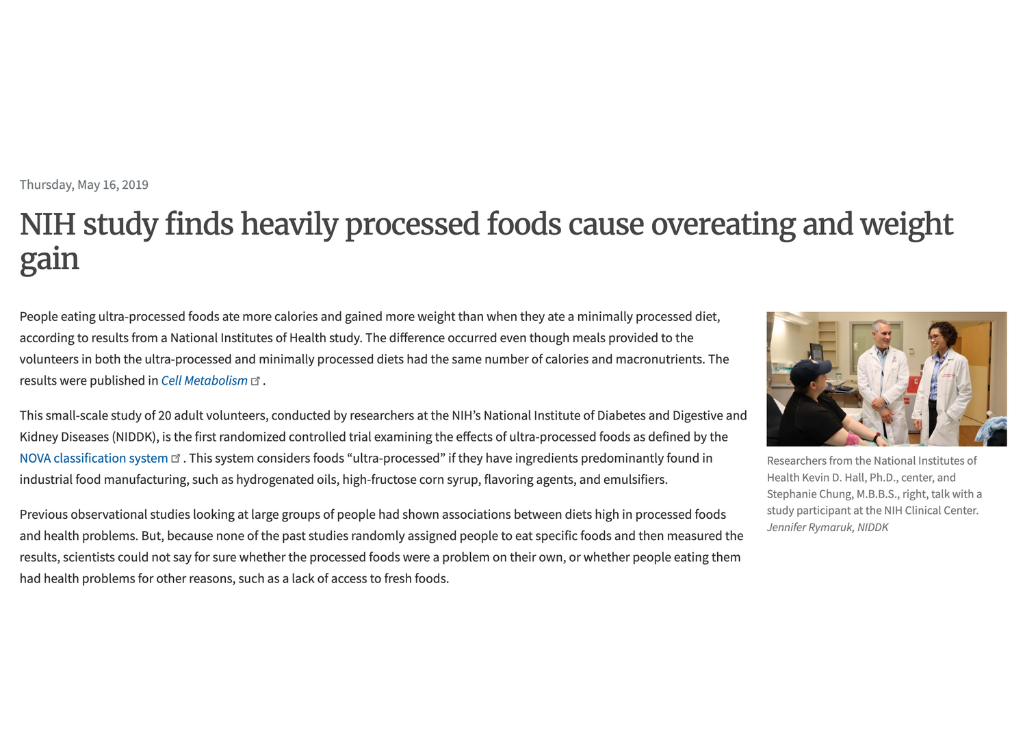
This NIH study demonstrates that individuals consuming ultra-processed foods consistently eat more calories and gain more weight compared to those eating minimally processed foods, even when macronutrient composition and caloric availability are matched. These findings support the hypothesis that food processing plays a critical role in metabolic dysregulation and obesity risk, beyond just calorie content.
– Participants consuming ultra-processed foods ate approximately 500 more calories per day than when eating unprocessed foods.
– The study design was a controlled, crossover feeding trial where subjects were randomly assigned to two diet conditions for two weeks each.
– Both diets were matched for calories, macronutrients, sugar, sodium, and fiber, isolating processing as the variable of interest.
– The ultra-processed group gained an average of two pounds over two weeks, while the unprocessed group lost about the same amount.
– Subjects on the processed diet ate faster and showed delayed satiety, suggesting disruptions in hunger signaling.
– Ultra-processed foods led to increased energy intake primarily through higher carbohydrate and fat consumption.
– The increased caloric intake occurred without participants reporting increased satisfaction or enjoyment, suggesting subconscious overconsumption.
– The study supports a link between food structure and satiety signaling, likely mediated by the gut-brain axis.
– Higher insulin levels were observed in the ultra-processed food group, indicating a metabolic shift toward fat storage.
– Processing often degrades food structure, making it easier to digest and overconsume, which may short-circuit natural appetite regulation.
– The processed diet included common foods like packaged snacks, sugary cereals, and ready-to-eat meals, all widely consumed in Western diets.
– This trial adds empirical support to the view that food quality—not just calorie quantity—impacts metabolic outcomes.
– Minimally processed whole foods appear to better support metabolic homeostasis and weight regulation.
– The study calls for reconsidering public health guidance to focus more on food processing, not just calories or macronutrient ratios.
The findings of this NIH study reinforce the Opti Metabolics approach by highlighting how ultra-processed foods impair metabolic signaling, drive insulin resistance, and promote unintentional overeating. This aligns with the need to eliminate processed, seed-oil-laden, high-carbohydrate foods in favor of nutrient-dense, whole food approaches such as low-carb and ketogenic diets.
– Supports the foundational Opti Metabolics principle that real, minimally processed foods improve satiety and metabolic control.
– Provides direct evidence linking processed food consumption with insulin dysregulation and weight gain.
– Reinforces the need to address root contributors like food quality, not just caloric balance or weight-centric metrics.
Reviewed and interpreted by the Opti Metabolics editorial team, with a focus on early metabolic risk detection and prevention.
Read the article to learn more: NIH Study Finds Heavily Processed Foods Cause Overeating and Weight Gain
Opti Metabolics does not provide medical diagnosis, treatment, or advice. Our program is for educational and informational purposes only and does not represent medical advice or the practice of medicine. These article summaries are intended to help readers understand metabolic health research and emerging scientific findings, but personal health decisions should always be made in consultation with a qualified healthcare provider.
Participants are strongly advised to consult their personal healthcare professional before making any dietary, lifestyle, or medication changes.
Email: info@optimetabolics.com
Your results suggest early signs of metabolic dysfunction are emerging beneath the surface.
While you may feel healthy today, several biomarkers indicate increasing risk for insulin resistance, cardiovascular disease, and other chronic conditions if these patterns continue to progress.
The encouraging news is that these findings were identified before disease developed, creating an opportunity to improve your long-term health trajectory through targeted interventions.
No
Risk
Low
Risk
Medium Risk
High Risk
Higher Risk
Higher numbers indicate more biomarkers in each risk category.
We look upstream to identify and address the root drivers of chronic disease long before symptoms appear.
Excess insulin and poor cellular response drive metabolic dycfuntion and fat storage.
Imbalance between free radicals and your body's antioxidant defenses.
Chronic, low grade inflamation damages tissues and disrupts normal function.
Elevated cortisol and other stress hormones amplify the damaga and impair recovery.
Inherited factors can increase succeptbility and influence how your body responds.
Over time, these drivers create the foundation for chronic disease to take root.