Opti Metabolics 11652 Jollyville Road Austin, TX 78759

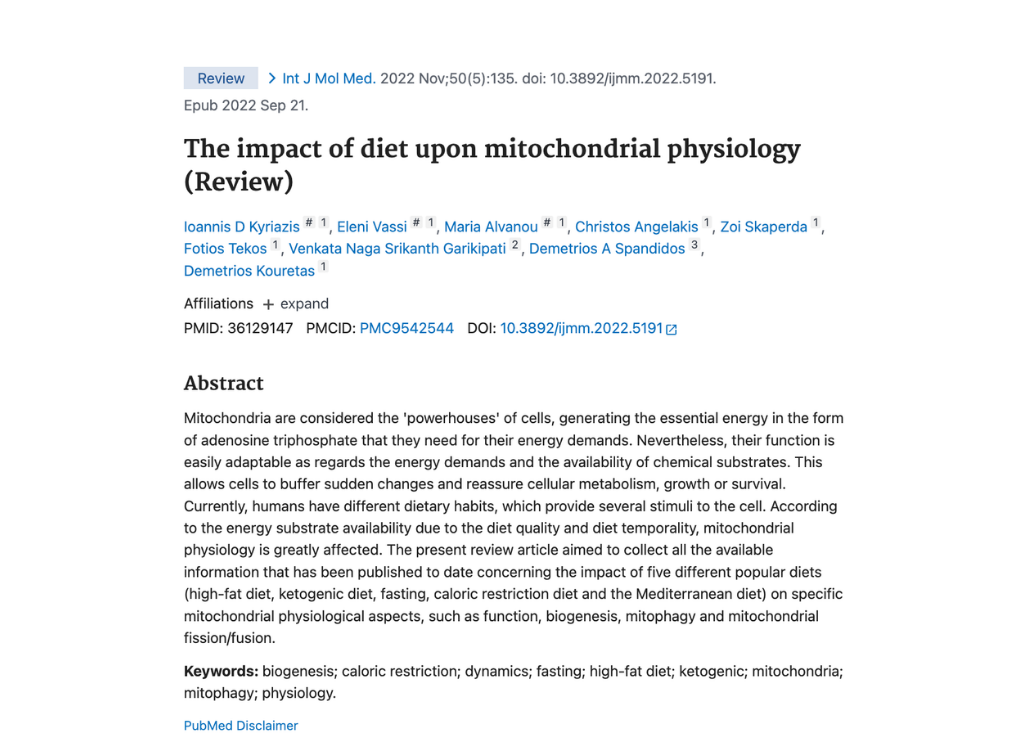
Article Review – The Impact of Diet Upon Mitochondrial Physiology (Review)

Article Review – The Impact of Diet Upon Mitochondrial Physiology (Review)

by Ioannis D Kyriazis, Eleni Vassi, Maria Alvanou, Christos Angelakis, Zoi Skaperda, Fotios Tekos, Venkata Naga Srikanth Garikipati, Demetrios A Spandidos, Demetrios Kouretas

This article is part of Opti Metabolics’ ongoing effort to translate complex metabolic research into clear, practical insights for readers without formal scientific or medical training.

Summary -

The article reviews the effects of five popular diets—high-fat, ketogenic, fasting, caloric restriction, and Mediterranean—on mitochondrial physiology, demonstrating that diets like high-fat often impair mitochondrial biogenesis, dynamics, and bioenergetics while increasing oxidative stress, whereas ketogenic, Mediterranean, and caloric restriction diets enhance these processes and promote cellular health. These dietary influences have profound implications for metabolic health, as improved mitochondrial function supports efficient energy utilization and reduces the risk of insulin resistance-driven conditions such as diabetes and obesity. Overall, the review underscores the potential of nutrient-balanced, low-carbohydrate approaches to optimize mitochondrial adaptability and prevent chronic metabolic diseases.

Key Takeaways Explained for a Non-Medical Audience

– Mitochondria serve as cellular powerhouses, adapting their function based on energy substrate availability from dietary habits.

– High-fat diets impair mitochondrial biogenesis by decreasing PGC-1α mRNA and protein levels in skeletal muscle and reducing mtDNA copy number in myocardium.

– High-fat diets promote mitochondrial fission through elevated FIS1 and DRP1 while reducing fusion via decreased MFN2 in tissues like myocardium and skeletal muscle.

– High-fat diets show variable effects on mitophagy, with increased acidity in cardiomyocytes but reduced PARKIN protein in cardiac muscle.

– High-fat diets impair bioenergetics by reducing OXPHOS-related mRNA, cytochrome c levels, mitochondrial respiration, and ATP production.

– Ketogenic diets enhance mitochondrial biogenesis by elevating PGC-1α and TFAM levels in cardiac muscle and brown adipose tissue.

– Ketogenic diets have tissue-specific effects on dynamics, increasing fission/fusion markers in skeletal muscle but reducing MFN2 and DRP1 in cardiomyocytes.

– Ketogenic diets increase mitophagy, with elevated BNIP3 protein in liver, though not always induced in hepatocytes.

– Ketogenic diets improve bioenergetics through increased mitochondrial respiration and fatty acid oxidation.

– Mediterranean diets, rich in polyphenols, upregulate genes like TFAM, NRF1, PGC-1α, and SIRT1 to enhance mitochondrial biogenesis.

– Mediterranean diet components like ferulic acid improve dynamics by increasing MFN1, MFN2, and FIS1 expression.

– Mediterranean diets stimulate mitophagy via increased Beclin-1 expression and enhance bioenergetics by boosting complex IV activity.

– Mediterranean diets reduce ROS production, with chlorogenic acid alleviating elevated mitochondrial ROS levels.

– Caloric restriction and fasting activate pathways like SIRT1 and AMPK, promoting mitochondrial biogenesis and mitophagy while improving overall function.

– Nutrient-dense diets like ketogenic and Mediterranean can mitigate mitochondrial dysfunction associated with age-related and metabolic diseases.


Integrated Insights –

This article aligns with the Opti Metabolics framework by illustrating how diets that limit carbohydrate excess, such as ketogenic and low-carbohydrate approaches, enhance mitochondrial efficiency and reduce oxidative stress, thereby addressing insulin resistance at its core. By emphasizing the benefits of natural, polyphenol-rich foods in Mediterranean diets, it supports strategies that counteract inflammation from poor dietary choices. Ultimately, these insights reinforce the use of well-formulated low-carbohydrate or ketogenic diets to restore mitochondrial health and prevent metabolic imbalances.

Alignment with Broader Review Content –

– Links mitochondrial impairment from high-fat diets to insulin resistance, consistent with excessive carbohydrate consumption disrupting blood sugar management.

– Highlights oxidative stress and inflammation from suboptimal diets, aligning with concerns over omega-6-rich seed oils exacerbating metabolic stress.

– Advocates for ketogenic, low-carbohydrate, and Mediterranean diets with natural ingredients to improve mitochondrial function, mirroring approaches to mitigate chronic conditions through better metabolic health.

Reviewed and interpreted by the Opti Metabolics editorial team, with a focus on early metabolic risk detection and prevention.

Read the article to learn more: The Impact of Diet Upon Mitochondrial Physiology (Review)

Health & Medical Disclaimer –

Opti Metabolics does not provide medical diagnosis, treatment, or advice. Our program is for educational and informational purposes only and does not represent medical advice or the practice of medicine. These article summaries are intended to help readers understand metabolic health research and emerging scientific findings, but personal health decisions should always be made in consultation with a qualified healthcare provider.

Participants are strongly advised to consult their personal healthcare professional before making any dietary, lifestyle, or medication changes.

x
Opti Metabolics provides informational health insights and does not dispense medical advice, diagnose, treat, or cure any medical conditions. Always consult a qualified healthcare professional before making any health-related decisions.

Contact With Us!

Email: info@optimetabolics.com

Join Opti Metabolics

It’s time to take control of your health.

Eat Like a Human Again

Drop your name and email to receive the eBook that shows how returning to simple, whole foods can restore stable energy, support metabolic health, and help your body function the way it was designed to.
Name

The Fast Track to Frailty

Drop your name and email to receive the guide that helps you understand how GLP-1 weight loss changes your body, and why the scale alone never tells the full story.
Name

Starving for Nothing

Drop your name and email to receive the eBook that shows why “Eat Less, Move More” was never your fault. It was the wrong story, and now you get the right one.
Name